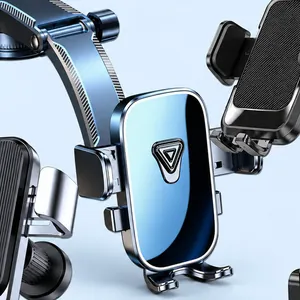
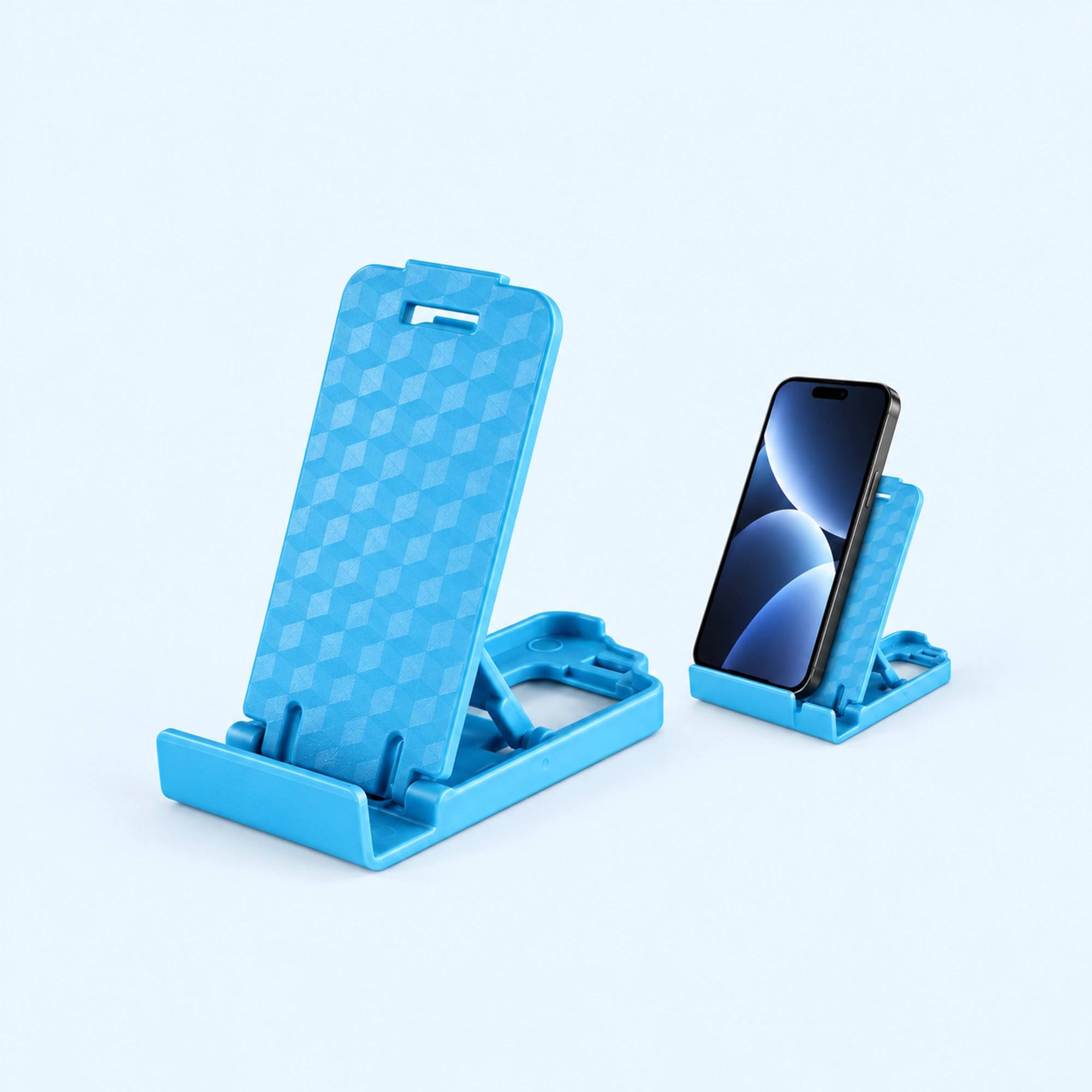
 Blue Four-Position Folding Desk Stand | Adjustable Foldable Phone Stand
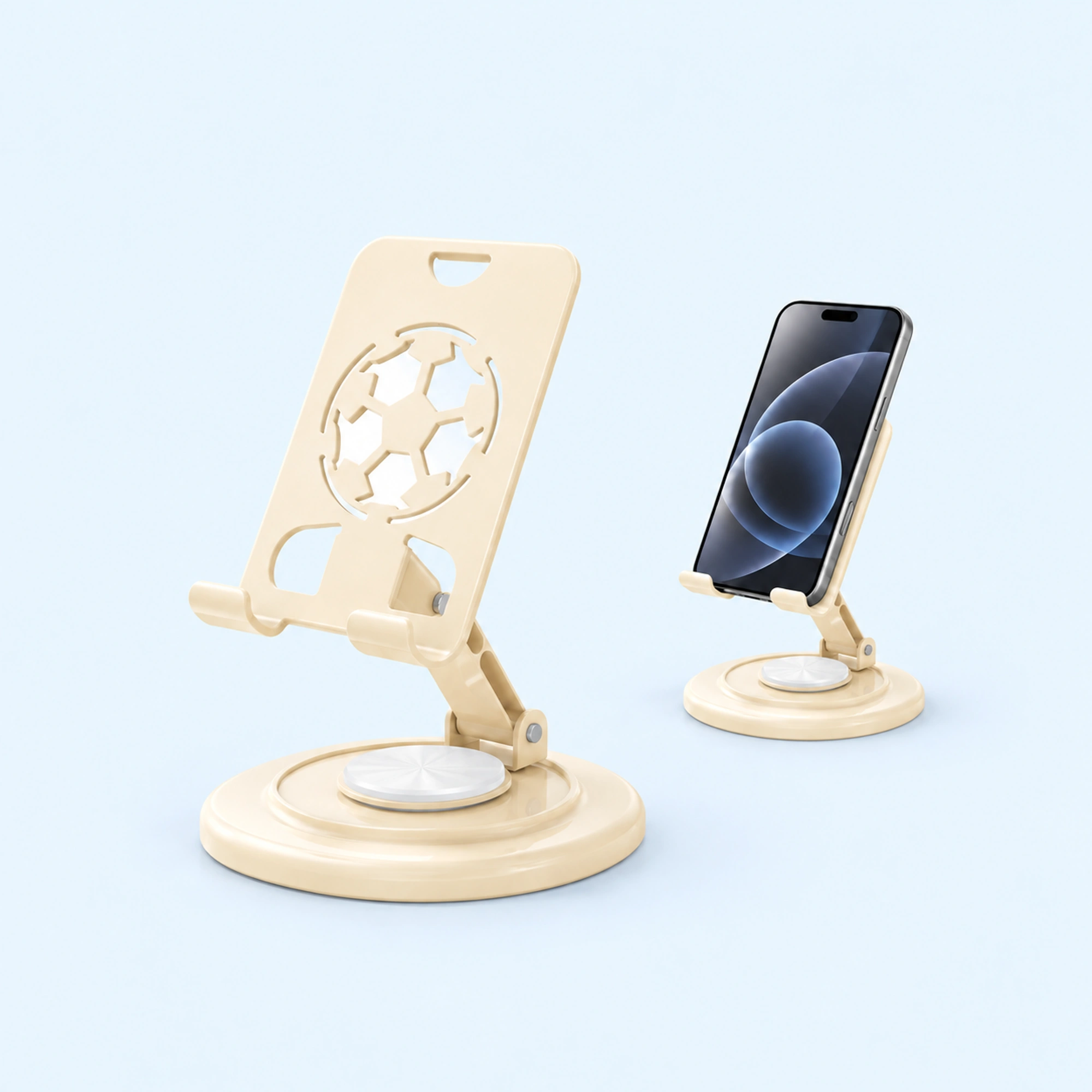 Cream Round-Base Folding Phone Stand | Foldable Phone Stand
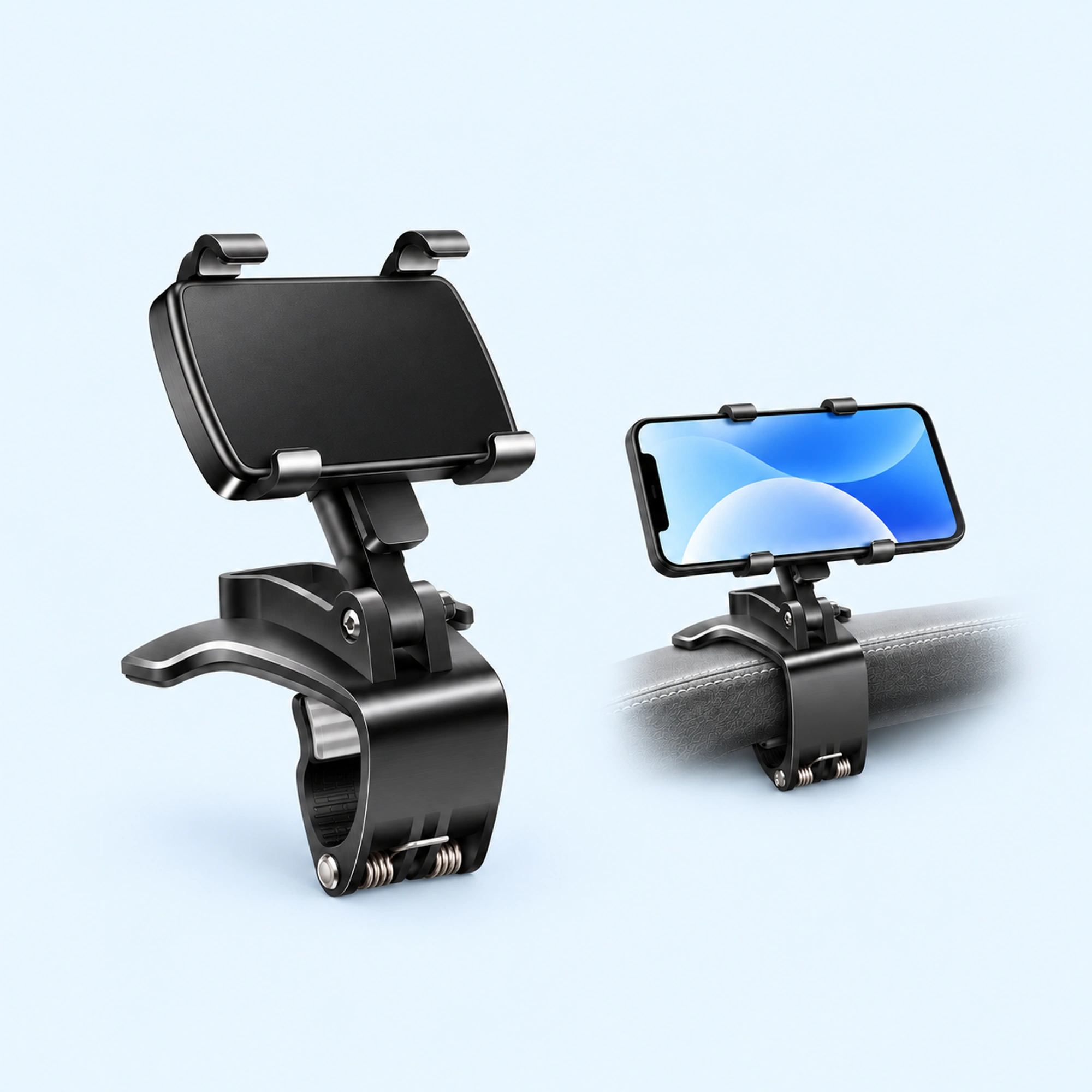 Dashboard Edge Clip Phone Holder | Dashboard Phone Holder
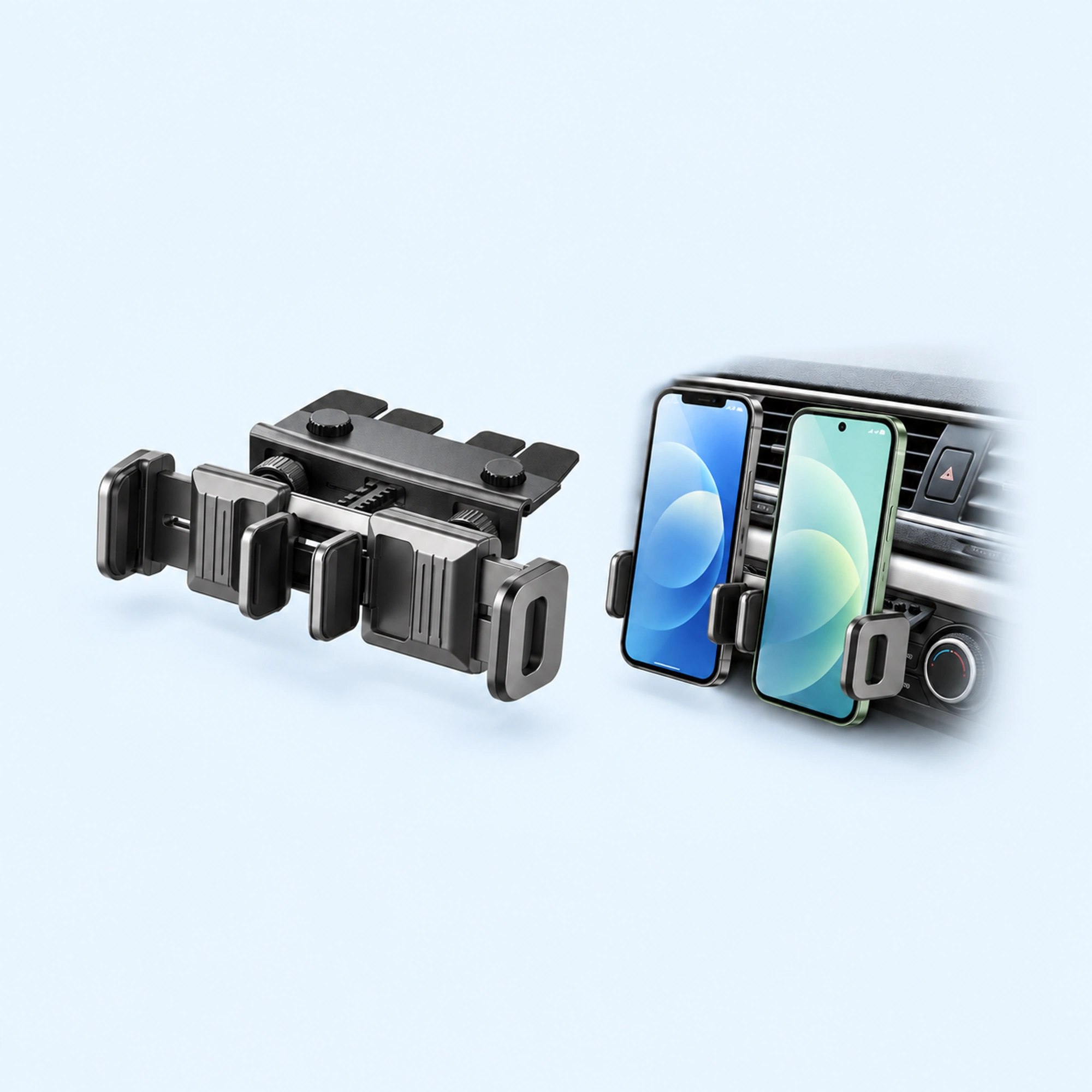 Dual-Cradle CD-Slot Phone Mount | Cd Phone Holder
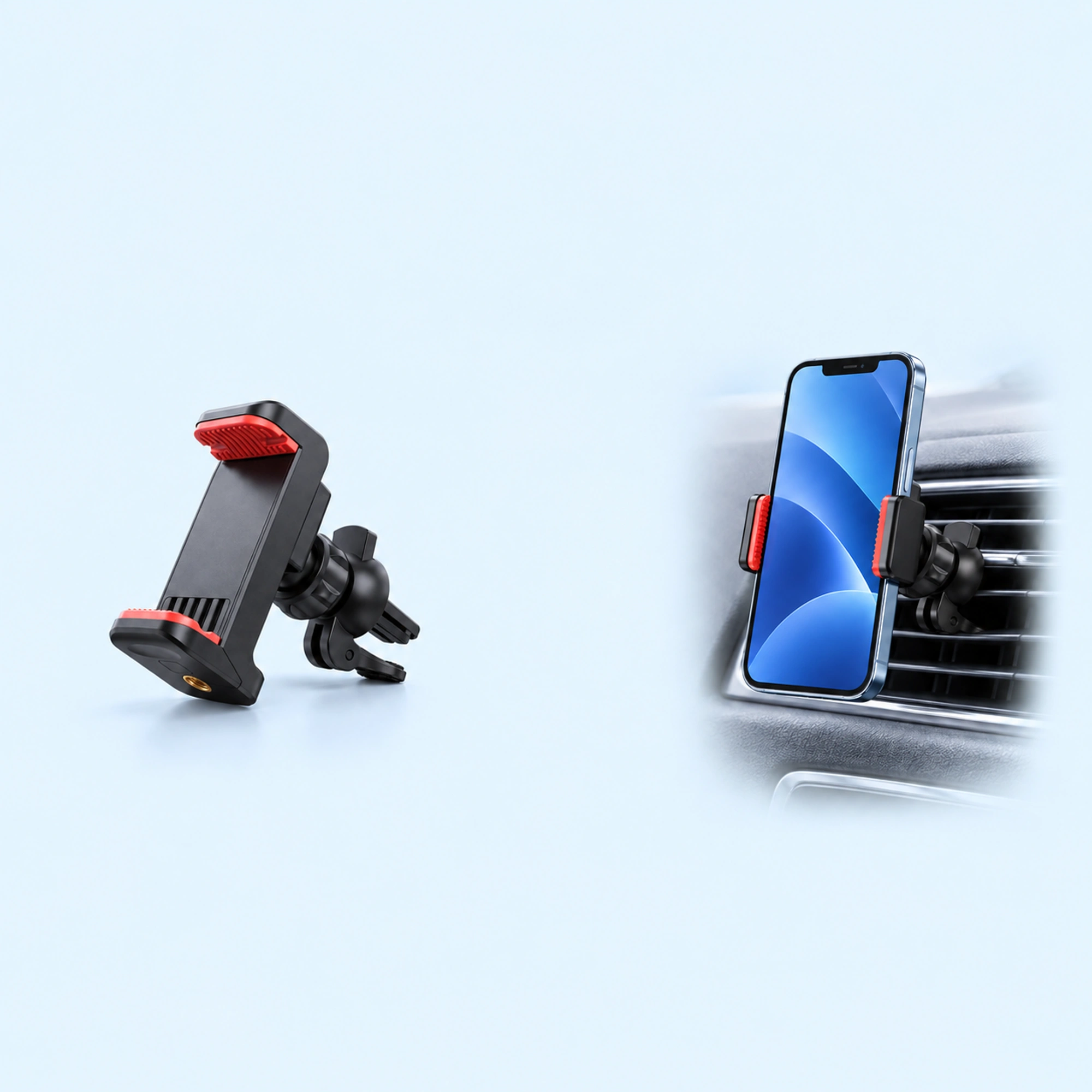 Red-Pad Compact Vent Phone Clip | Car Vent Phone Holder
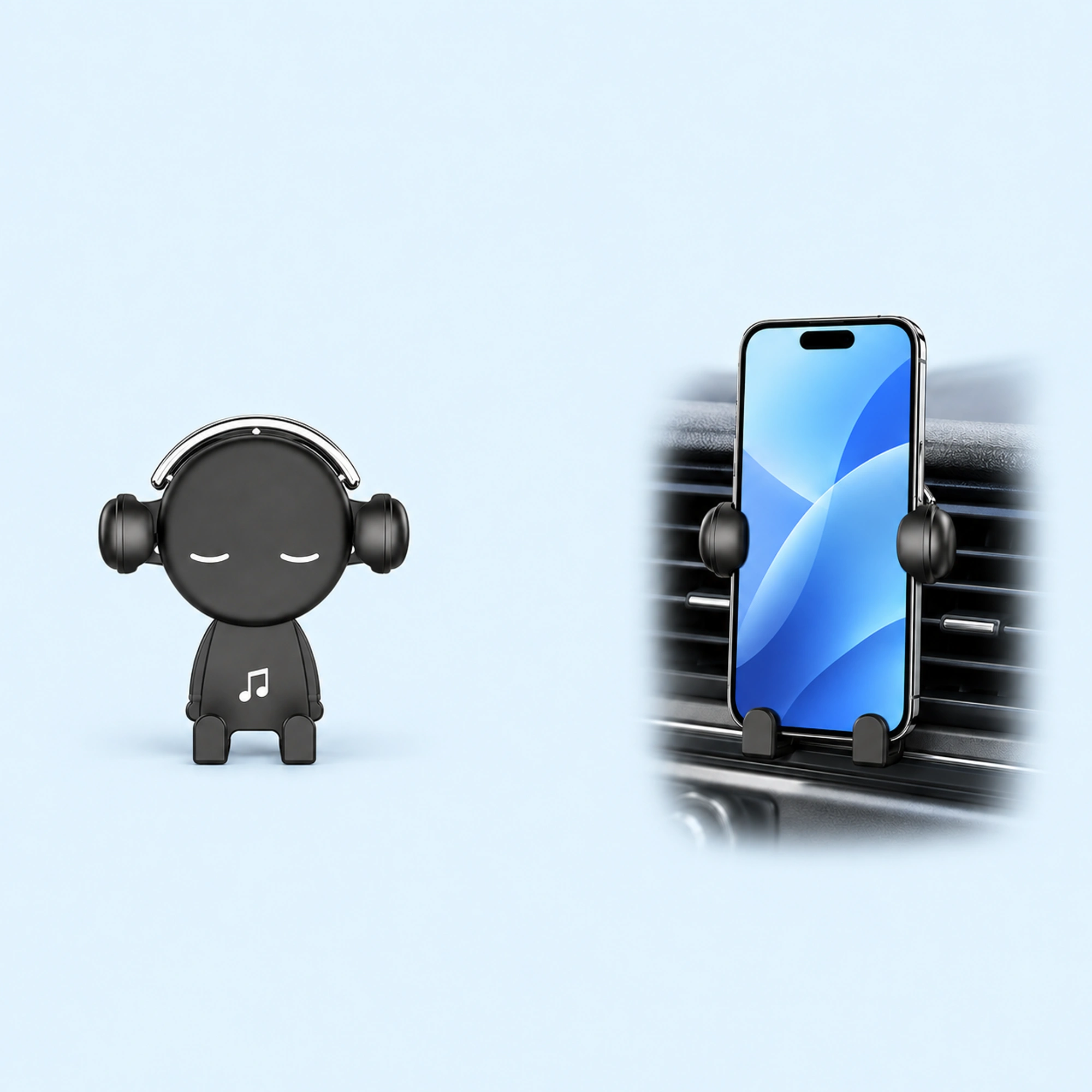 Music-Note Character Gravity Vent Holder | Gravity Phone Holder
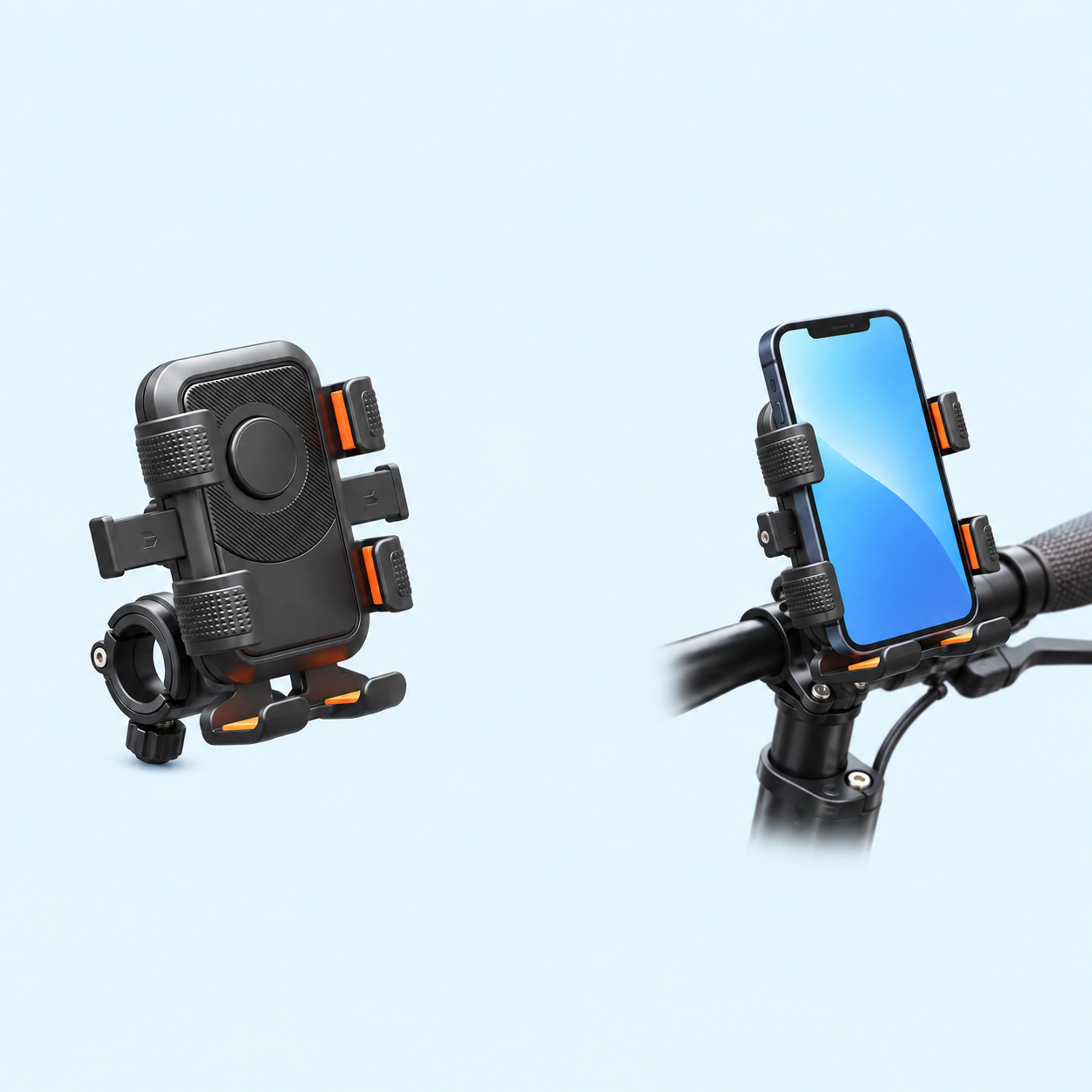 Black Six-Pad Handlebar Phone Cradle | Bike Handlebar Phone Mount
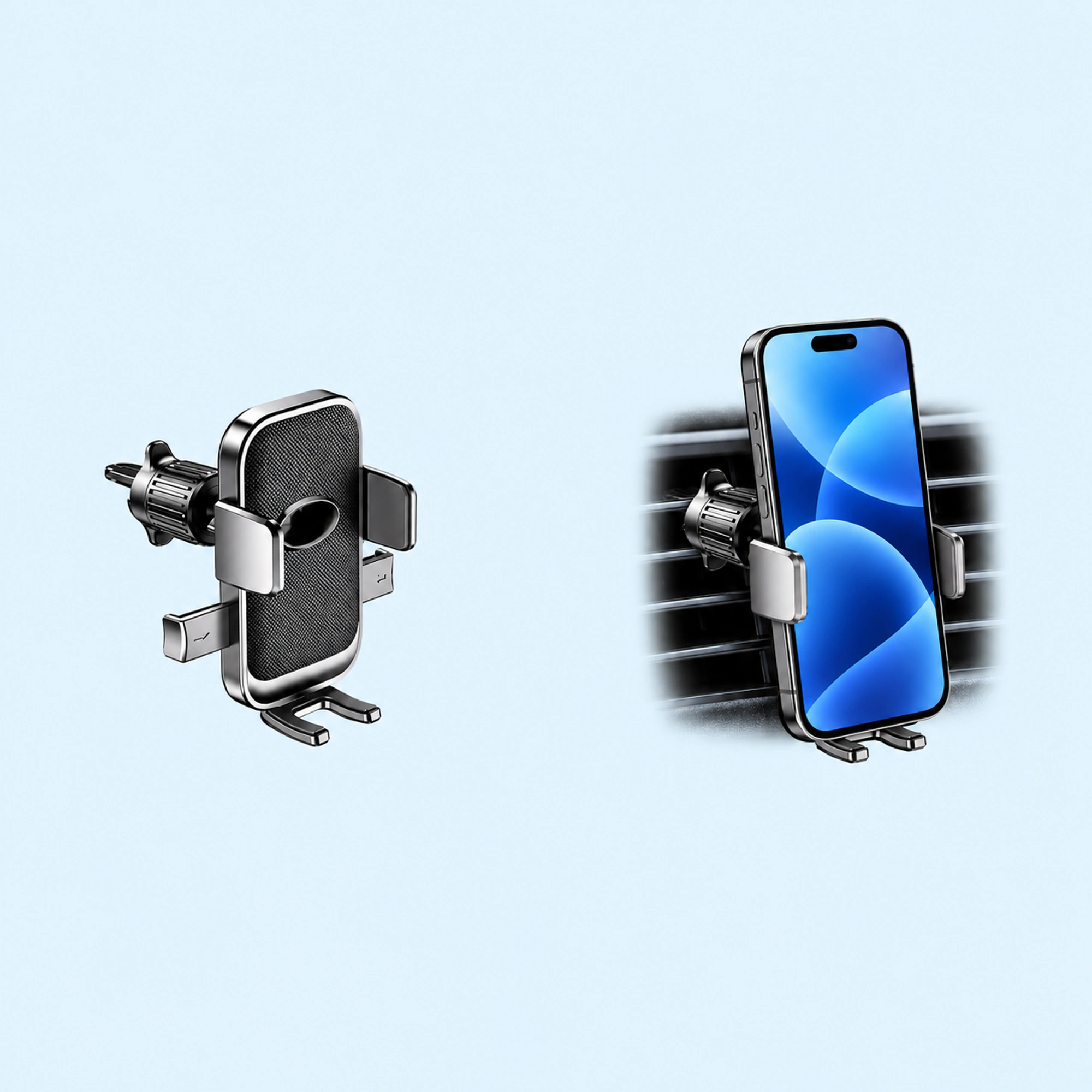 Oval-Opening Textured Vent Phone Cradle | Car Vent Phone Holder
Bicycle commuters and weekend road cyclists rely heavily on smartphone navigation to track urban routes and trail maps. When choosing a bicycle phone holder or phone holder for bike commuting, riders encounter two distinct bike phone mount philosophies: a rigid mechanical bike handlebar phone mount with a screw-collar clamp and flexible wrap-around silicone elastomer straps. Each design balances mechanical rigidity, road vibration absorption, tool-free portability, and handlebar geometry in contrasting ways.
Understanding how these mounting mechanisms handle cobblestones, potholes, and changing weather conditions helps you select the best cockpit hardware for your cycling style.
How Screw-Collar Clamps Differ from Silicone Straps
Mechanical screw-collar mounts secure around bicycle handlebars using a split-ring clamp tightened with a threaded bolt, knurled thumbscrew, or hex hardware. Once torqued into place, the bracket forms a rigid structural platform anchored to the handlebar tube. The phone rests within a mechanical cradle featuring cushioned side jaws, four-corner corner locks, or quick-release square clips.
Silicone strap mounts use molded elastic bands that stretch around the bicycle handlebar and wrap over the four corners of the smartphone. While silicone bands install in seconds without tools, they lack rigid clamping force. Over rough tarmac and gravel, elastic bands bounce and flex under the weight of modern smartphones.
| Mechanical Feature | Rigid Screw-Collar Mount | Elastic Silicone Strap |
|---|---|---|
| Mounting Attachment | Hinged split collar with threaded screw | Stretchable rubber or silicone band |
| Road Vibration Response | Rigid platform with internal rubber damping pads | Flexible elastomer oscillation over bumps |
| Installation Requirements | Hex key or manual thumbscrew tightening | Tool-free stretch installation in seconds |
| Cockpit Angle Stability | Stays locked in position over rough tarmac | Can rotate or sag forward under device weight |
| Long-Term Durability | Weather-resistant ABS composite and metal bolts | Susceptible to UV rot, tearing, and stretching |
Mechanical Stability and Vibration Control on Rough Roads
Bicycle handlebars transmit constant high-frequency buzz from coarse pavement and sharp impacts from potholes directly into the cockpit. How a mount handles this kinetic energy determines whether your screen stays readable during rides.
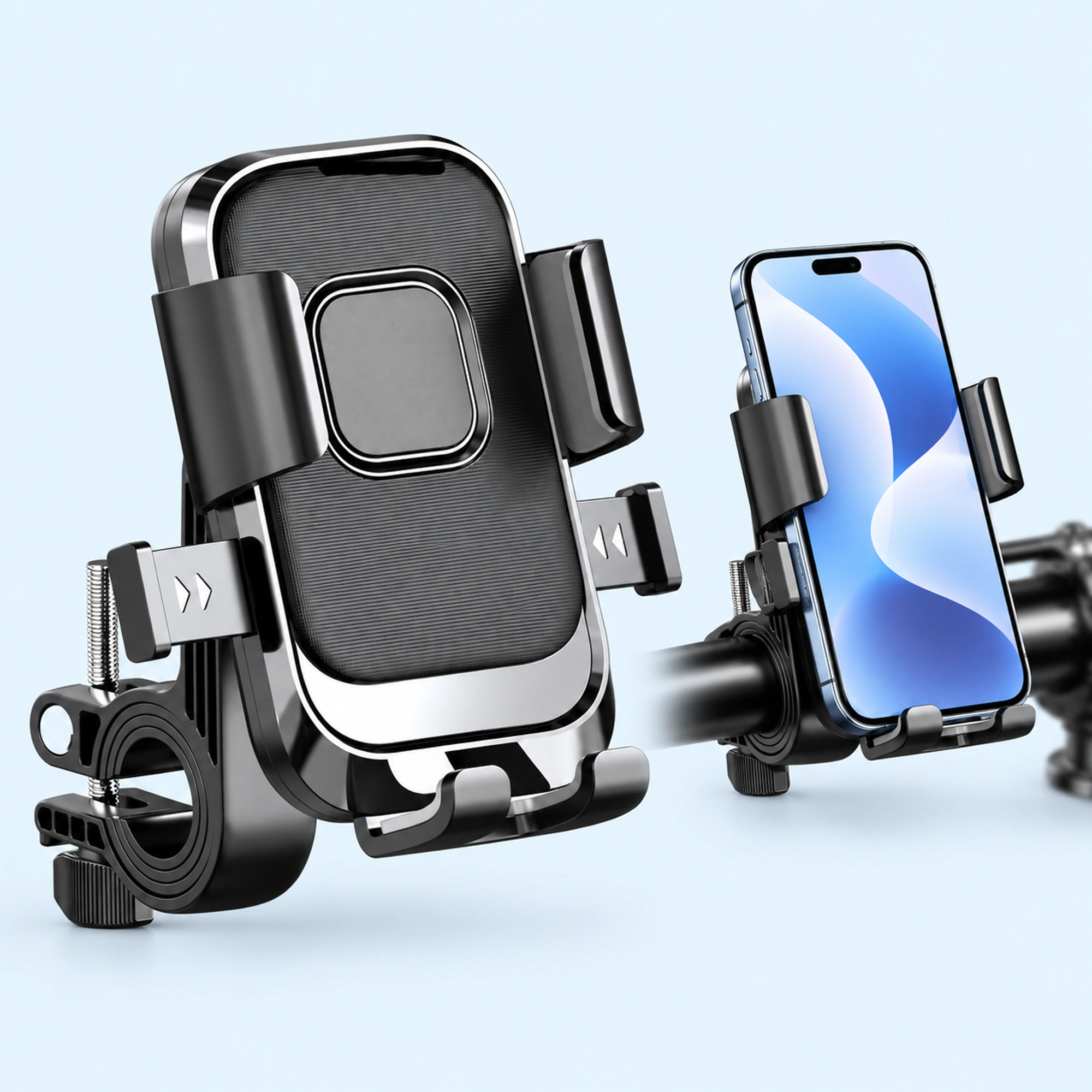
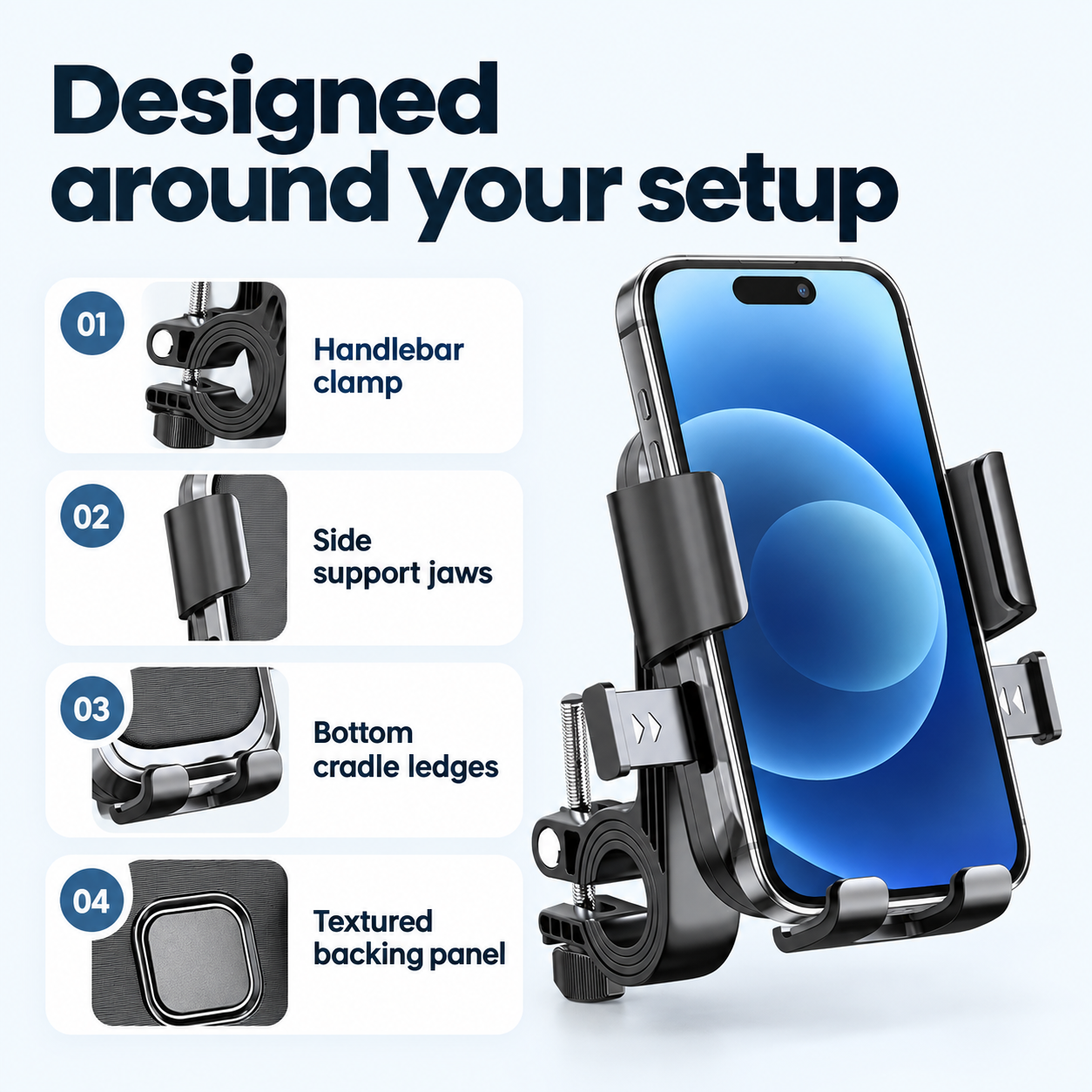
Rigid collar brackets isolate the smartphone using dense internal rubber liners and textured cradle backings. Because the clamp holds the handlebar firmly, the phone maintains a stable viewing angle without drooping toward the front wheel. For example, the Handlebar Bike Phone Holder pairs a round handlebar clamp with a black and silver cradle. Side jaws and lower ledges surround the phone, while a textured backing panel sits behind it to absorb road vibration.
Conversely, silicone strap mounts suspend the entire phone in tension. Over smooth suburban asphalt, silicone provides gentle shock isolation. When you ride across railroad tracks or brick streets, the elastic material stretches dynamically. Heavy smartphones can bounce vigorously, making live GPS turn indicators difficult to read at high speed.
Explore these rigid bicycle mounting options directly:
- Handlebar Bike Phone Holder
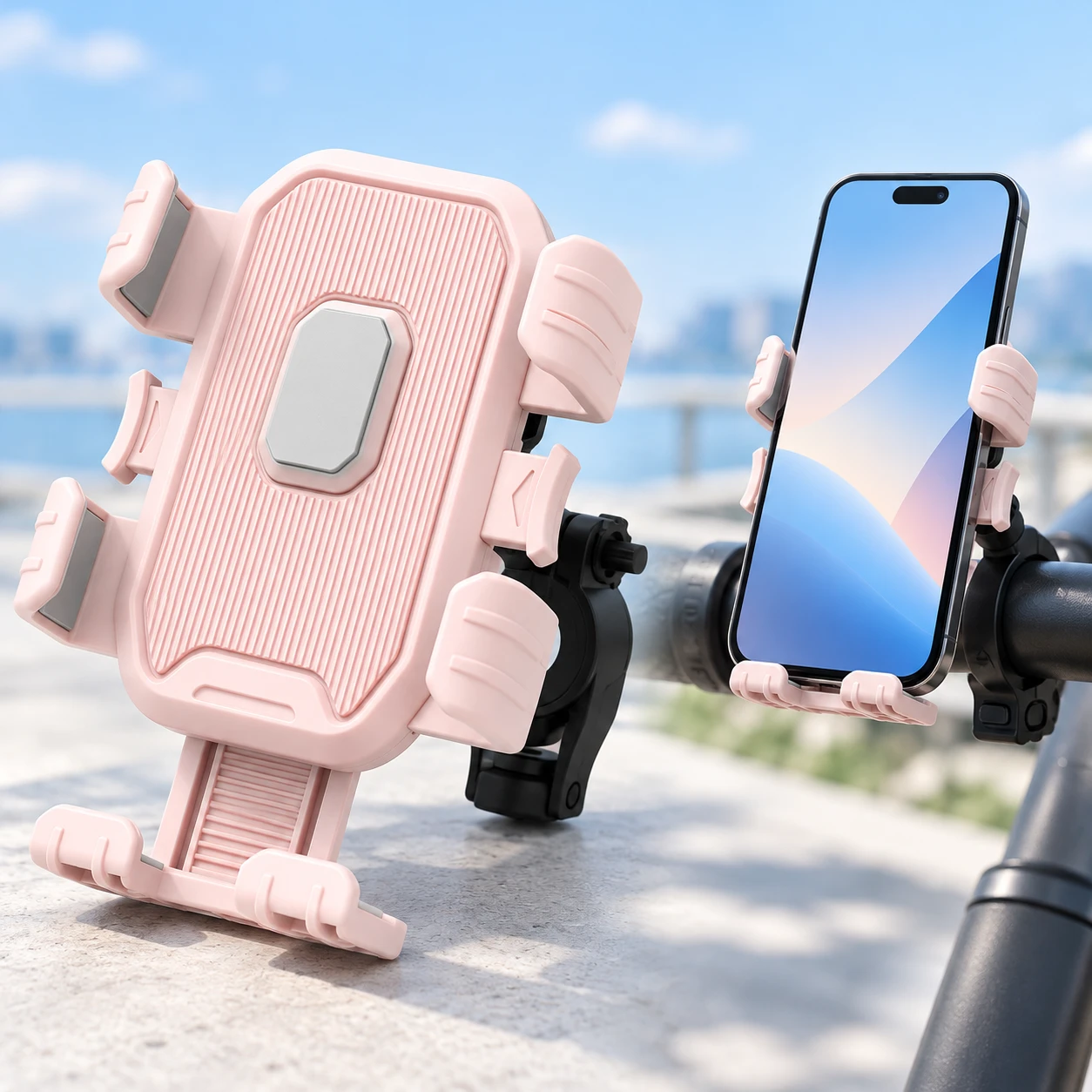
- Pastel Pink Handlebar Bike Phone Holder
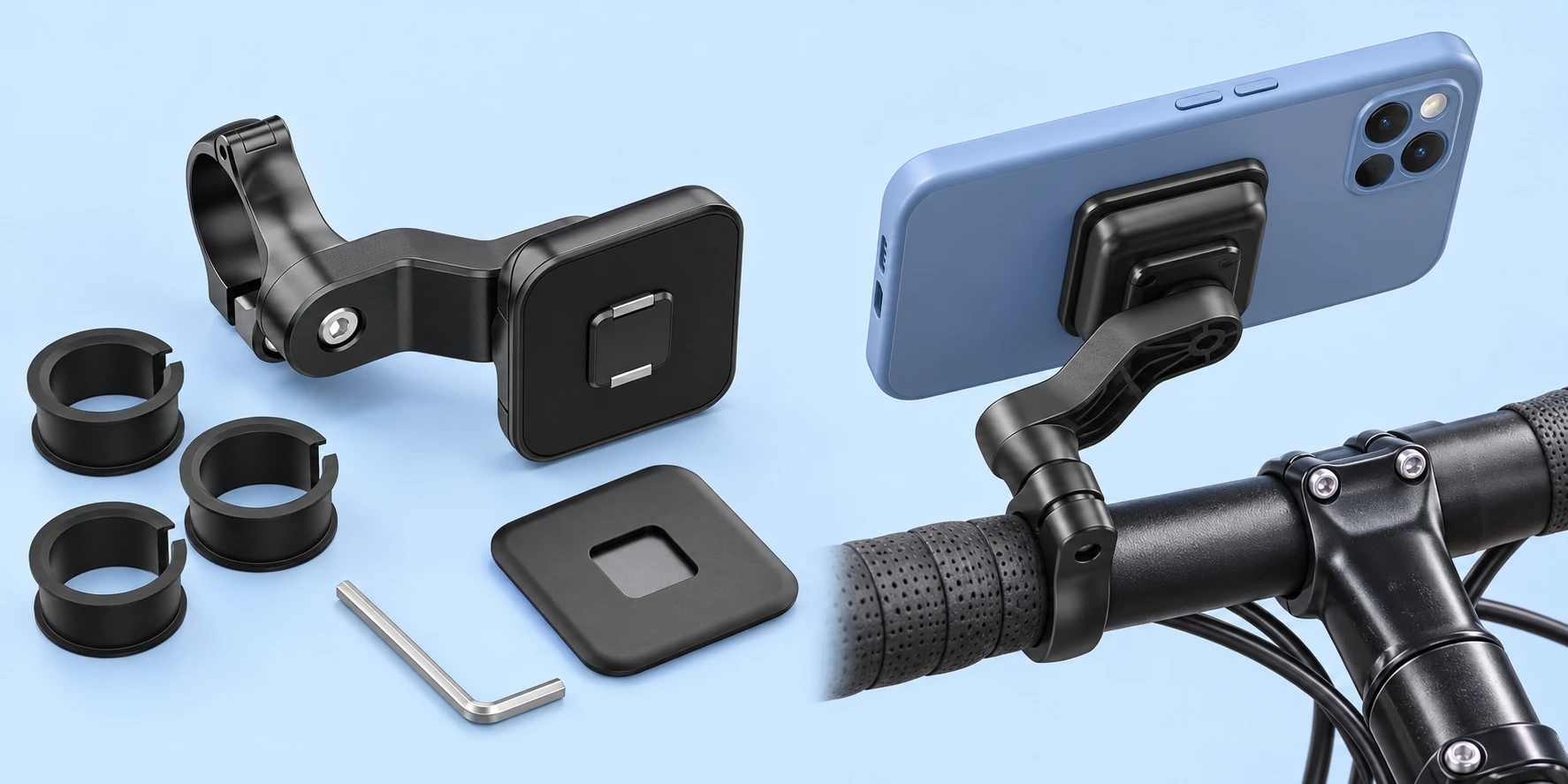
- Black 148A Square-Clip Handlebar Phone Kit
Split-Collar Sizing Shims for 22.2 mm to 31.8 mm Handlebars
Handlebars vary considerably across bicycle styles. Standard urban commuter bikes often use 22.2 mm or 25.4 mm steel bars, mountain bikes commonly feature 31.8 mm aluminum clamp areas, and modern gravel bikes taper toward the grips. A quality screw-collar mount accommodates these variations through modular sizing liners.
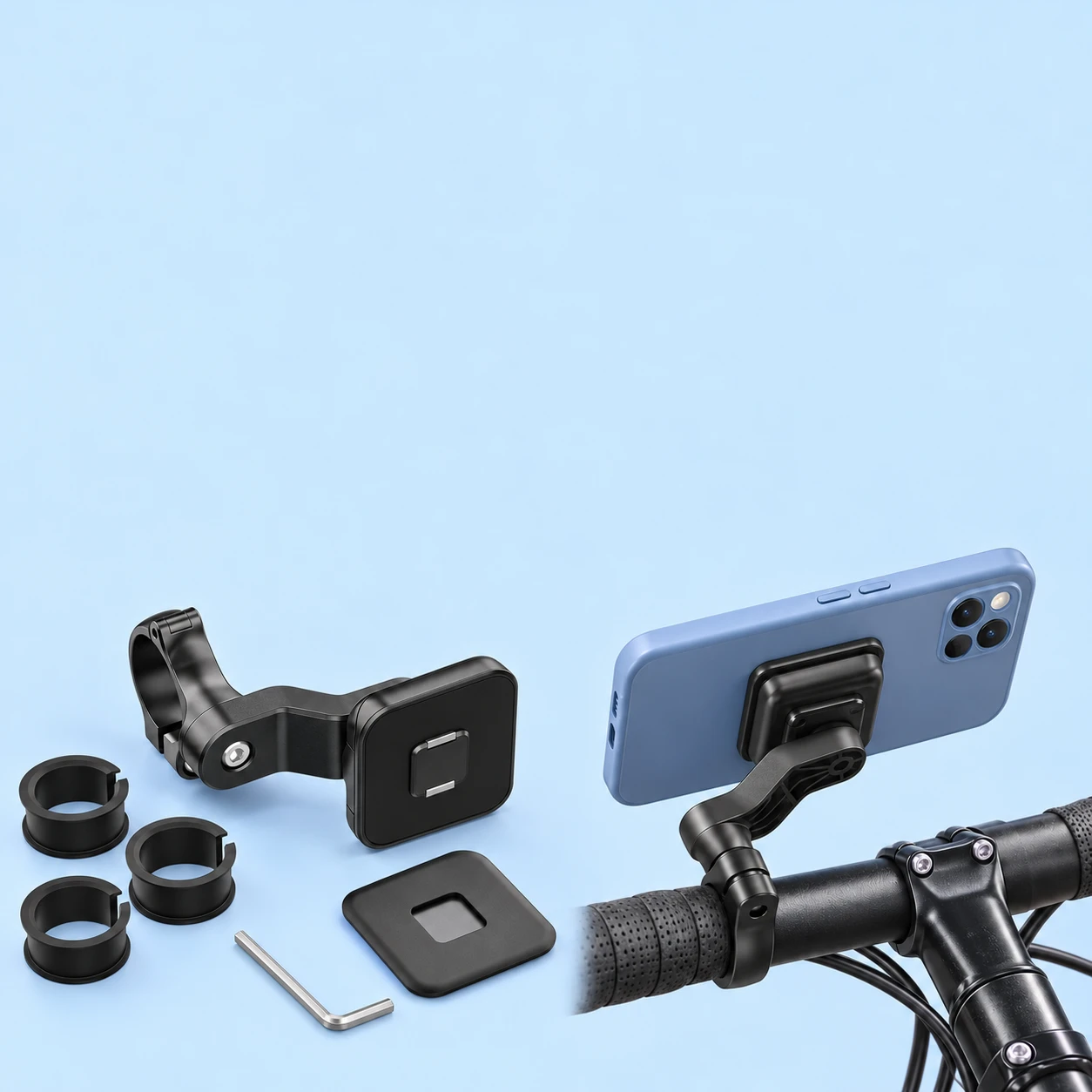
The Black 148A Square-Clip Handlebar Phone Kit includes an original square clip head with two metallic tips, molded S-offset webbed arm, hinged split collar, plus matching square phone-side receiver, three split liners and one hex key. Installing the appropriate split liner inside the hinged collar prevents metal-on-metal friction and ensures uniform clamping pressure around circular tubes without crushing carbon or aluminum bars.
For riders who prioritize rapid single-handed docking, the Pastel Pink Handlebar Bike Phone Holder features four cushioned corner clamps and lower support feet lined with anti-slip rubber pads to absorb vibrations and prevent accidental slips. Built with durable pastel-pink ABS casing, a central release button lets you lock and disengage your smartphone with one quick press, while a circular handlebar bracket with threaded locking screw fits standard tube diameters.
Durability and Environmental Wear: Sun, Rain, and Ozone
Cycling accessories face relentless environmental exposure. Sunlight, ultraviolet radiation, rain spray, and temperature extremes affect mounting materials differently over time.
- UV Degradation and Elasticity Loss: Silicone and rubber straps degrade when exposed to outdoor sunlight. Ultraviolet rays break down polymer chains in elastomers, leading to micro-cracks, surface chalking, and eventual snapping under tension. Riders who store bikes outdoors or ride long summer tours frequently report broken corner loops.
- Mechanical Fatigue Resistance: Rigid brackets built from engineering-grade ABS composites and alloy hardware maintain their structural integrity across years of riding. Internal clamp pads and silicone jaw linings remain protected within rigid housings, preventing catastrophic drop failures.
- Thread Tension Maintenance: Threaded collar fasteners retain their clamping torque throughout wet rides. Applying a dab of medium threadlocker or checking screw tightness during monthly maintenance keeps collar brackets securely centered.
Pre-Ride Fitment and Safety Checklist
Before setting off on city commutes or weekend bike packing trips, review these essential safety checks:
- Match Handlebar Diameter: Confirm your handlebar diameter using calipers or bike manufacturer specifications before selecting collar shims.
- Verify Brake Cable Clearance: Ensure the mounting bracket and extension arm do not pinch brake housings or derailleur cables during full handlebar turns.
- Test Cradle Jaw Engagement: Press your smartphone firmly into the cradle pads until side jaws or corner clips seat fully around phone corners.
- Check Thumbscrew Tightness: Confirm the collar clamping bolt is snug so the mount cannot rotate under vigorous forward pressure.