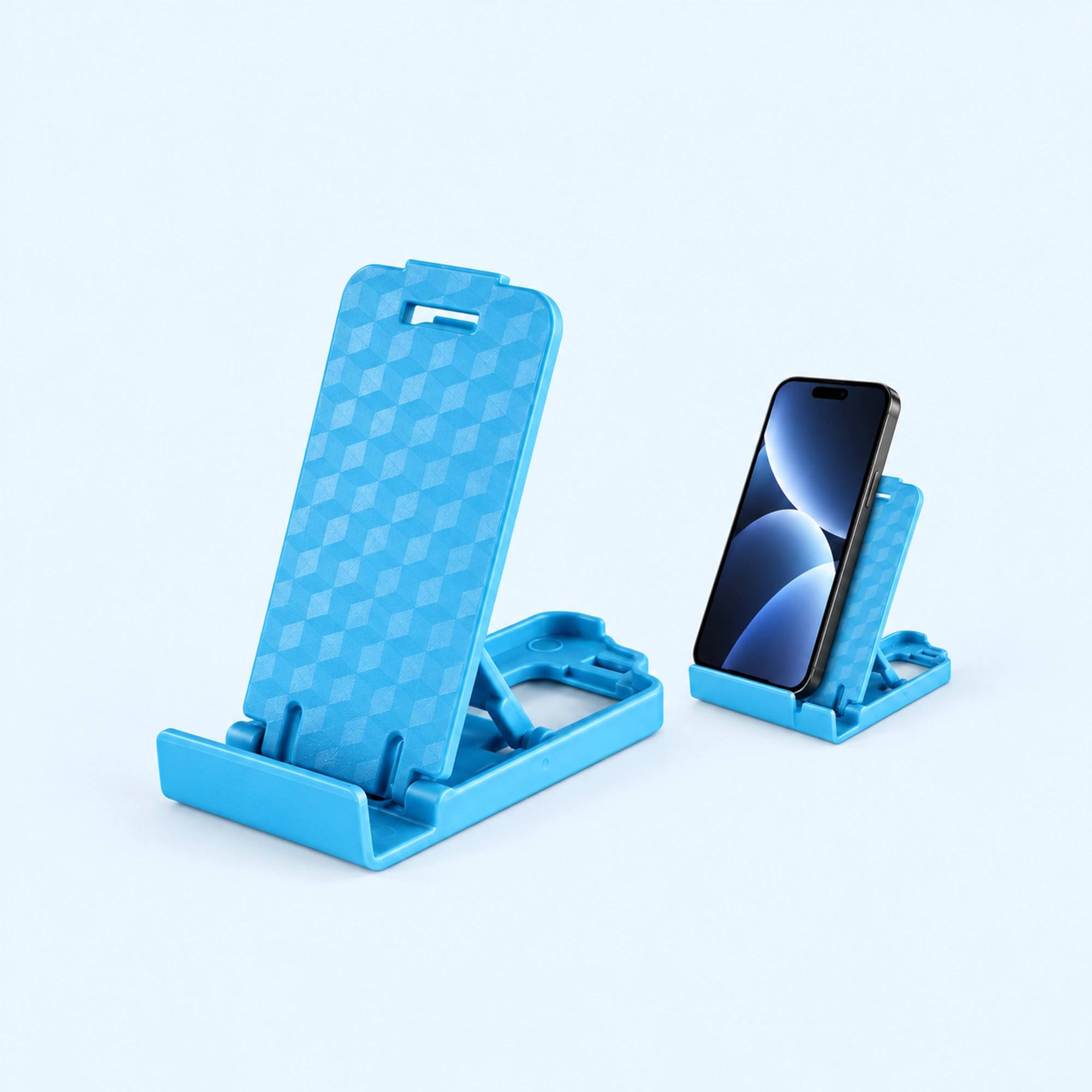
 Blue Four-Position Folding Desk Stand | Adjustable Foldable Phone Stand
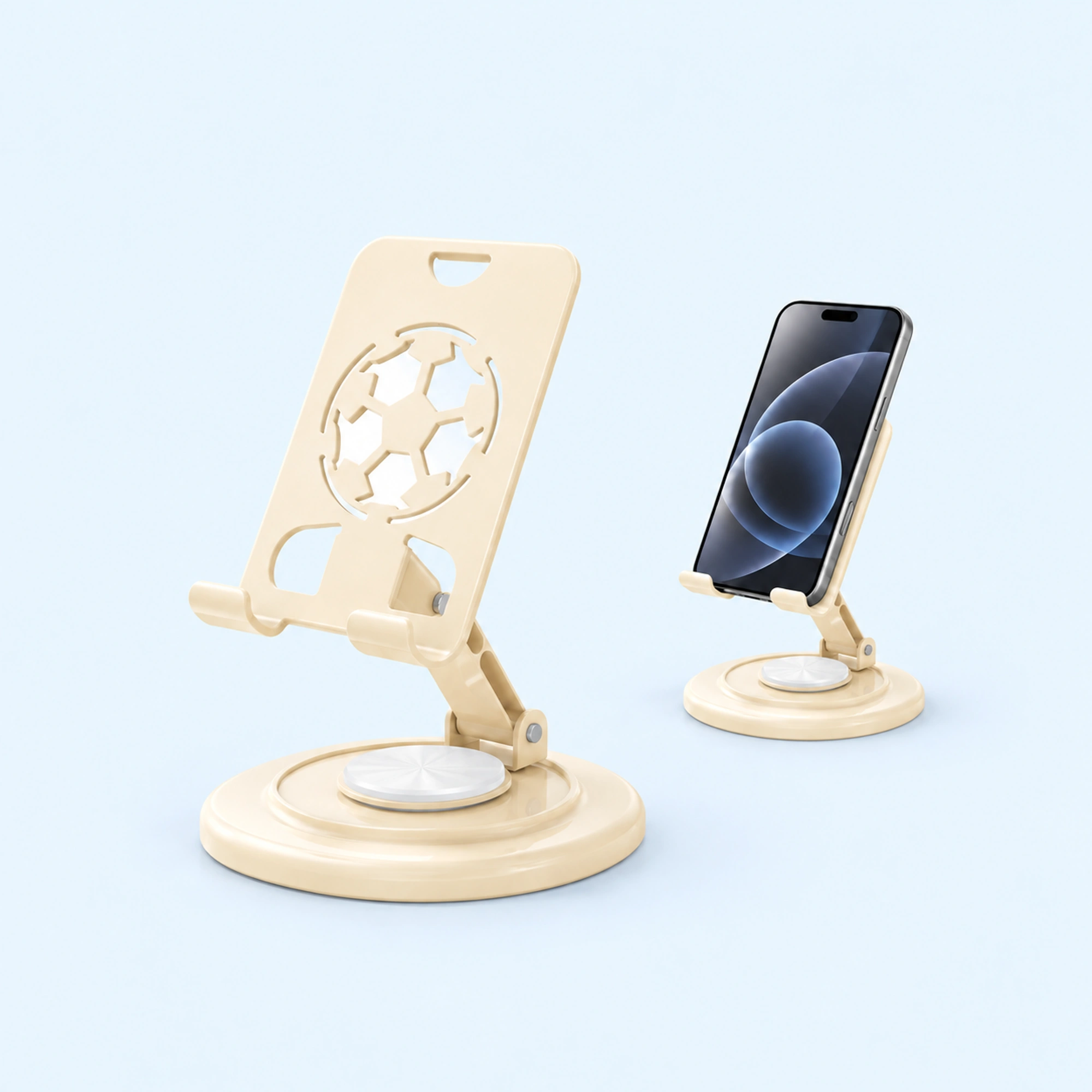 Cream Round-Base Folding Phone Stand | Foldable Phone Stand
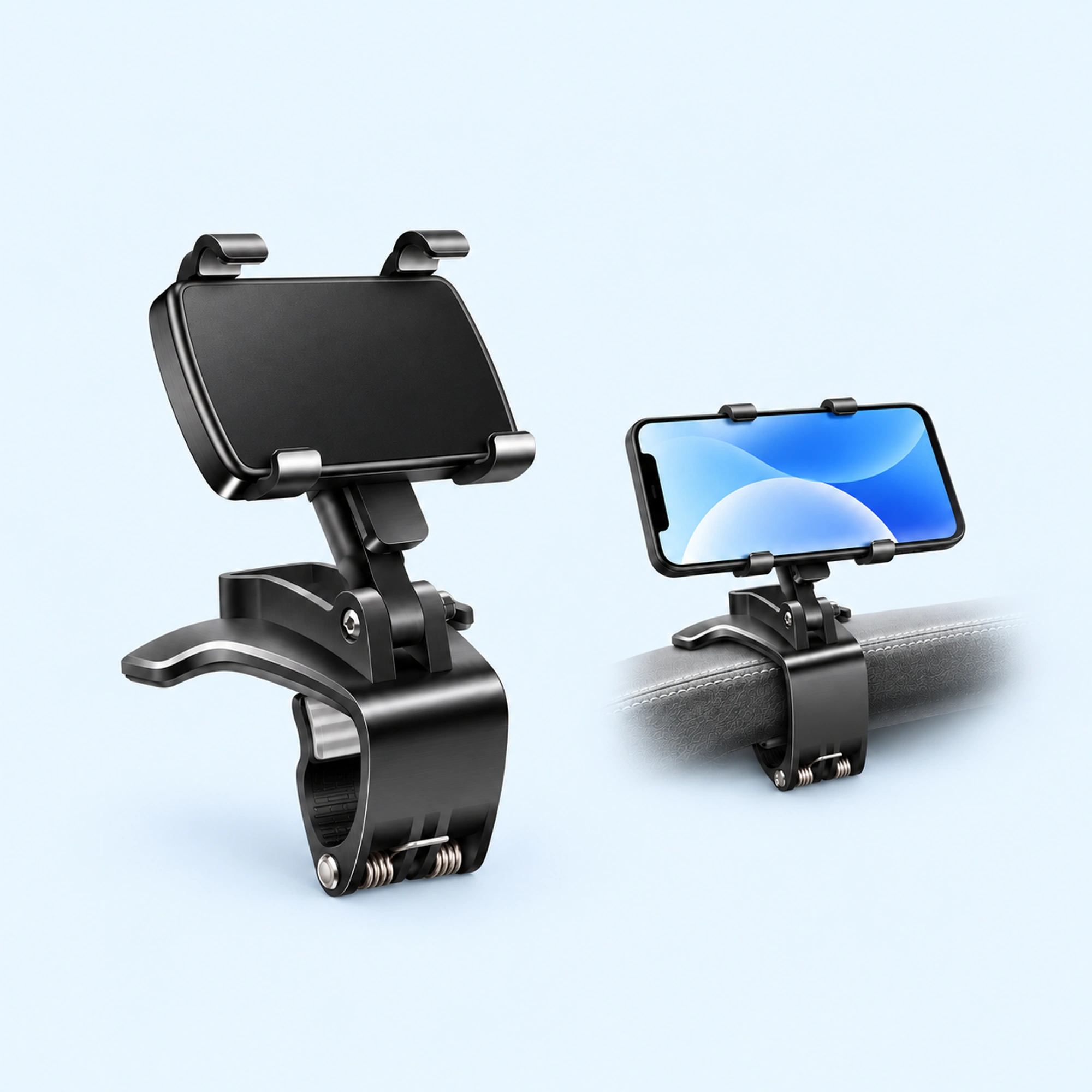 Dashboard Edge Clip Phone Holder | Dashboard Phone Holder
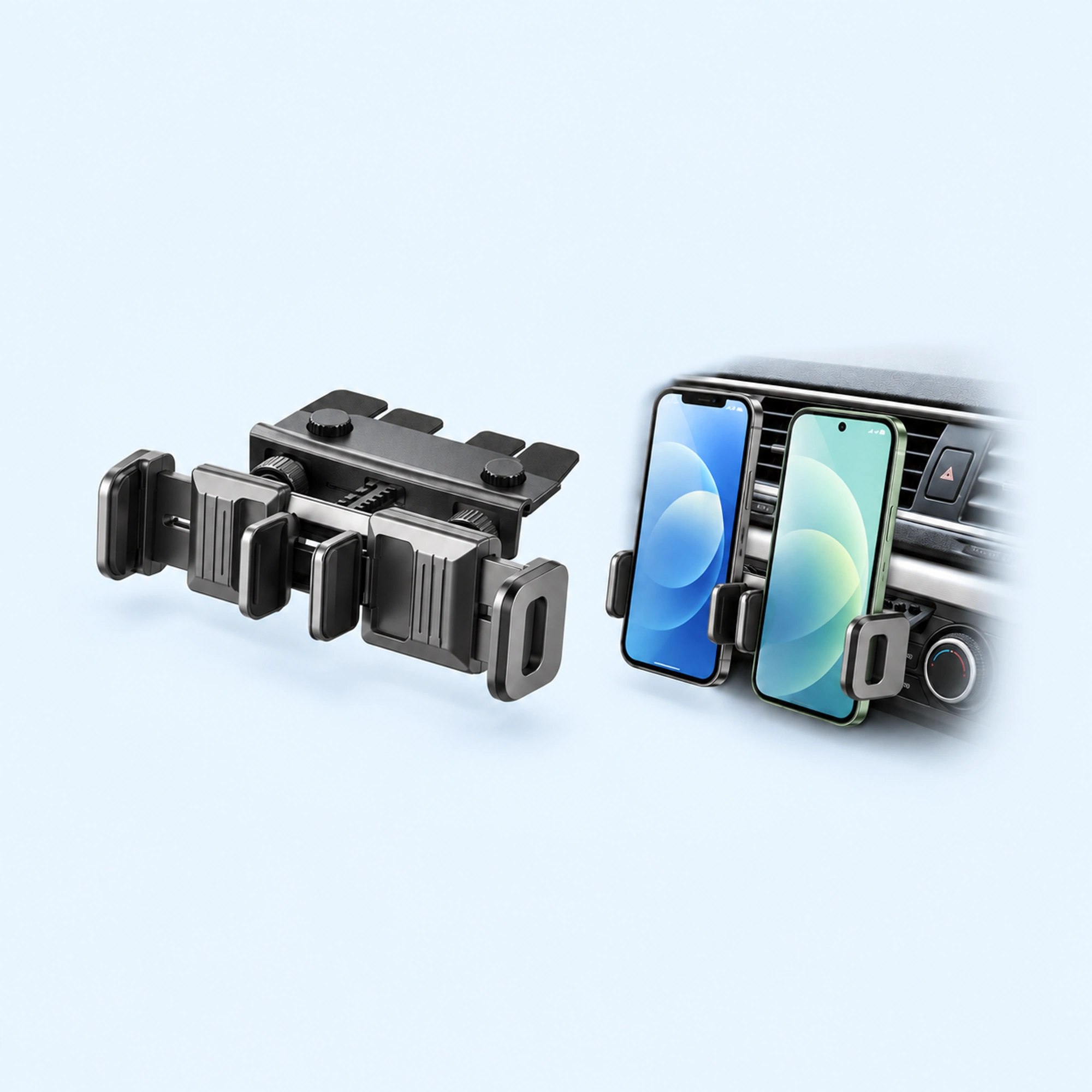 Dual-Cradle CD-Slot Phone Mount | Cd Phone Holder
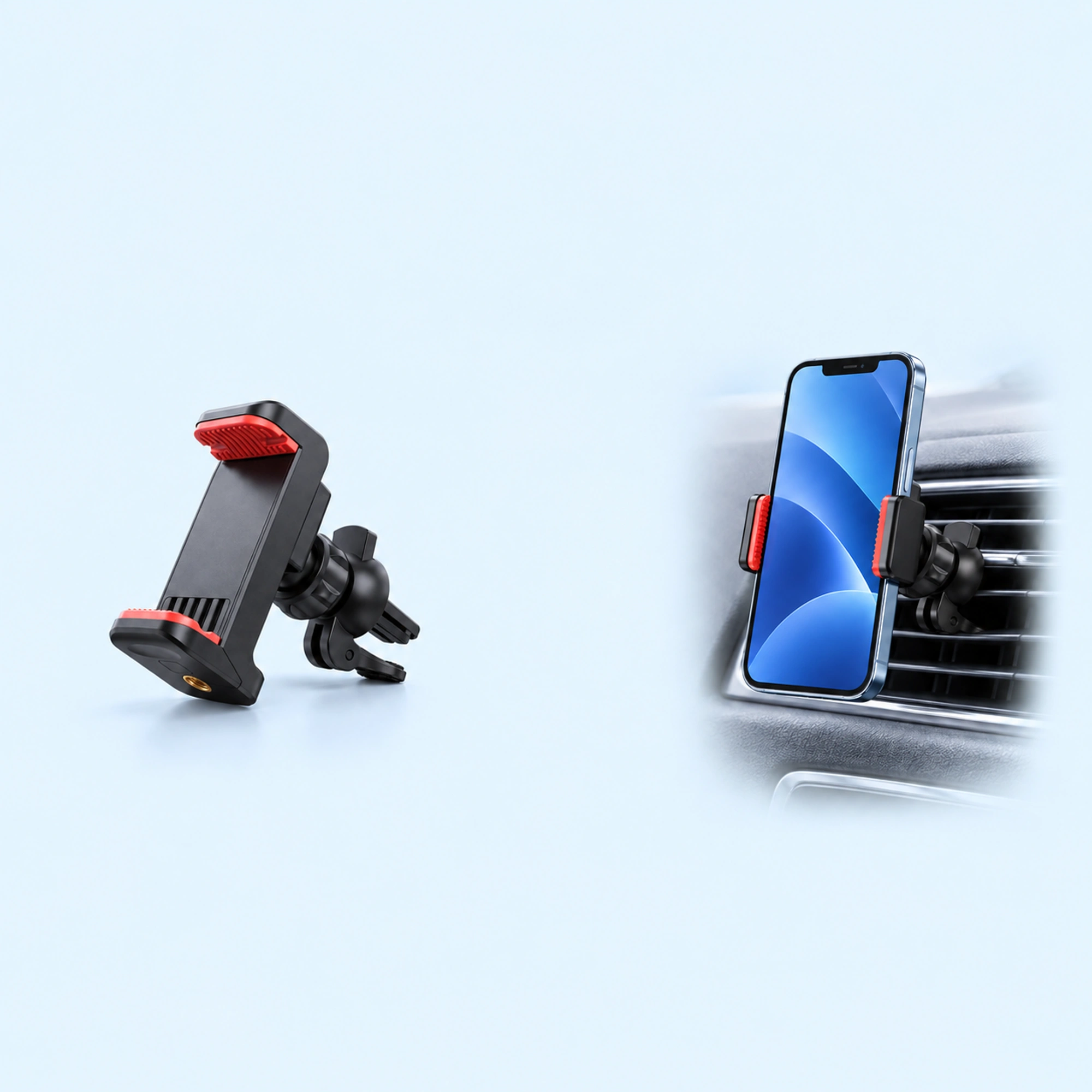 Red-Pad Compact Vent Phone Clip | Car Vent Phone Holder
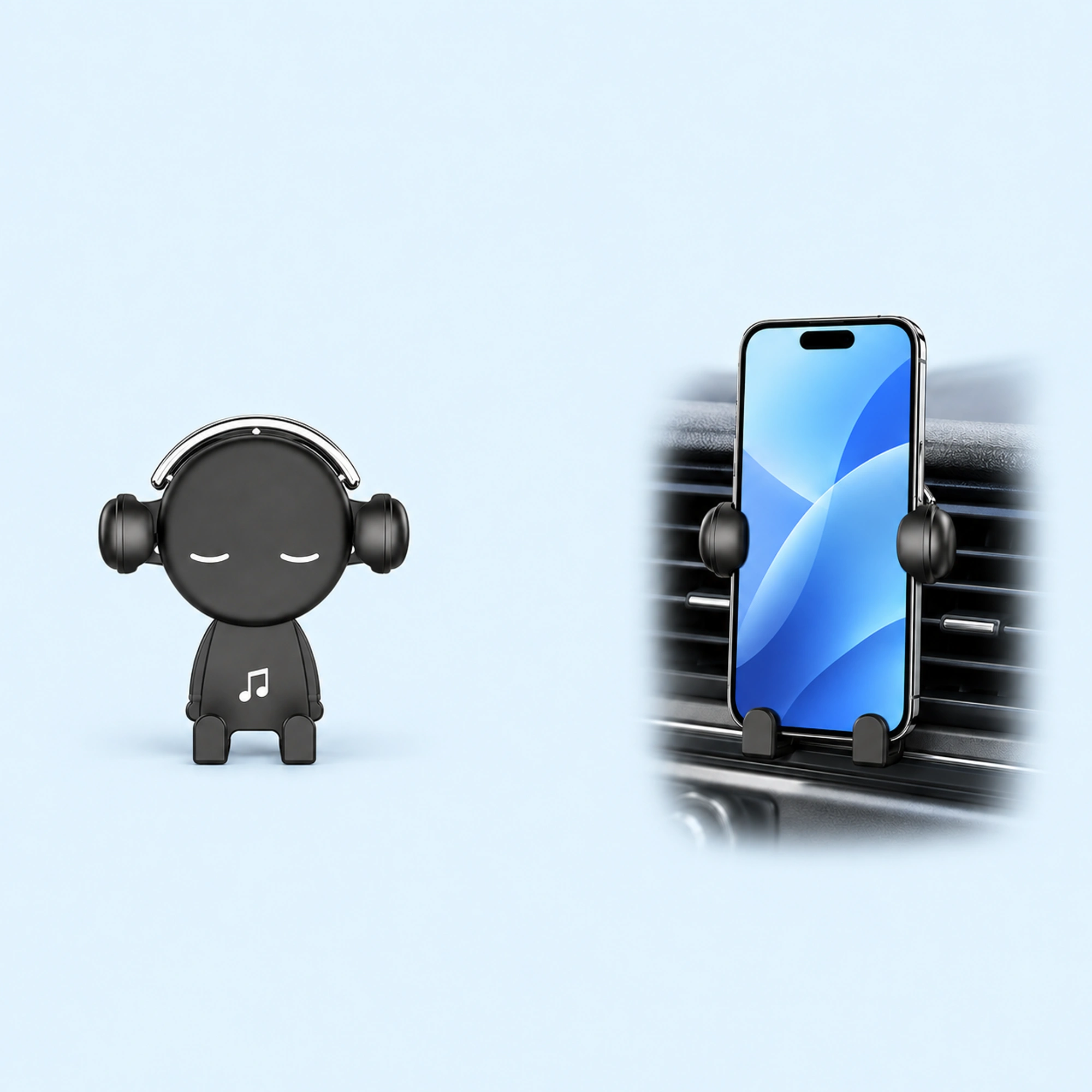 Music-Note Character Gravity Vent Holder | Gravity Phone Holder
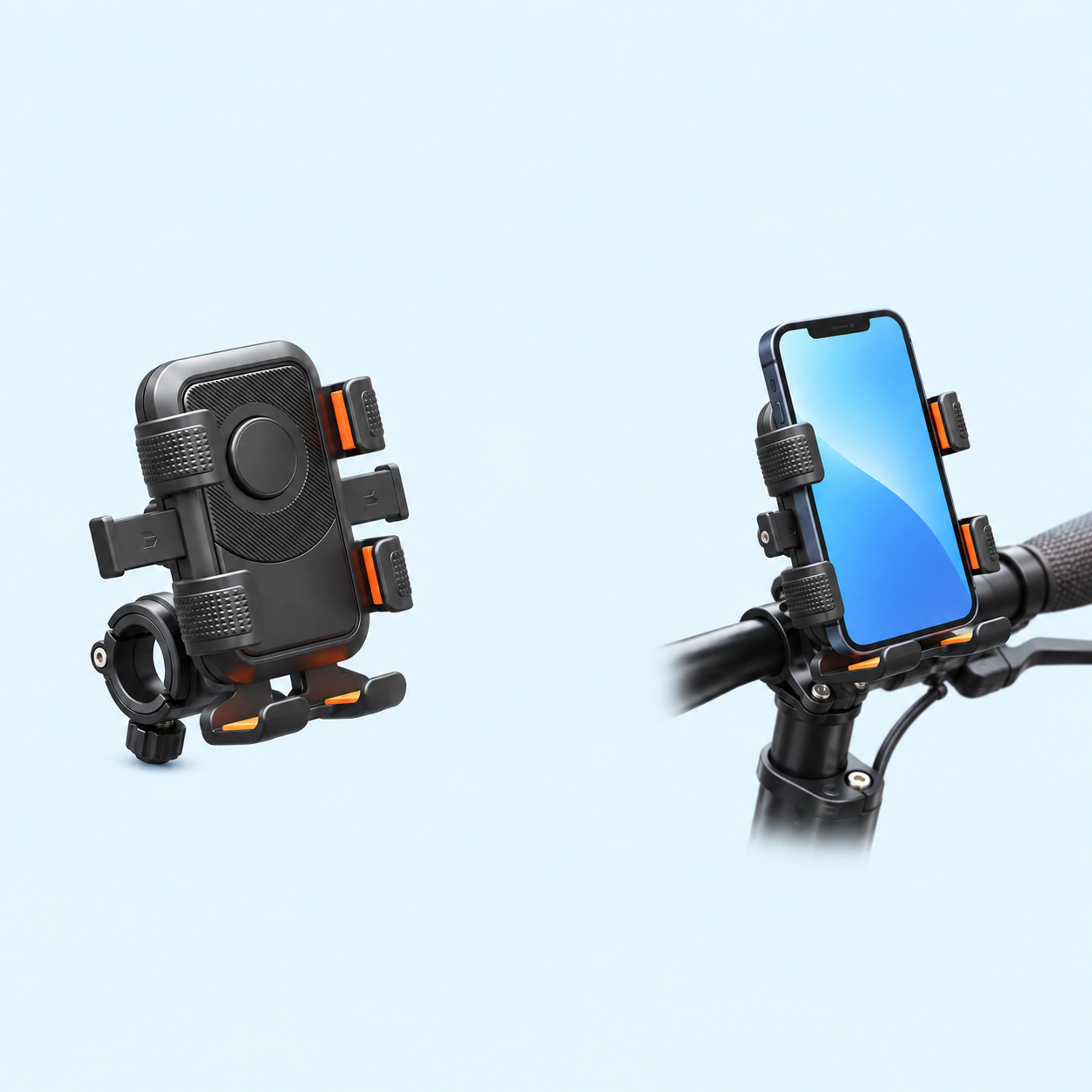 Black Six-Pad Handlebar Phone Cradle | Bike Handlebar Phone Mount
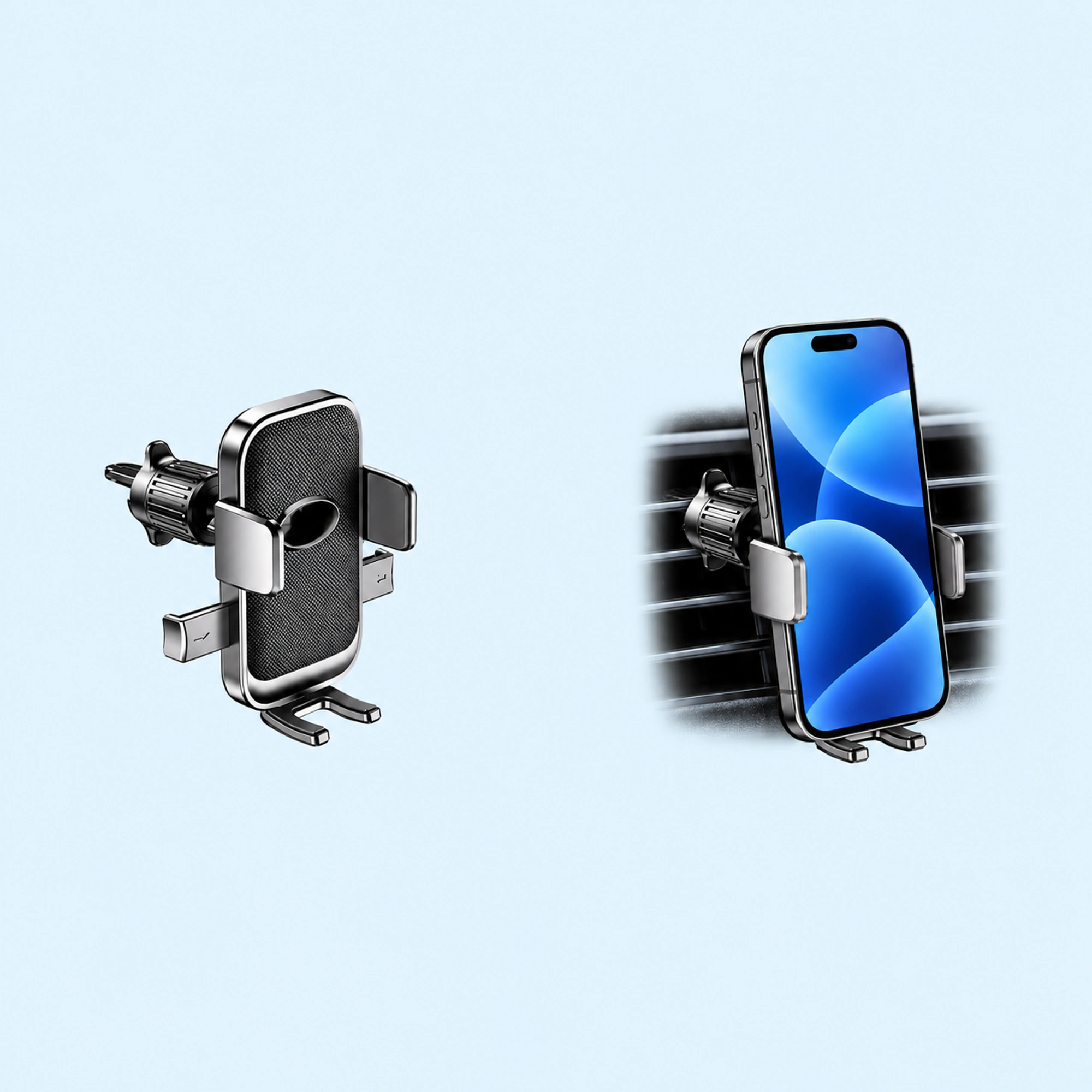 Oval-Opening Textured Vent Phone Cradle | Car Vent Phone Holder
A foldable phone stand asks one small frame to handle two opposite jobs. On your desk, it has to hold a cased smartphone steady at an angled tilt; in transit, it needs to fold small enough for a commuter bag or sleeve pocket. Choose a graphite metal frame with a rotating base and hinged support arm when your stand stays parked beside a keyboard, choose a four-arm X-frame with a notched rear support strut when you want positive tilt stops that fold into a pocketable bar, and choose a regular 80 g non-weighted linked-hinge stand when light landscape travel carry comes first.
We sell portable and desktop phone holders in our own shop, so read this guide as a sourced mechanical comparison of our three active foldable models paired with motion-control hinge documentation and first-hand Reddit user threads. Smartphones, protective cases, and display props shown in product photos are not included with any stand.
Friction Barrels vs Notched Rear Struts: Why Hinged Arms Sag or Lock
Every adjustable folding phone stand relies on either continuous rubbing friction inside a hinge barrel or a physical rear brace that drops into fixed slots. Those two mechanisms resist gravity in very different ways. One holds any micro-angle you set by hand, while the other clicks into discrete preset steps.
In motion-control hardware, Sugatsune UK notes that the torque moment of a friction hinge is attributed to two surfaces rubbing together to generate friction and limit movement. Engineering manufacturer Weber Knapp explains that friction hinges consist of a spring and a clutch pack or disc in the barrel of the hinge, which creates a known frictional force to hold a lid or screen open in different positions. Weber Knapp also highlights two practical engineering limits: the ideal torque for a product depends on center of gravity, weight, mounting position, and range of motion, and frictional components like monitor hinges wear out over time so less friction means less support.
Builders run into that physics limit fast when smooth pivot faces lack internal clutch resistance. In a phone-holder joint thread on r/BambuLabA1, maker u/Kubbino designed bolted arms for a table-clamped phone holder and found that tightening the bolt could not hold phone weight because the arm lowered under the load. Commenter u/prof_noballs pointed out that higher friction needs more surface area touching or easy locking angles, while u/Infamous-Amphibian-6 explained that commercial phone stands use torque hinges with inner high-friction inserts made of rubber and medium-hardness polymers so joints stay fixed yet articulated. Light portable frames often skip heavy torque barrels altogether and use physical stops: in a portable phone stand post on r/3Dprinting, maker u/Jessi_Kim_XOXO found flimsy portable phone stand parts frustrating and designed braces to prevent over-rotation of parts.
Keyboard-Side Swivel and Metal Backplate Support: Rotating Foldable Desk Phone Stand
For a dedicated phone stand for desk work next to an external keyboard or monitor, horizontal swivel and a broad backrest beat shirt-pocket slimness every day. When you can turn the base toward your chair, you stop dragging rubber pads across your desk mat each time you shift posture.
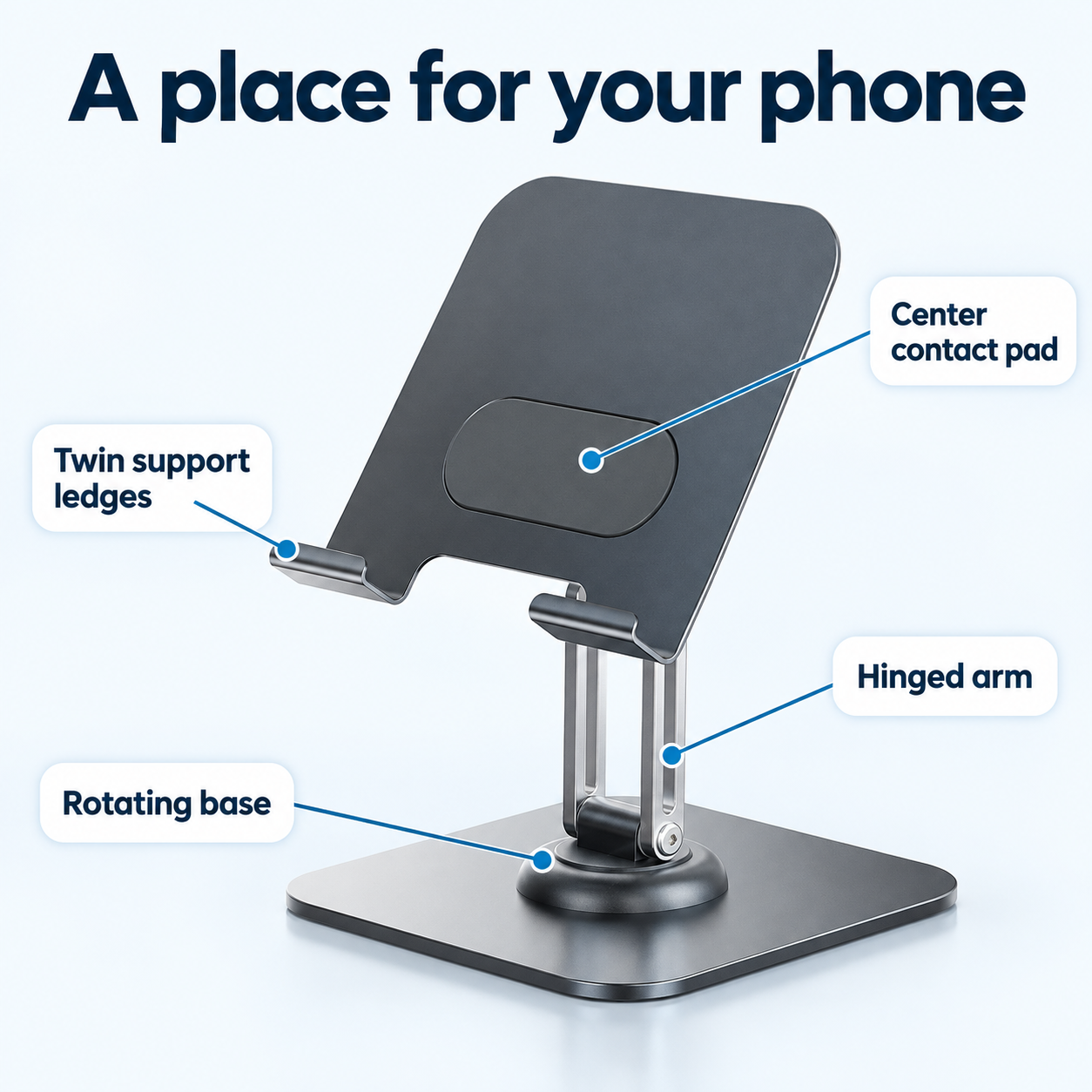
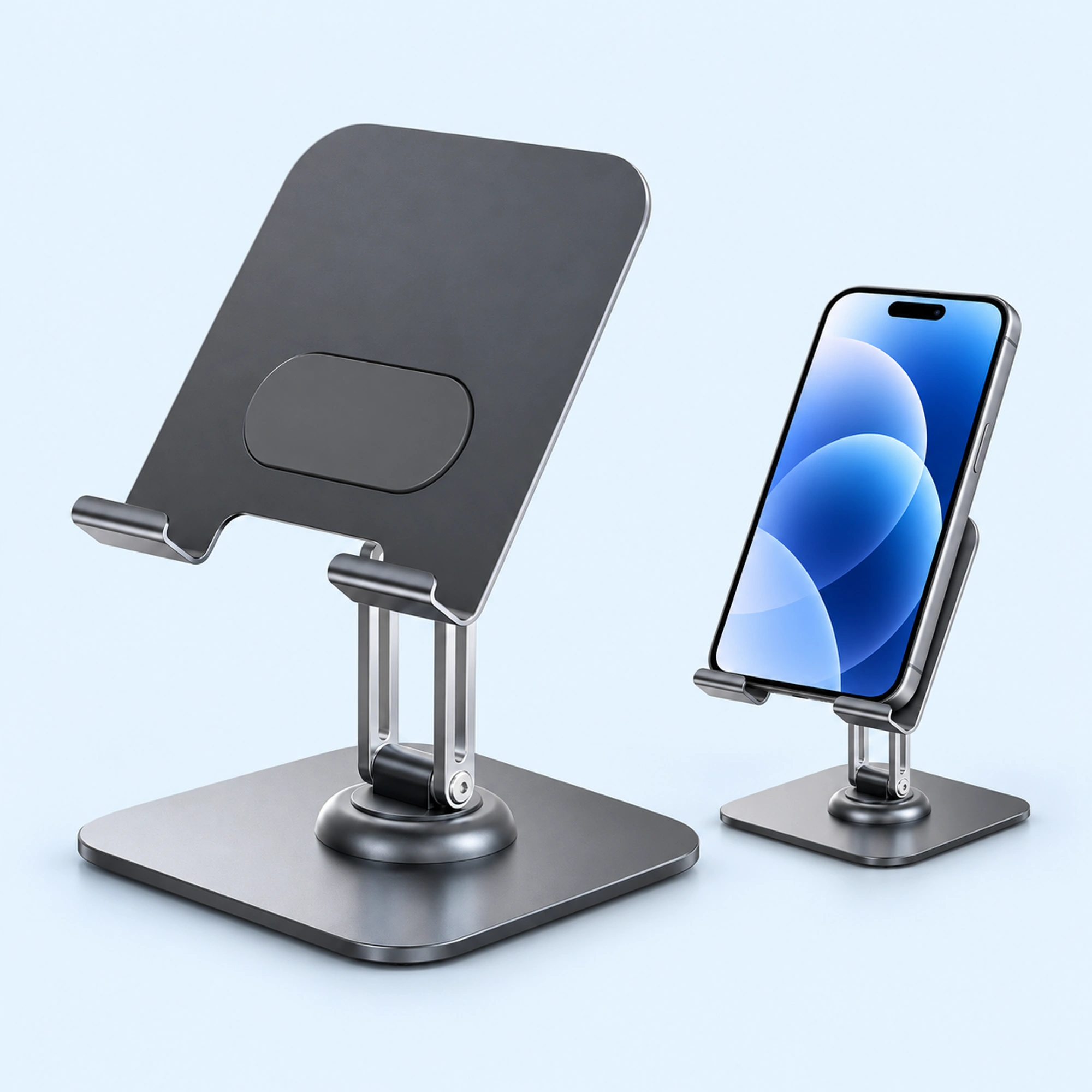
Our Rotating Foldable Desk Phone Stand ($16.99) uses a graphite metal frame that combines a rotating base, a hinged support arm, and a broad backplate with two lower ledges. Set up as a desktop phone stand at a home desk, study table, or workstation, it lets you adjust the hinged arm and turn the rotating phone stand base to suit your seating position. An open center span sits between the two lower ledges beneath the phone’s bottom edge, and the broad backplate supports the rear of your handset.
Our catalog listing leaves folded millimeter dimensions, lower ledge depth in millimeters, numeric hinge torque ratings, metal alloy grade, and gram weight unstated for this model. Seat your cased phone on the two lower ledges first and angle the hinged arm so the phone’s center of gravity stays above the rotating base. If your holder stays parked on one tabletop year-round and never folds into a bag, you can also compare fixed bamboo charging-cutout easels versus one-piece wood slots or check wooden phone stand groove width for thick protective cases.
X-Frame Reach and Pocketable Bar Collapse: Black Four-Arm Foldable Phone Stand
A wide circular metal base can feel awkward inside a slim tech organizer when you split your week between office desks, coworking tables, and train trays. That daily pack-down is where a collapsible phone stand with an inward-folding frame earns its space.
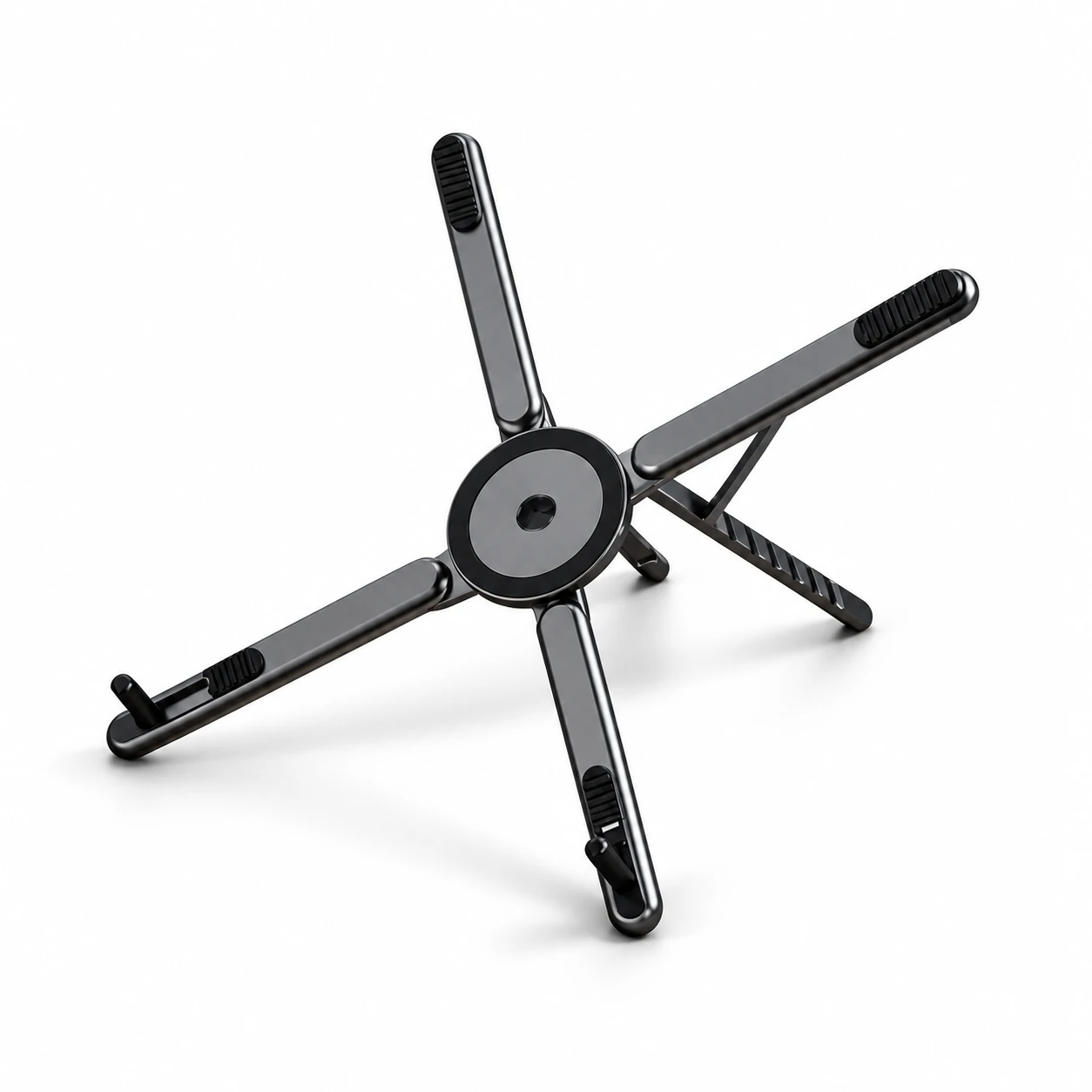
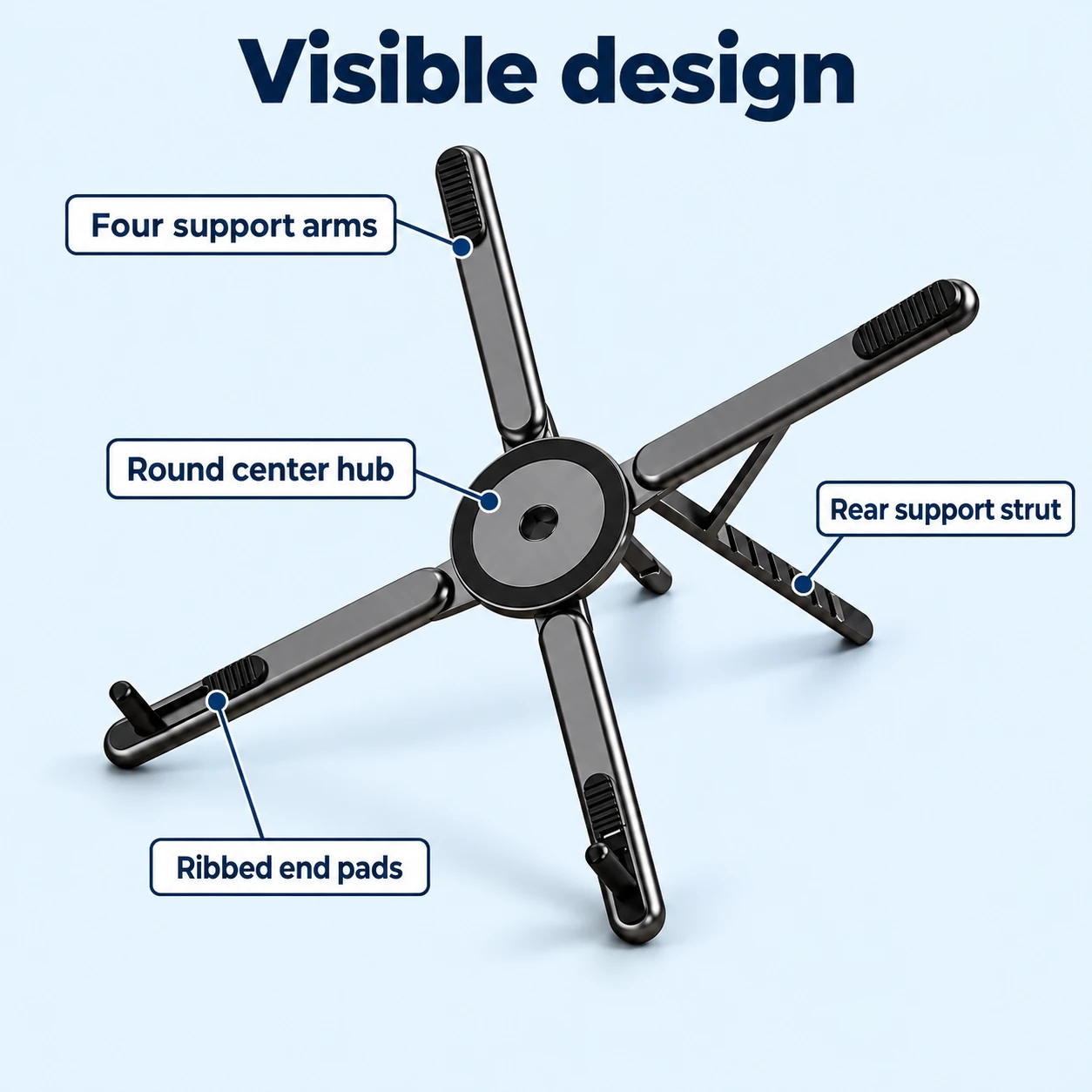
Our Black Four-Arm Foldable Phone Stand ($16.99) deploys an X-shaped four-point support structure from a round center hub to steady a smartphone on any flat surface. Four pivoting extension arms radiate outward to cradle small phones or wider mobile devices. Grooved silicone grips on each arm tip cushion contact points, front retaining hooks block forward slip, and rubber feet underneath keep the frame planted across polished office desks.
Behind the central hub, a multi-position rear strut locks into base notches so you can pick a fixed reading tilt. Those mechanical notches block backward over-rotation without relying on barrel friction alone, though fixed slots limit you to preset angles; on a Multitasky foldable phone holder product page, one buyer noted that a flat-folding foldable phone holder stayed tilted back even on its closest setting. At the end of a work session, all four arms and the rear brace pivot inward to turn the frame into a slim pocketable bar that works well as a compact phone stand or pocket phone stand. Folded bar millimeter dimensions, front retaining hook depth in millimeters, and gram weight are unpublished in our catalog, so confirm phone and case fit, contact points, and available desk space before ordering.
Featherweight 80 g Landscape Carry Without a Weight Plate: Blue and Yellow Studded Folding Phone Stand
Outer sleeve pockets leave almost no room for sharp corners or heavy steel ballast when you pack a travel phone stand. In an on-the-go setup post on r/kindle, reader u/socialissuecatlady described sitting and waiting during a family member’s medical procedure with a slim folding phone stand that has multiple angles and collapses flat enough to fit easily into the front pocket of a padded kindle sleeve for transport. General roundups such as TechGearLab’s tested phone stand guide point out the same storage split: their top-ranked fixed aluminum desk stand is not foldable and is harder to store, which pushes mobile workers toward flat-stowing travel frames.
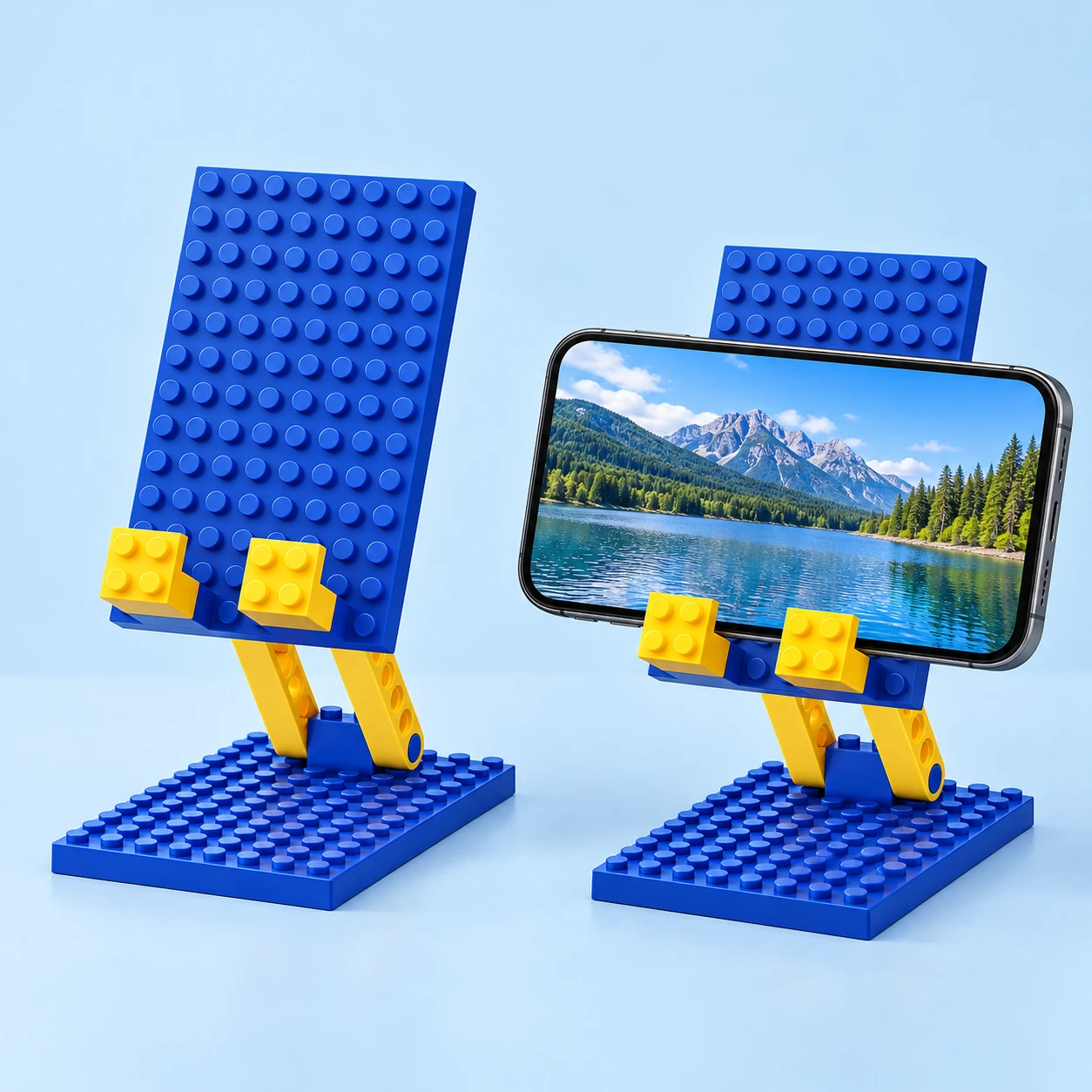
Our Blue and Yellow Studded Folding Phone Stand ($19.99) is a dark-blue portable phone stand built with raised stud patterns, paired yellow hinge links, and two chunky yellow front stops. Its linked structure folds down for bag carry, and the listing’s use illustration follows a landscape phone-support arrangement for horizontal video or sideways desk reference.
Check two catalog details before checkout. First, this item is the regular 80 g (0.08 kg) folding version without the weighted sibling’s added plate, so it keeps bag mass low without extra metal ballast. Second, the listing includes one complete dark-blue foldable cell phone stand; the product image shows two views of the same item, not a two-pack. Folded millimeter dimensions and inner millimeter clearance behind the two chunky yellow front stops remain unpublished in our catalog, so check actual phone fit and placement on a flat surface before use.
Side-by-Side Comparison and Fit Checks Before Packing or Desk Placement
| Stand Model | Joint & Tilt Mechanism | Folded Carry Profile | Cradle Contact & Orientation | Published Weight & Dimensions | Catalog Price |
|---|---|---|---|---|---|
| Rotating Foldable Desk Phone Stand | Hinged metal support arm on a rotating desktop base | Folds down on hinged metal arm; exact folded mm unstated | Broad backplate with two lower ledges for desktop seating alignment | Graphite metal frame; weight and mm dimensions unstated | $16.99 |
| Black Four-Arm Foldable Phone Stand | Four pivoting X-frame arms plus multi-position rear strut locking into base notches | All four arms and rear brace pivot inward into a slim pocketable bar | Grooved silicone arm-tip grips, front retaining hooks, rubber feet underneath | Weight and folded bar mm dimensions unstated | $16.99 |
| Blue and Yellow Studded Folding Phone Stand | Paired yellow hinge links on a dark-blue studded folding body | Linked structure folds down without an added weight plate | Two chunky yellow front stops; illustrated in landscape phone arrangement | Regular 80 g (0.08 kg) non-weighted version; mm dimensions unstated | $19.99 |
Run three quick hardware checks to match your cased phone and bag pocket to the right frame:
- Match the joint lock to how often you tap the glass. Free-stop hinged metal arms like the Rotating Foldable Desk Phone Stand let you fine-tune viewing pitch beside a keyboard as long as the arm angle keeps your phone’s center of gravity over the rotating base, whereas the notched rear strut on the Black Four-Arm Foldable Phone Stand gives you positive mechanical angle steps against backward over-rotation.
- Trade off sleeve-pocket slimness against tabletop mass. The inward-folding bar of the Black Four-Arm Foldable Phone Stand and the regular 80 g non-weighted Blue and Yellow Studded Folding Phone Stand ride lighter in a tech pouch or padded sleeve pocket than a rotating metal desktop frame, though light travel frames ask for flat table surfaces and gentler screen taps.
- Check front ledge, hook, or stop clearance against your everyday case. None of the three catalog listings publish front lip or hook depth in millimeters, so rest your cased phone against the two lower ledges, front retaining hooks, or chunky yellow front stops first to make sure the bottom edge seats cleanly below the lip.
Frequently Asked Questions
Why do some foldable phone stands slowly sag under a phone’s weight, and how does a notched rear strut differ from a friction hinge?
A friction hinge holds stepless angles through internal rubbing surfaces or a spring-and-disc clutch barrel, which Weber Knapp notes depends on load weight and center of gravity and loses holding support over time as frictional components wear. In Reddit maker threads on r/BambuLabA1 and r/3Dprinting, builders also report that smooth bolted joints lower under phone weight without high-friction torque inserts and that light portable stands benefit from braces that stop over-rotation. By comparison, the multi-position rear strut on the Black Four-Arm Foldable Phone Stand locks mechanically into discrete base notches to block backward slip at preset tilt angles, while the Rotating Foldable Desk Phone Stand uses a hinged metal support arm for continuous desktop adjustment.
Which foldable phone stand shape packs easiest into a padded tablet or laptop sleeve pocket without adding weight?
Commuters packing slim sleeve pockets favor frames that fold into a narrow bar or a flat non-weighted profile, much like the r/kindle reader who carried a slim multi-angle folding stand inside the front pocket of a padded kindle sleeve. In our catalog, the Black Four-Arm Foldable Phone Stand pivots all four extension arms and its rear brace inward into a slim pocketable bar, and the Blue and Yellow Studded Folding Phone Stand folds down at a listed 80 g (0.08 kg) regular weight without an added weighting plate for landscape viewing. The Rotating Foldable Desk Phone Stand trades ultra-flat pocket carry for a broader graphite metal backplate and rotating base beside a keyboard; folded millimeter dimensions remain unpublished across all three listings.