 Blue Four-Position Folding Desk Stand | Adjustable Foldable Phone Stand
 Cream Round-Base Folding Phone Stand | Foldable Phone Stand
 Dashboard Edge Clip Phone Holder | Dashboard Phone Holder
 Dual-Cradle CD-Slot Phone Mount | Cd Phone Holder
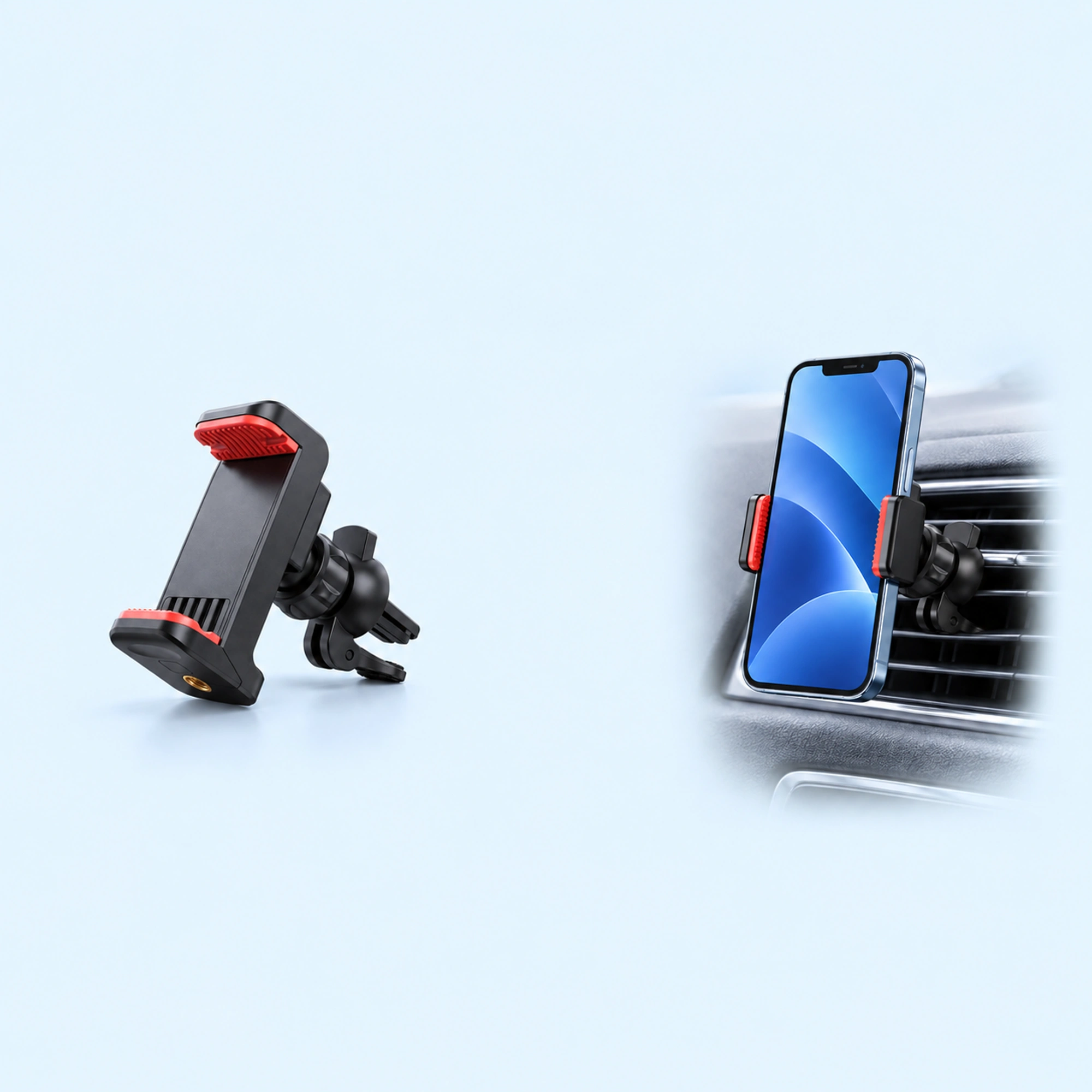 Red-Pad Compact Vent Phone Clip | Car Vent Phone Holder
 Music-Note Character Gravity Vent Holder | Gravity Phone Holder
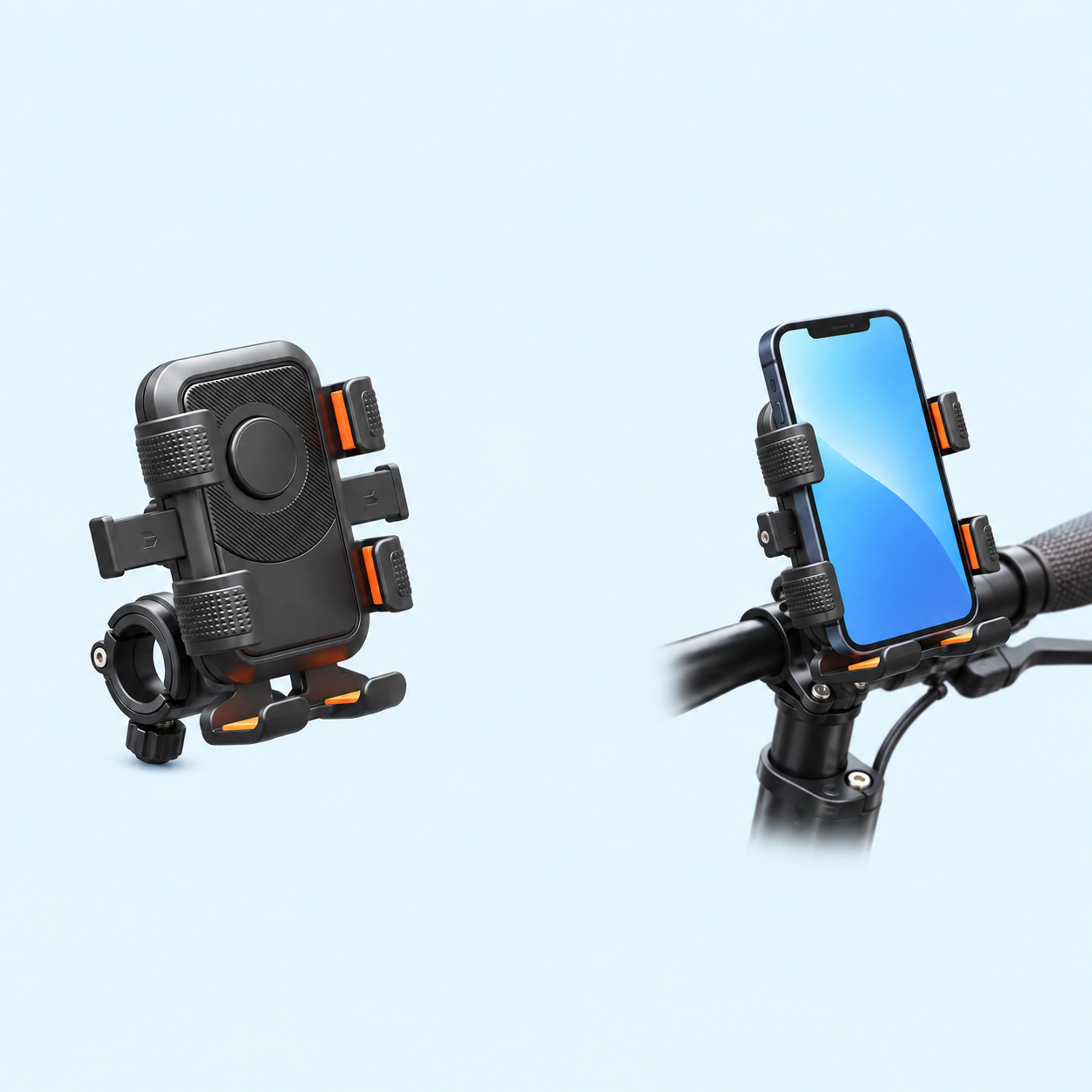 Black Six-Pad Handlebar Phone Cradle | Bike Handlebar Phone Mount
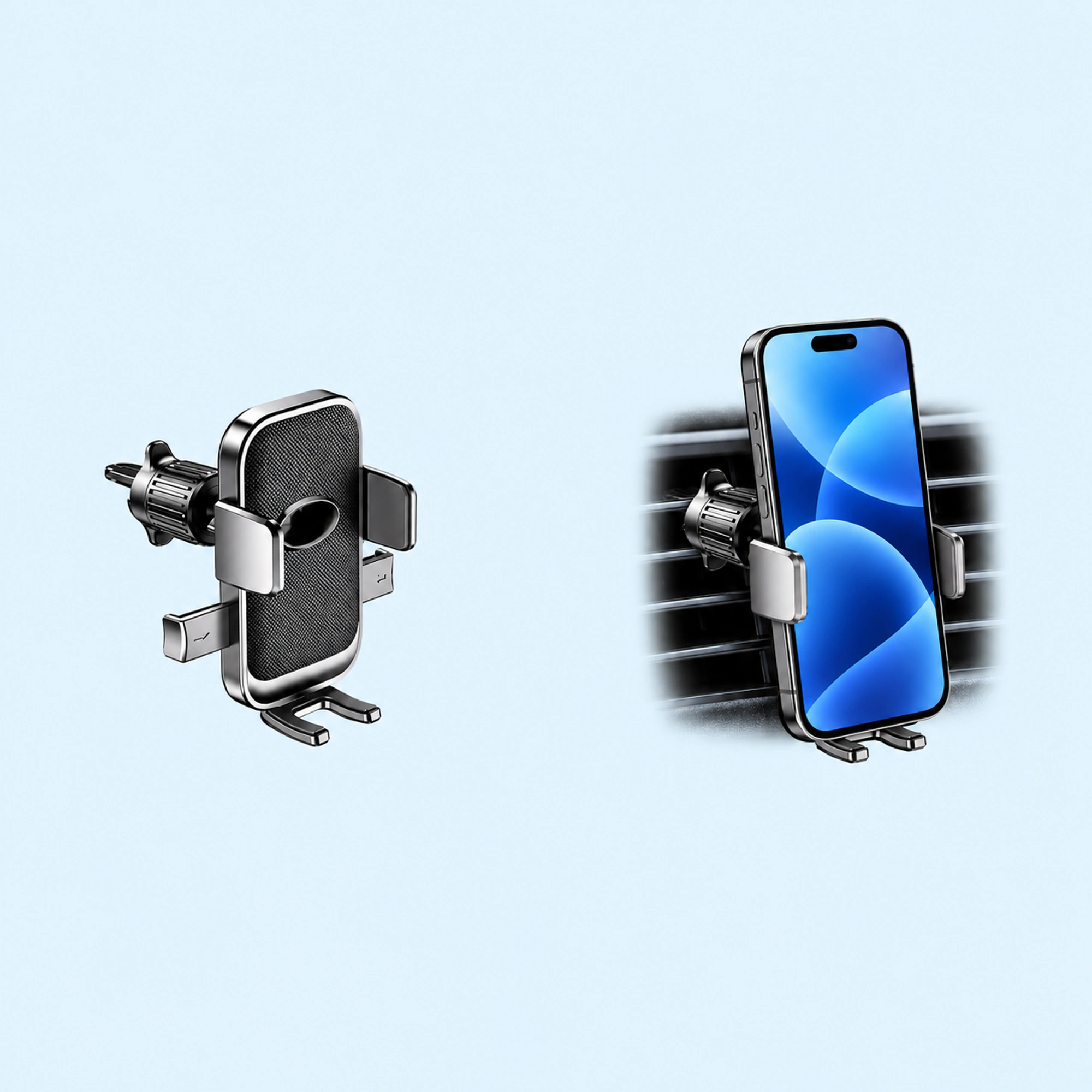 Oval-Opening Textured Vent Phone Cradle | Car Vent Phone Holder
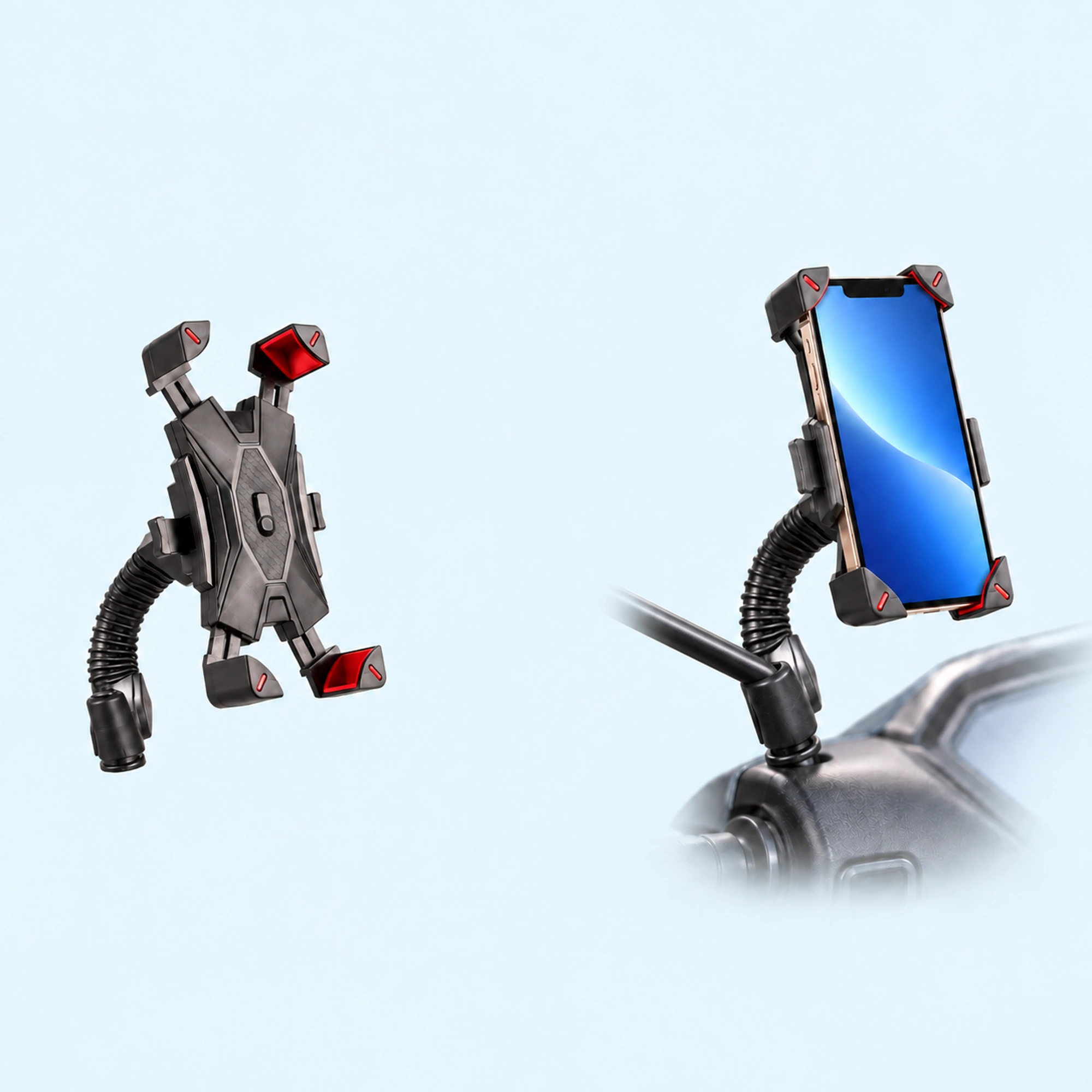
Clip-on sportbike bars and plastic-shrouded scooter handlebars leave zero bare round tubing for a standard bar clamp. Choosing between a motorcycle fork stem phone mount and a mirror-point cradle comes down to two spots on your cockpit: an open cylindrical bore in the center of your triple tree, or an exposed threaded mirror stalk above the bodywork.
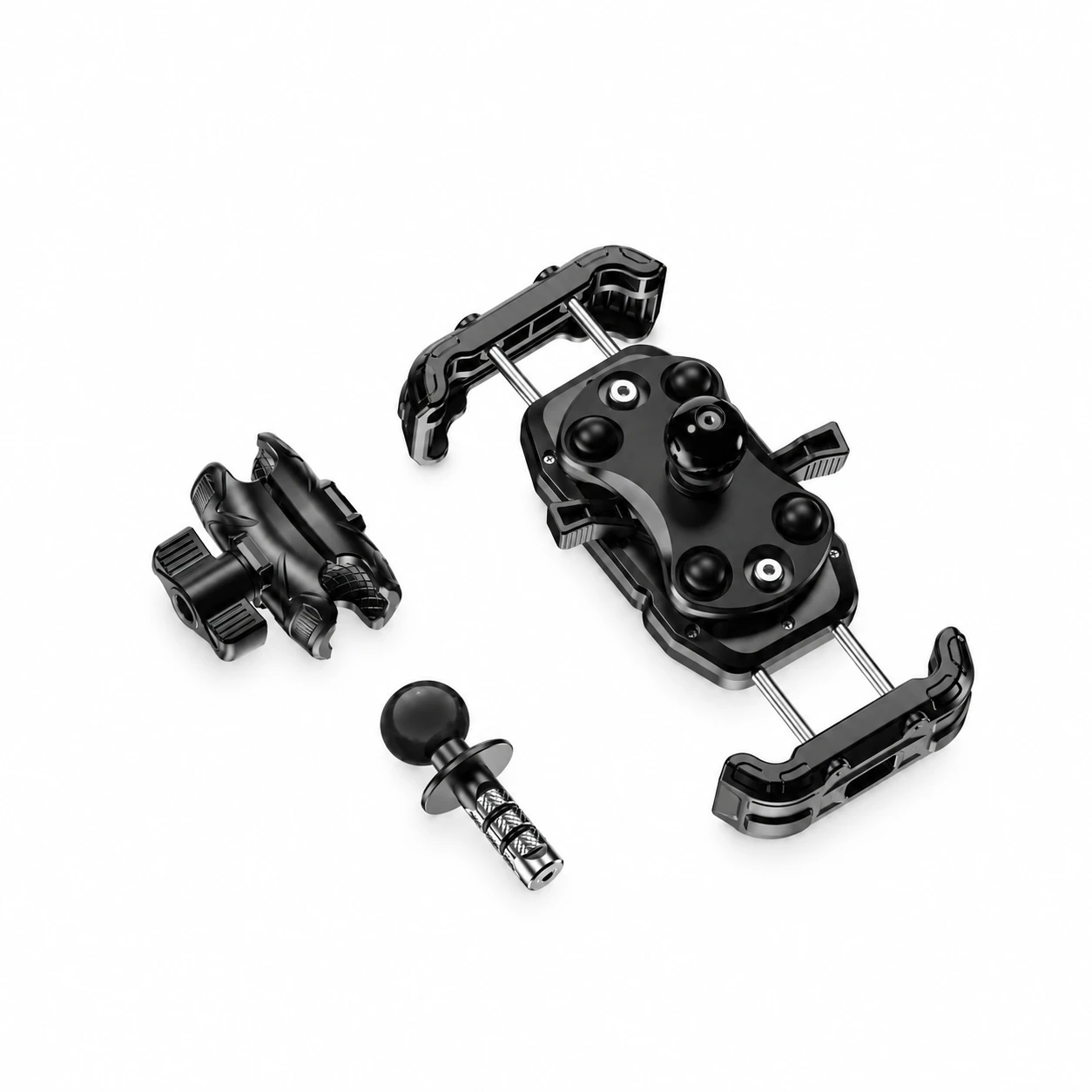
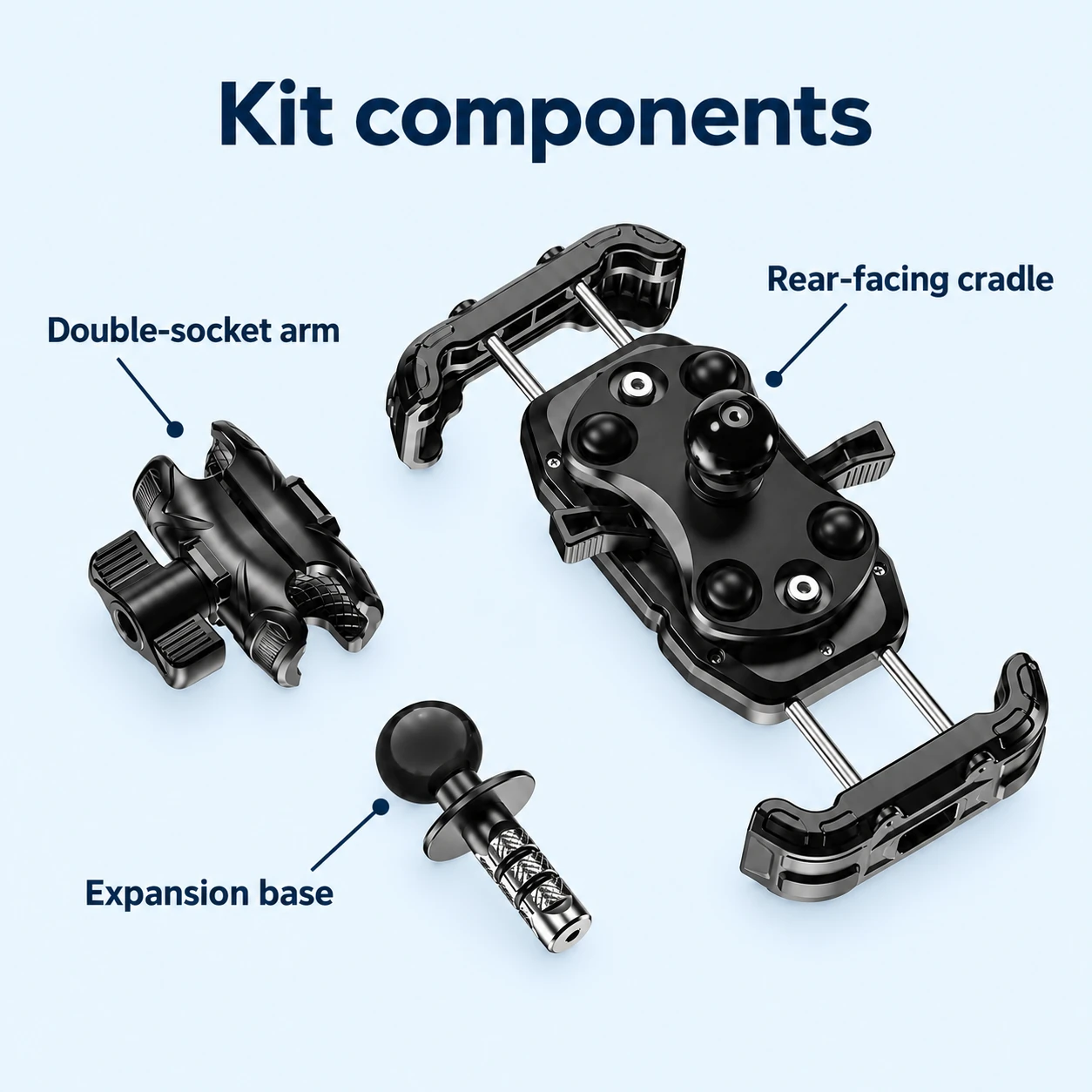
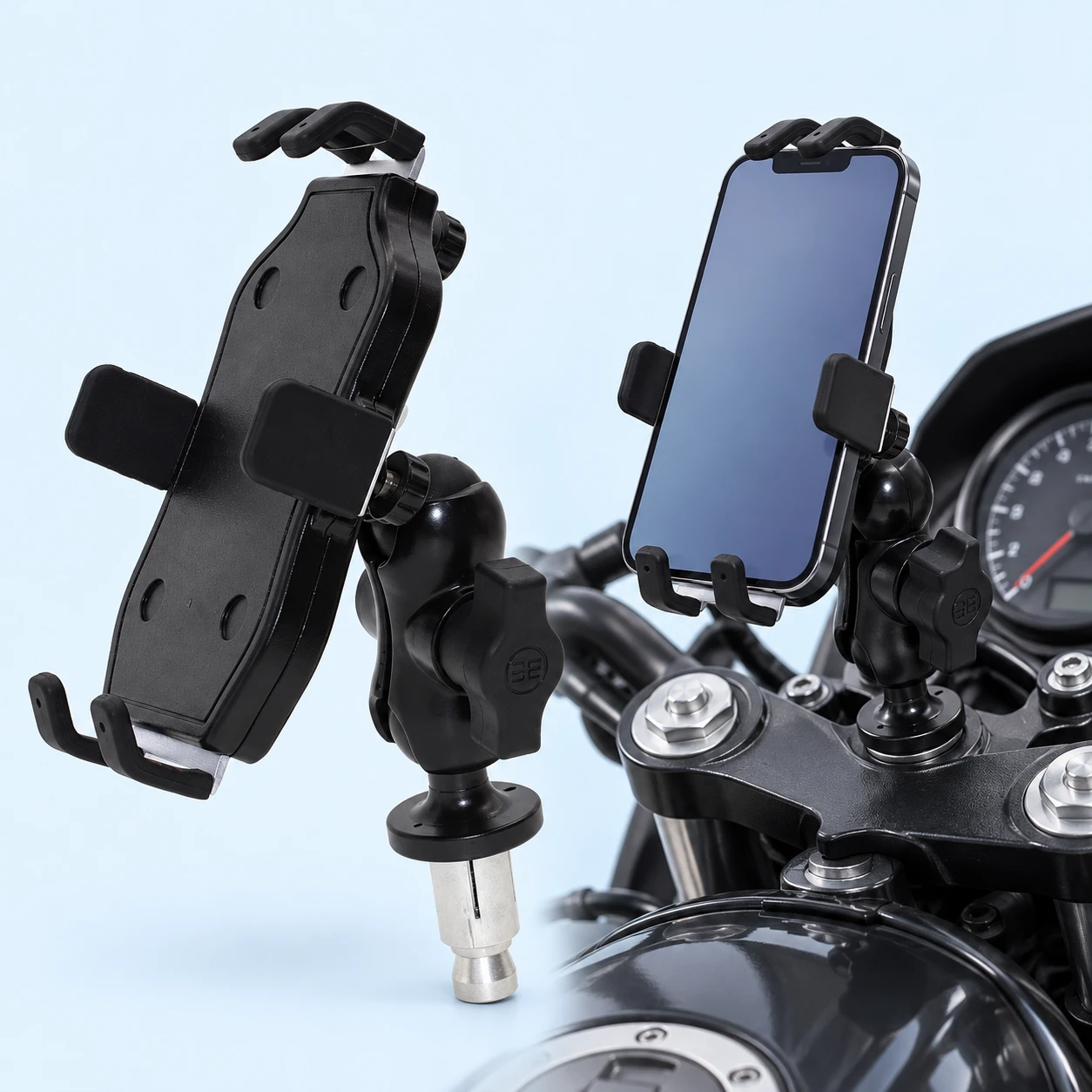
Riders with an open, straight-walled steering stem bore can choose between two expanding stem setups at Holderphone. The Motorcycle Fork Stem Phone Mount Kit with Ball Arm ($19.99) is an unassembled three-piece kit pairing an expansion base and a separate double-socket arm with a rear-facing black cradle and four rubber-damped corner hooks. For tighter sportbike cockpits that favor minimal stack height, the Black Six-Contact Fork-Stem Phone Mount ($20.99) combines a silver expanding fork-stem anchor and a short ball-joint arm with a black six-contact phone cradle. When a solid hex steering nut, a step-down stem bore, or molded scooter plastic blocks the steering column, the Angular Red-Corner Mirror Phone Cradle ($24.99) anchors its lower mounting hardware at a compatible mirror mounting point and grips your phone in four deep red-lined corner cups.
When Bare Handlebar Clamps Fail: Clip-On Triple Trees vs Shrouded Scooter Cowls
Bring a standard handlebar collar up to a faired supersport bike or a step-through city scooter and you run out of clamping space right away. Short clip-on stub bars bolt straight to the upper fork legs right next to master cylinders and switchgear housings. Riders whose bikes still expose a straight section of round tubing between the controls can start with our eight-claw U-bolt vs split-collar handlebar mount comparison. When no bare bar section exists, your two solid mounting points are the center of the upper triple tree and the mirror base.
Sportbike riders favor the center of the steering head because it tucks the screen behind the windscreen and keeps cockpit weight centered. According to SP Connect Moto Stem Mount specifications ($74.99), hollow-stem bases target supersport motorbikes with stub handlebars, while RAM Mounts RAM-B-176-A-UN7U documentation ($76.49) specifies anchoring inside the cylindrical bore wall of hollow fork stems. In an r/Ninja650 stem mount discussion, one rider noted that center-stem placement keeps the phone centered and protected from wind, and a commenter in an r/Ninja650 fork-stem alternatives thread reported a year and a half of trouble-free riding across multiple phones on an adjustable stem cradle.
Three cockpit layouts rule out an expanding fork stem mount right away. Some motorcycles cap the upper triple tree with a closed hex nut instead of an open tube. Others machine an internal step inside the steering tube that prevents an expansion wedge from seating against parallel walls. Step-through commuters and mopeds add a third obstacle: painted plastic shells cover both the steering head and the handlebar tubing, so a routine scooter phone holder search turns into a mirror-thread check. In an r/scooters phone holders discussion, a Buddy scooter owner struggling to find a working setup heard from another rider running a mirror stem mount with a hole for the mirror to thread through.
Hollow Triple-Tree Anchors: Double-Socket Arm Reach vs Low-Profile Six-Contact Cradles
An expanding stem phone mount acts like an internal wedge plug inside the steering head tube. Turning the center bolt pulls a tapered cone or split sleeve outward until it locks against the bore wall. Reference manufacturer pages illustrate why internal tube geometry matters so much: SP Connect Moto Stem Mount lists compatibility with 12 to 30 mm steering stem diameters, while RAM Mounts RAM-B-342U specifies cylindrical bore walls from 12 mm to 38 mm (0.5 in to 1.49 in) tightened via an M5 x 60 mm machine screw. Holderphone’s two fork-stem catalog listings do not publish millimeter bore ranges or minimum insertion depths, so check your open stem bore directly while the bike is parked.
Cylindrical Bore Walls, Step-Down Tubes, and Ignition Key Overhang
Point a flashlight straight down your open steering nut when sizing up a fork stem phone mount. Any internal step or taper inside that tube changes where an expansion plug can grip. In the r/Ninja650 stem mount discussion, the original poster noted that their Quad Lock stem mount could become loose due to the shape of the stem, and another commenter replied that the brand does not sell a mount made for a step-down fork stem.
Tall phones create a second clearance headache just ahead of the fuel tank, since many sportbikes put the ignition barrel right in front of the steering nut. In that same r/Ninja650 stem mount discussion, the rider noted running a big phone (an S23U and later an S26U) vertically for directions and finding that the stem mount sometimes got in the way of the key. How much arm reach sits between the stem plug and the cradle determines whether a tall phone clears your ignition key.
Three-Piece Kit Offset vs Compact Short-Arm Footprint
Arm reach is the main mechanical difference between Holderphone’s two hollow-stem mounts. The Motorcycle Fork Stem Phone Mount Kit with Ball Arm ($19.99) ships as three unassembled components: an expansion base that tightens inside a cylindrical triple-tree stem hole, a separate double-socket arm, and a rear-facing black phone cradle equipped with four rubber-damped corner hooks. That dual ball-and-socket link sits between the stem base and the spring-loaded cradle, letting you lift the phone higher or tilt it back clear of the ignition switch and dash. Assembly is required before fitting the kit to your parked bike.
Riders whose ignition barrel sits well clear of the triple-tree nut often prefer a lower, tighter profile under the windscreen. The Black Six-Contact Fork-Stem Phone Mount ($20.99) pairs a silver expanding fork-stem anchor with a short ball-joint arm and a black six-contact phone cradle. Its six-contact perimeter holds the sides and lower corners of a cased handset closer to the upper yoke without adding a separate intermediate socket arm. As the catalog listing notes, install and adjust the mount only while your motorcycle is stationary.
Mirror-Point Mounting When Stem Nuts Are Solid or Bodywork Covers the Bars
When a closed steering nut or molded scooter cowling eliminates the center stem, the mirror stalk becomes your cleanest structural bolt point for a motorcycle mirror phone mount or enclosed-bar scooter phone mount. The Angular Red-Corner Mirror Phone Cradle ($24.99, dark gray and red variant) secures its lower mounting hardware at a compatible mirror mounting point where bar clamps have nowhere to grip. Above the flexible ribbed lower arm, an angular ribbed backplate with a central contact button and four deep red-lined corner cups holds all four corners of your smartphone.
Fitting a mirror-point cradle on a plastic-shrouded scooter takes two quick hardware checks at the stalk. First, you cannot slide a closed lower eyelet onto an installed mirror; as a commenter in an r/scooters mirror screw fitment thread explained, you need to unscrew the mirror and place the mount over the threads before threading the mirror back down. Reference angled bolt-head adapter bases such as the RAM Mounts RAM-B-272U measure 1.18 in x 0.75 in x 0.2 in with a 9 mm hole (offered in angled 9 mm or flat 11 mm base options) for attaching to a motorcycle mirror frame. Holderphone’s catalog listing for the Angular Red-Corner Mirror Phone Cradle does not specify its lower hole diameter in millimeters, so verify bolt clearance on your mirror stalk while parked.
Second, look at where the mirror threads meet the bodywork. In that same r/scooters mirror screw fitment thread, a scooter owner reported not having enough room on the mirror screw for the mount while the bracket clashed with the plastic shell of the scooter. Another rider in the thread shared a clean hardware shop fix: adding a 10 mm screw nut for the mirror raises the mounting height above the plastic cowl so the bracket tab seats flat without scraping painted panels. Leave mirror-point brackets off faired sportbikes whose mirrors bolt through the upper fairing with twin studs instead of a single threaded handlebar stalk.
Cockpit Anchor Matrix: Two Expanding Fork-Stem Mounts vs One Mirror-Point Cradle
| Cockpit Specification | Motorcycle Fork Stem Phone Mount Kit with Ball Arm | Black Six-Contact Fork-Stem Phone Mount | Angular Red-Corner Mirror Phone Cradle |
|---|---|---|---|
| Catalog Price | $19.99 | $20.99 | $24.99 |
| Mounting Point | Hollow cylindrical center stem of triple tree | Compatible hollow motorcycle fork-stem opening | Compatible mirror mounting point |
| Anchor Hardware | Expansion plug base | Silver expanding fork-stem anchor | Lower mirror-point mounting hardware |
| Arm Articulation | Separate double-socket ball arm | Short ball-joint arm | Flexible ribbed lower arm |
| Cradle Retention | Rear-facing black cradle with four rubber-damped corner hooks | Black six-contact phone cradle | Four deep red-lined corner cups, angular ribbed backplate, central contact button |
| Assembly State | Ships as three unassembled components; assembly required | Complete set for stationary installation | Single cradle unit with lower mirror arm (dark gray and red) |
| Published Bore or Bolt Millimeters | Not specified in catalog listing | Not specified in catalog listing | Not specified in catalog listing |
Driveway Clearance Checks and Engine Vibration Safeguards Before Riding
Because none of these three Holderphone listings publishes millimeter stem bore limits, bolt-hole diameters, or phone width caps, run four stationary checks on your parked motorcycle or scooter before riding:
- Inspect the open triple-tree bore or mirror stalk threads first. Confirm a hollow fork stem has straight cylindrical walls and unobstructed depth with no internal step-down ledge, or check that your mirror bolt leaves enough exposed thread above any plastic handlebar cover.
- Check ignition key and switchgear access with your cased phone seated in the cradle. If a tall smartphone overhangs your ignition key in portrait orientation, use the double-socket arm on the Motorcycle Fork Stem Phone Mount Kit with Ball Arm to angle the cradle clear, or switch to landscape orientation.
- Sweep the steering slowly from full left lock to full right lock while parked. Confirm the cradle, arm, and phone clear the windscreen, fairing stay, instrument cluster, and fuel tank at both steering stops without pinching brake lines or throttle cables.
- Tug upward and sideways on your cased phone by hand before starting the engine to confirm all four corner hooks, six contact arms, or four deep red-lined corner cups grip the case edges without pressing the power button or volume rocker.
Account for engine vibration before clipping a flagship camera phone onto any rigid chassis or mirror mount. Official product pages for RAM Mounts RAM-B-176-A-UN7U note that vibrations generated by high-powered motorcycle engines might impact iPhone cameras, while SP Connect Moto Stem Mount advises adding a vibration-dampening module if your smartphone uses a mechanical image stabilizer. A commenter in the r/scooters phone holders discussion echoed that road impacts and engine buzz can ruin a phone’s optical motion stability sensor. None of the three Holderphone mounts in this guide publishes dedicated mechanical optical image stabilization (OIS) camera isolation ratings; rubber-damped corner hooks and a flexible ribbed lower arm help hold the case steady, yet riders on hard-vibrating engines should keep their primary OIS camera phone zipped inside a jacket pocket, run an inexpensive spare handset over hotspot, or review our vibration-damped motorcycle phone holder and OIS camera guide.
Rider Questions on Fork-Stem Bores and Mirror-Stalk Clearance
How do I know if a motorcycle fork stem phone mount will fit my triple tree without loosening or blocking the ignition key?
Confirm first that your upper triple tree has an open, straight-walled cylindrical center hole deep enough for an expanding wedge, with no solid hex cap or internal step-down ledge. Reference designs like the RAM Mounts RAM-B-342U specify cylindrical 12 mm to 38 mm bore walls and an M5 x 60 mm machine screw, whereas riders in an r/Ninja650 stem mount discussion report a Quad Lock stem mount becoming loose due to stem shape, note that no version is sold for a step-down stem, and mention big phones (S23U and S26U) run vertically for directions sometimes getting in the way of the key. Because Holderphone’s Motorcycle Fork Stem Phone Mount Kit with Ball Arm ($19.99) and Black Six-Contact Fork-Stem Phone Mount ($20.99) do not publish millimeter bore diameters, check bore fit, key access, and full-lock clearance on your stationary motorcycle before riding.
What causes a mirror-stem phone mount to hit scooter plastic cowls or run out of bolt thread?
On plastic-shrouded scooters, the mirror perch often sits recessed below the painted handlebar cover, leaving too little exposed thread height once a lower bracket tab sits under the stalk. In an r/scooters mirror screw fitment thread, riders note that you need to unscrew the mirror and place the mount over the threads (reference adapter bases like the RAM Mounts RAM-B-272U measure 1.18 in x 0.75 in x 0.2 in in angled 9 mm or flat 11 mm base options) and can add a 10 mm screw nut for the mirror to raise the height clear of the scooter shell. Verify thread engagement and cowl clearance on your parked bike first, as the Angular Red-Corner Mirror Phone Cradle ($24.99) catalog listing does not disclose bolt-hole diameter in millimeters.