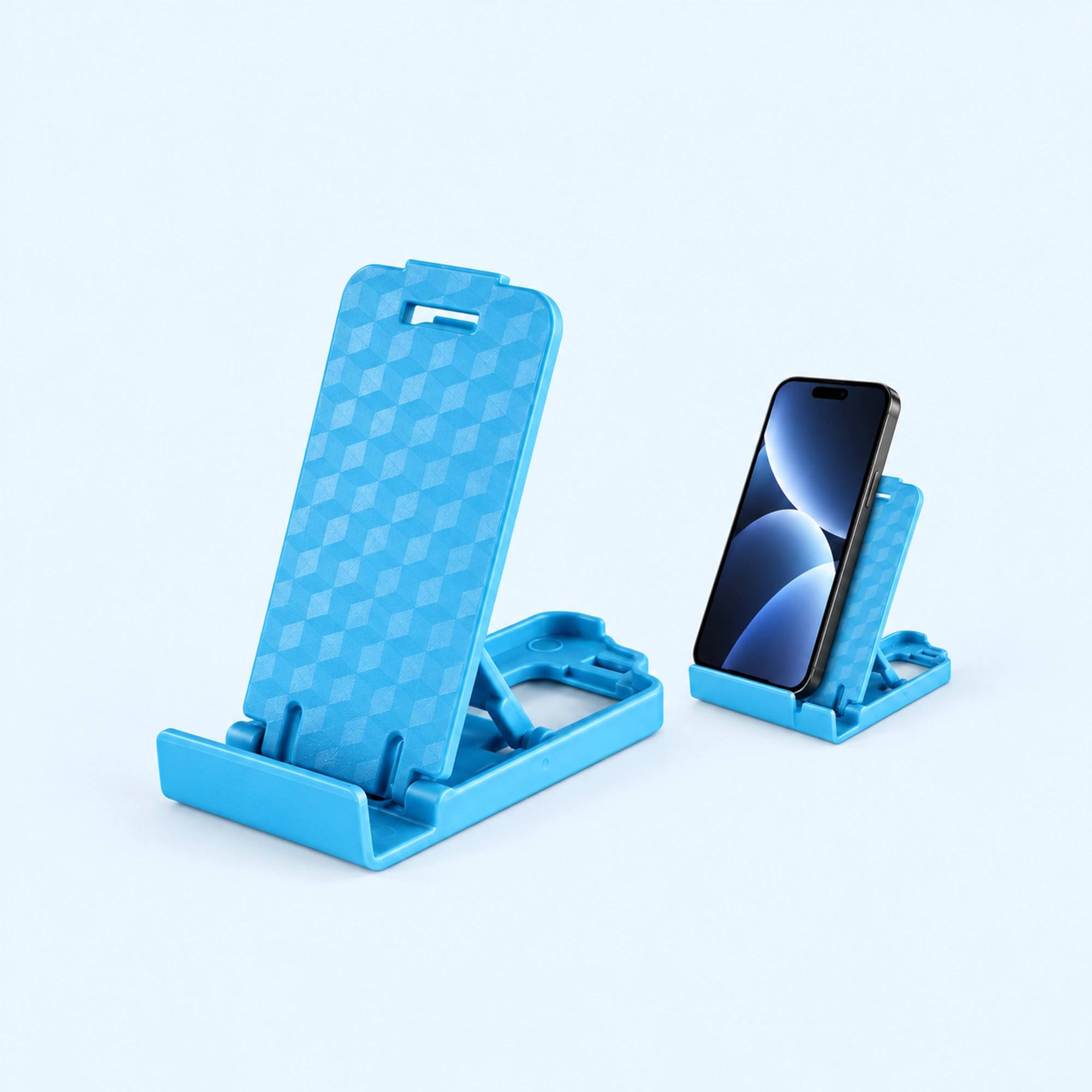
 Blue Four-Position Folding Desk Stand | Adjustable Foldable Phone Stand
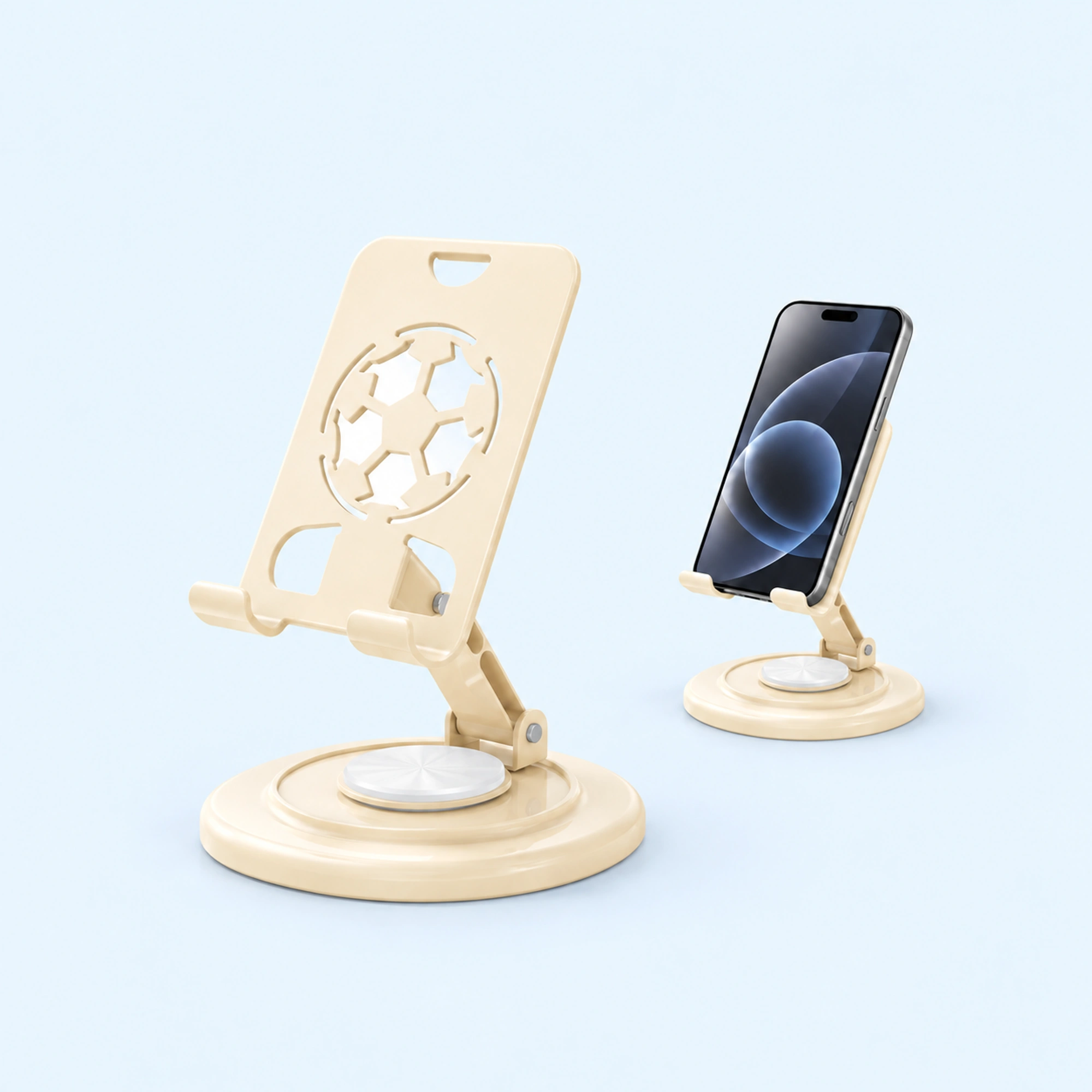 Cream Round-Base Folding Phone Stand | Foldable Phone Stand
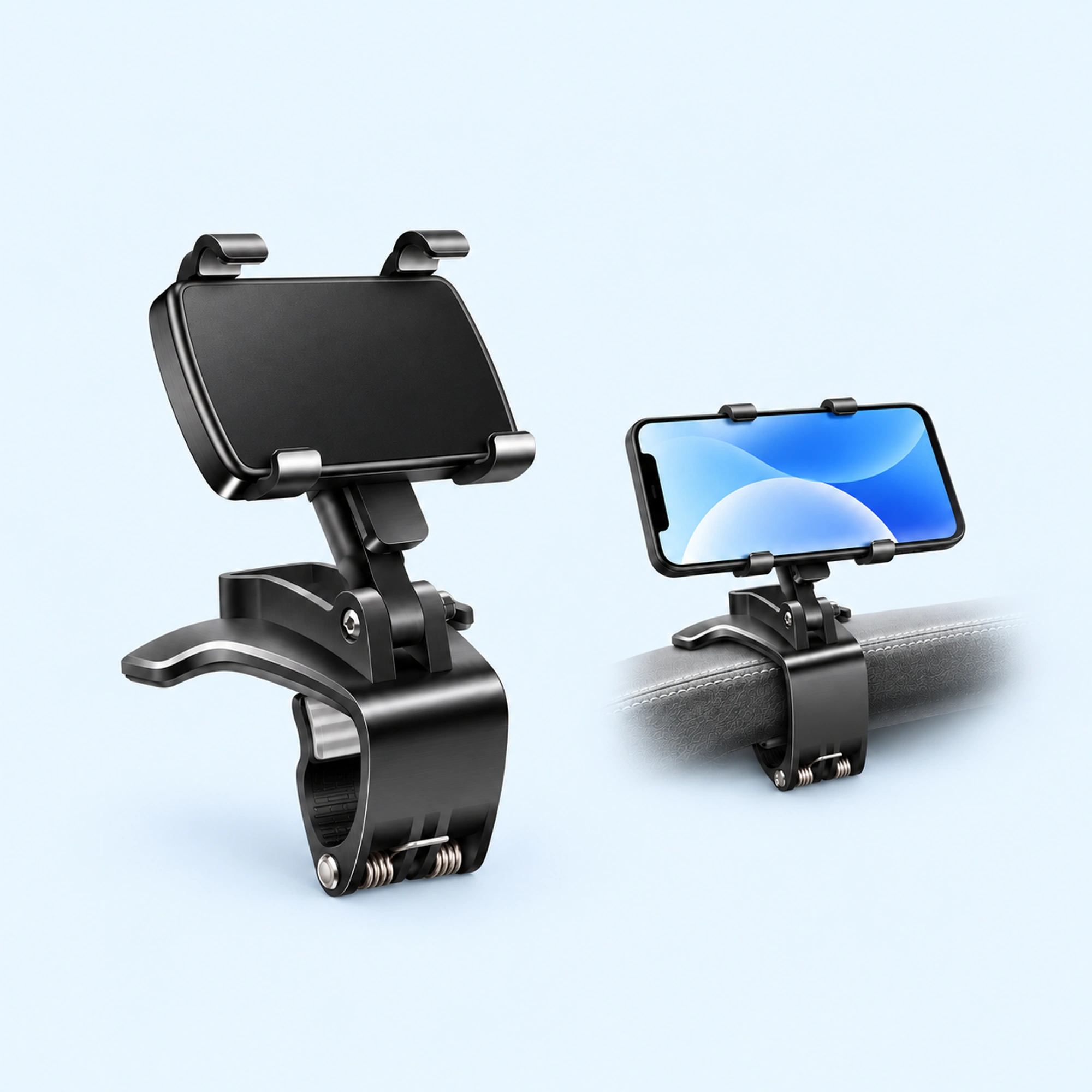 Dashboard Edge Clip Phone Holder | Dashboard Phone Holder
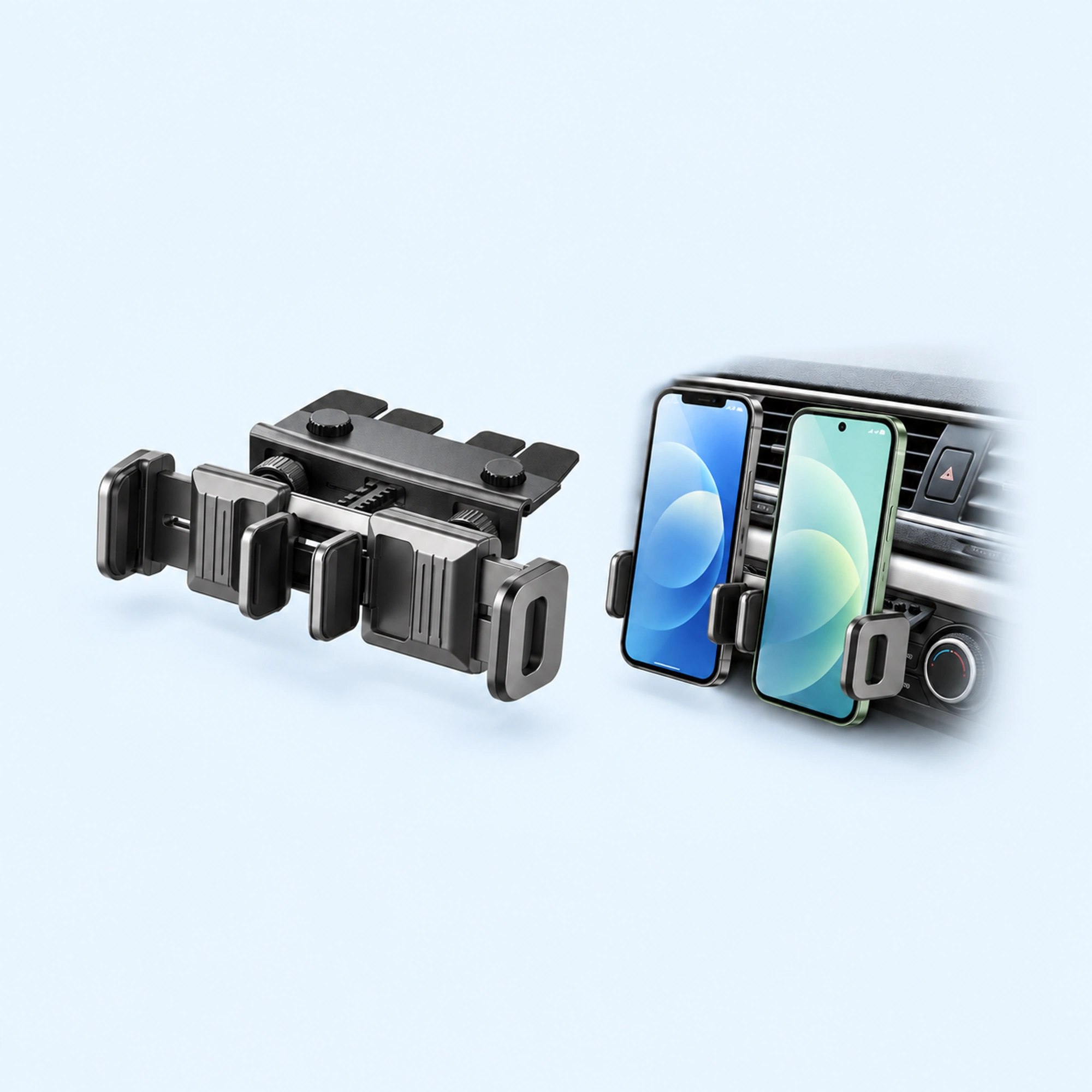 Dual-Cradle CD-Slot Phone Mount | Cd Phone Holder
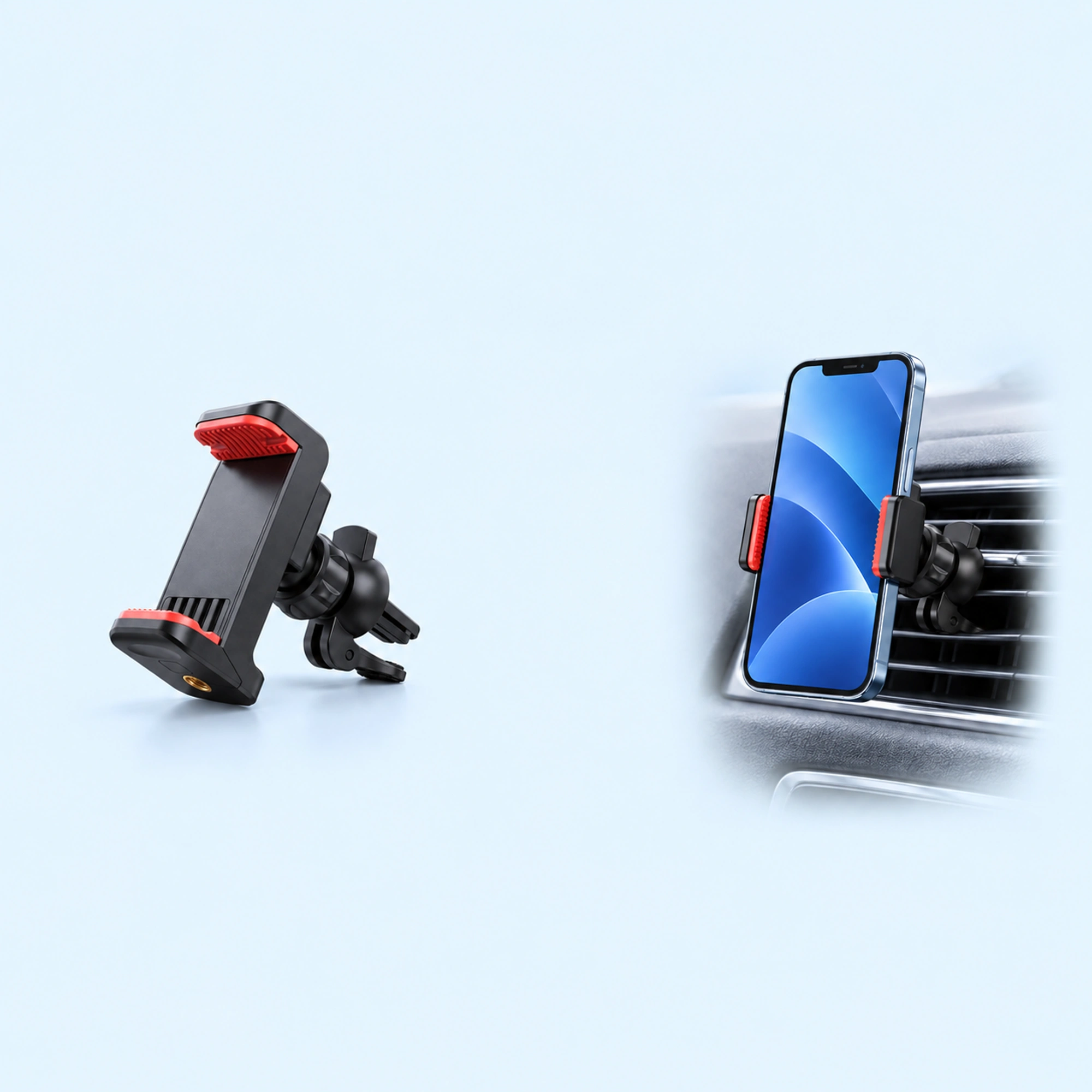 Red-Pad Compact Vent Phone Clip | Car Vent Phone Holder
 Music-Note Character Gravity Vent Holder | Gravity Phone Holder
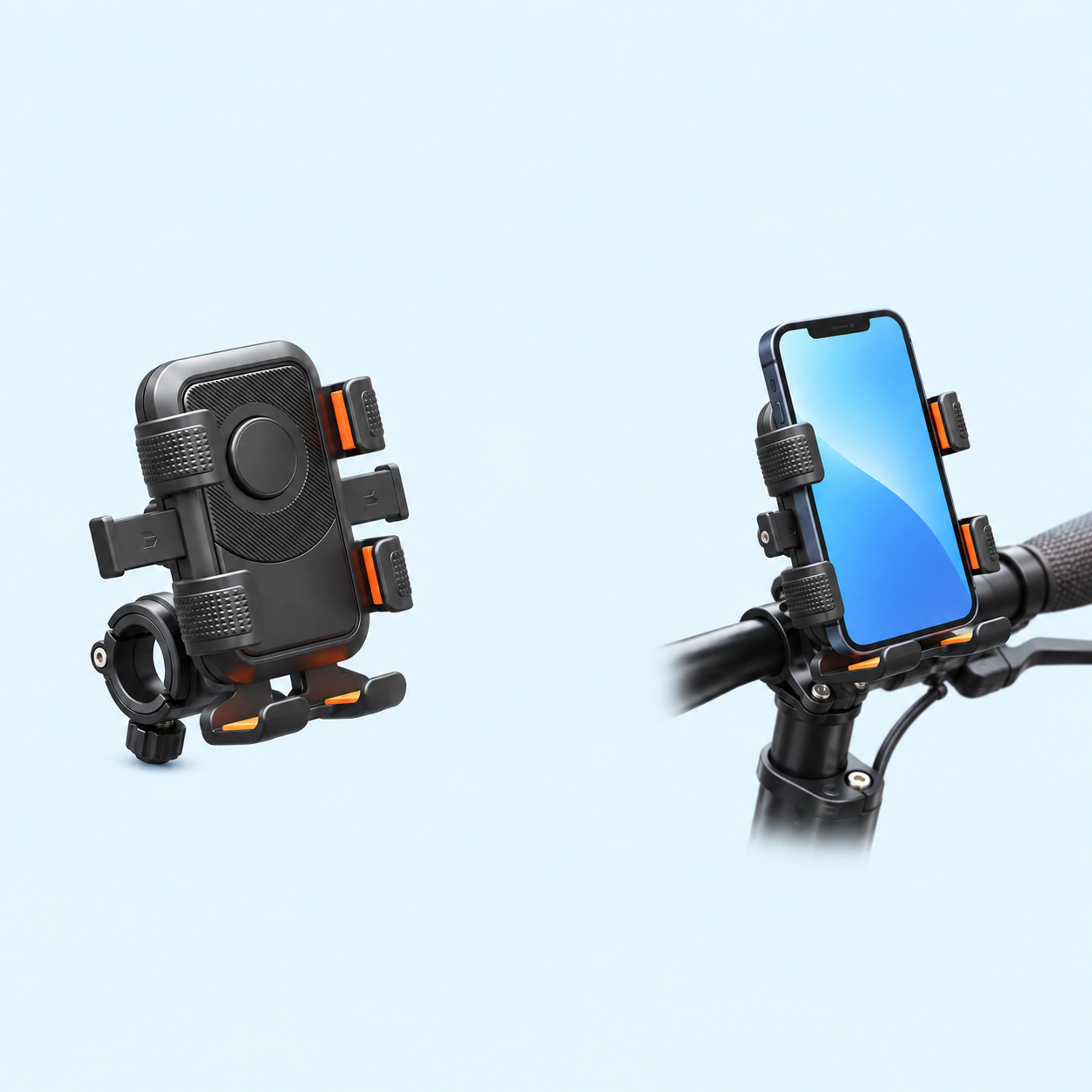 Black Six-Pad Handlebar Phone Cradle | Bike Handlebar Phone Mount
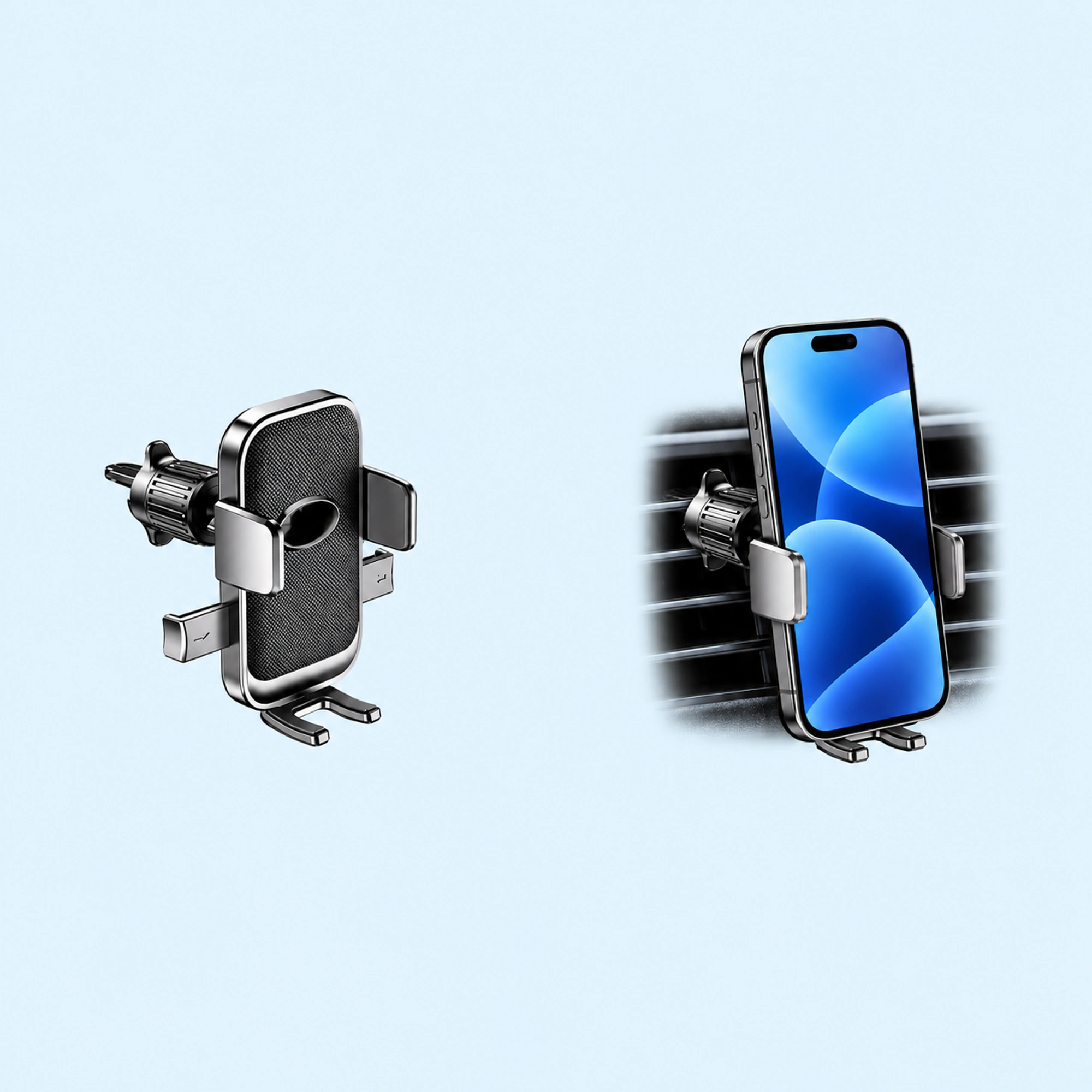 Oval-Opening Textured Vent Phone Cradle | Car Vent Phone Holder
A rear view mirror phone holder places GPS navigation directly below your natural line of sight without suction cups on the windshield or clips in delicate air vents. By suspending the phone from the central mirror, drivers can glance at turn-by-turn directions without looking down toward the center console. However, modern automotive mirrors house automatic dimming sensors, microphones, forward-facing collision cameras, and rain sensor pods. Clamping onto the wrong surface can crack plastic housings, block light sensors, or loosen mirror ball pivots.
Selecting between four-corner housing claws, twin-clamp mirror frames, and overhead stem clips requires checking mirror shell dimensions and sensor cutouts. This guide compares mirror-attachment designs to help drivers secure a rear view mirror phone mount safely without shaking on rough roads or obscuring highway sightlines.
Mirror Shell Housing Claws vs Stem-Mount Clamps
Automotive rear view mirrors attach to the windshield using two primary sections: the wide glass housing that pivots for driver visibility, and the rigid metal or composite stem that anchors to the glass.
Mounting hardware follows two distinct attachment strategies:
- Housing Perimeter Claws: Clamps that wrap around the top and bottom rims of the rectangular mirror frame. These models use spring-loaded jaws or ratchet sliders to grip the outer plastic bezel.
- Mirror Stem Clamps: Mounts that grip the narrow circular or hexagonal support rod behind the mirror glass.
While stem clamps avoid contacting the mirror face, many modern vehicles conceal the stem inside an integrated plastic sensor box. If your vehicle features a thick driver-assistance camera shroud behind the mirror, housing perimeter claws provide a more accessible mounting location.
Four-Corner Cradles and Spring-Loaded Clips
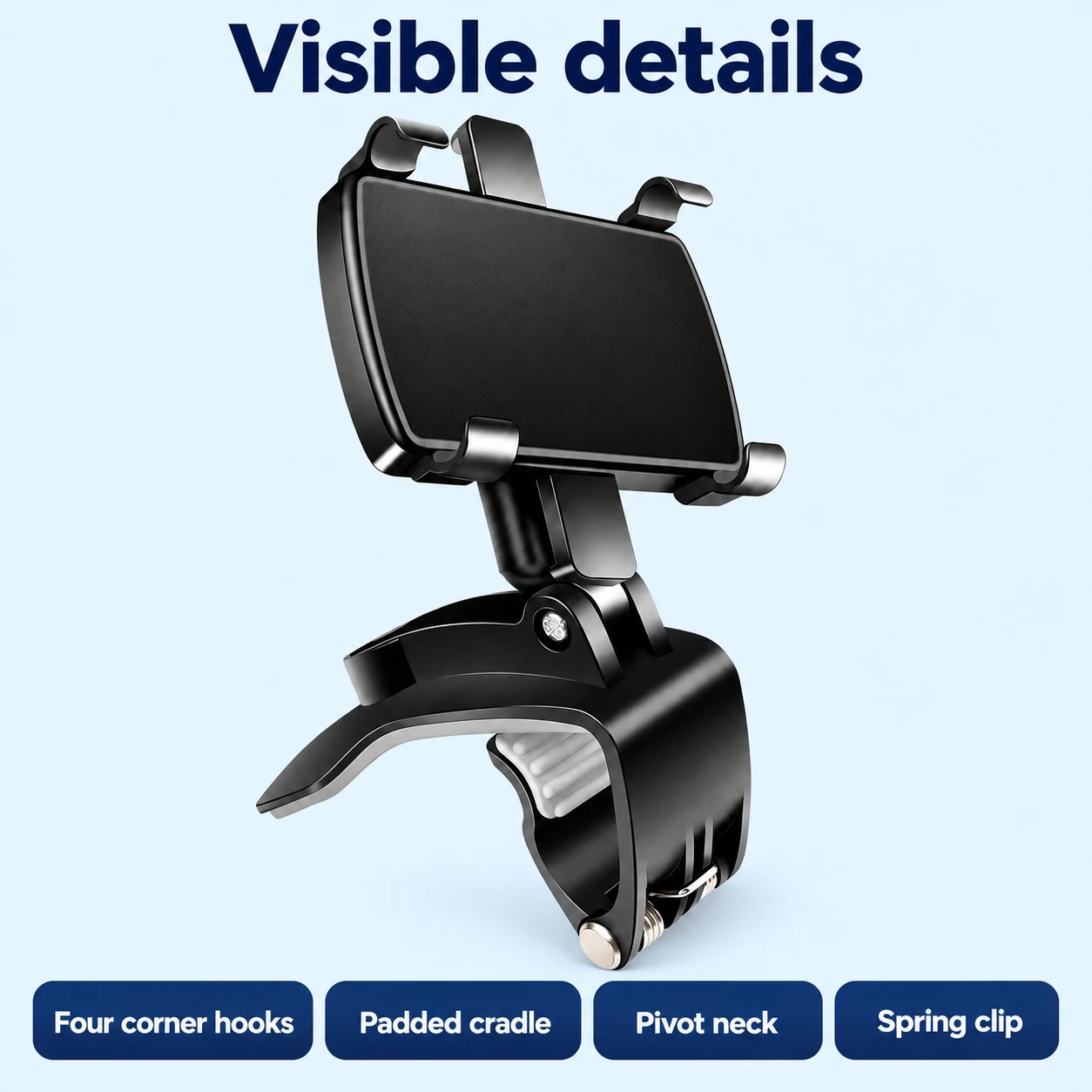
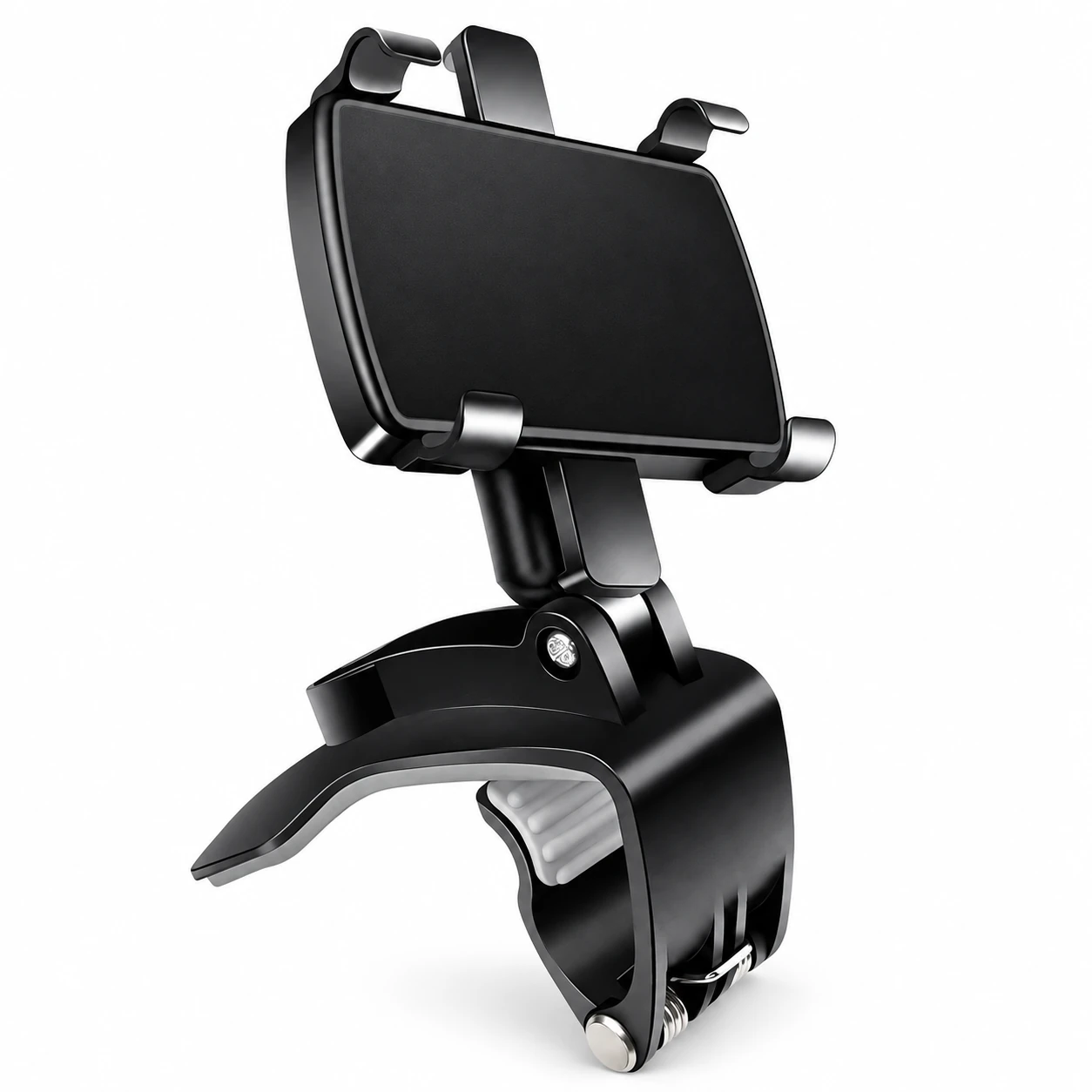
For vehicles with accessible mirror bezels or dash edges, compact spring clips provide straightforward installation. The Black Rear View Mirror Phone Holder with Spring Clip pairs a broad curved spring clip with a four-corner phone cradle.
The clip features protective gray contact pads that grip mirror edges without scratching plastic frames. A short pivot neck with a manual tightening screw connects the clip to the phone cradle. Four corner hooks secure the phone firmly, preventing lateral slip while leaving side buttons accessible. Because spring clips rely on edge tension, drivers should verify that the mirror shell thickness does not exceed the clamp opening before mounting.
Twin-Clamp Wraparound Frames and Overhead Levers
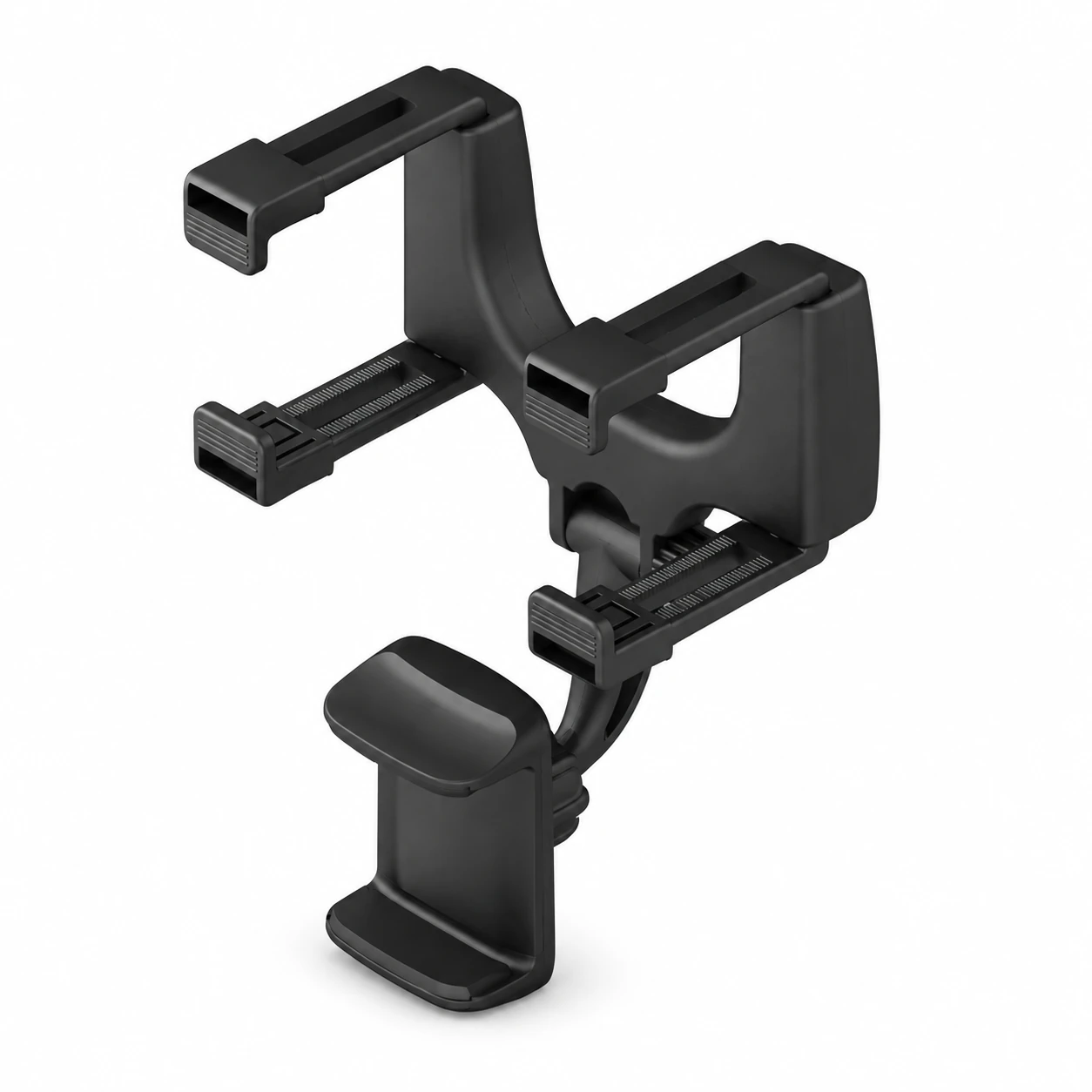
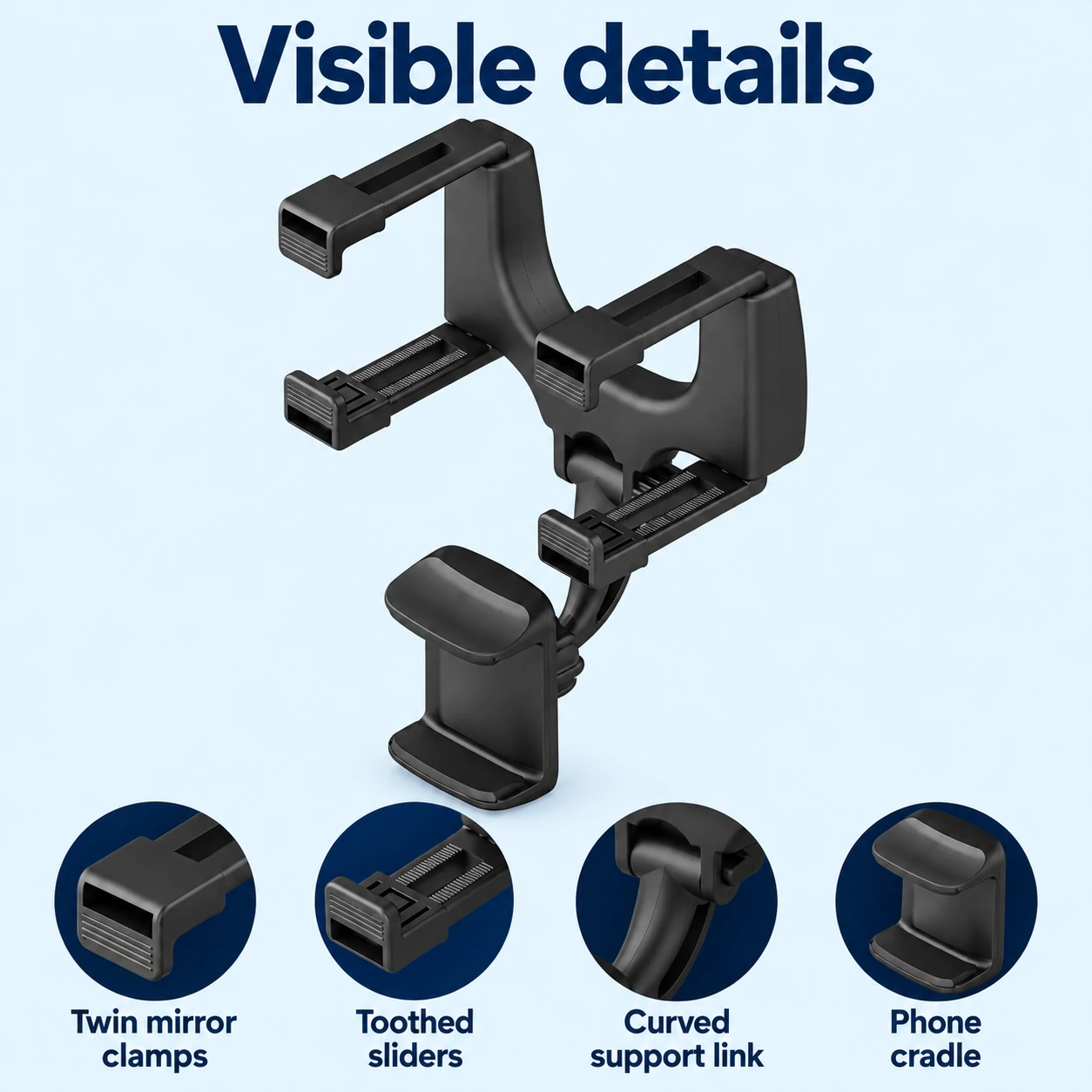
Vehicles requiring heightened stability benefit from dual-point clamping systems that span the mirror casing. The Twin Clamp Rear View Mirror Phone Holder utilizes twin upper clamps paired with lower sliding ratchets.
Precision adjustment teeth allow drivers to size the frame snugly against the mirror housing, while a curved downward link positions the phone cradle below the mirror glass. This lower placement keeps the mirror face completely clear for checking rearward traffic. A rear pivot joint enables rapid switching between landscape navigation and portrait calls.
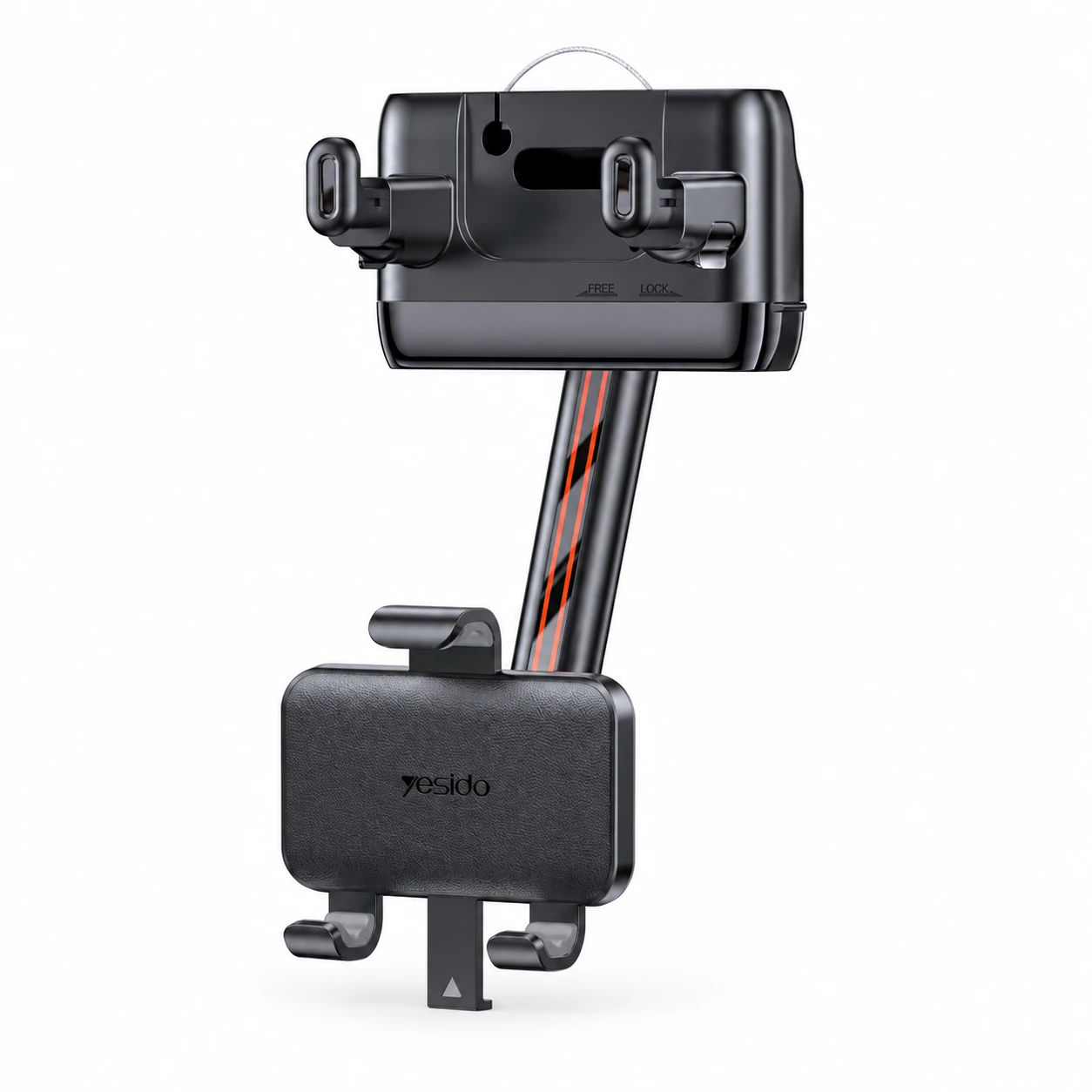
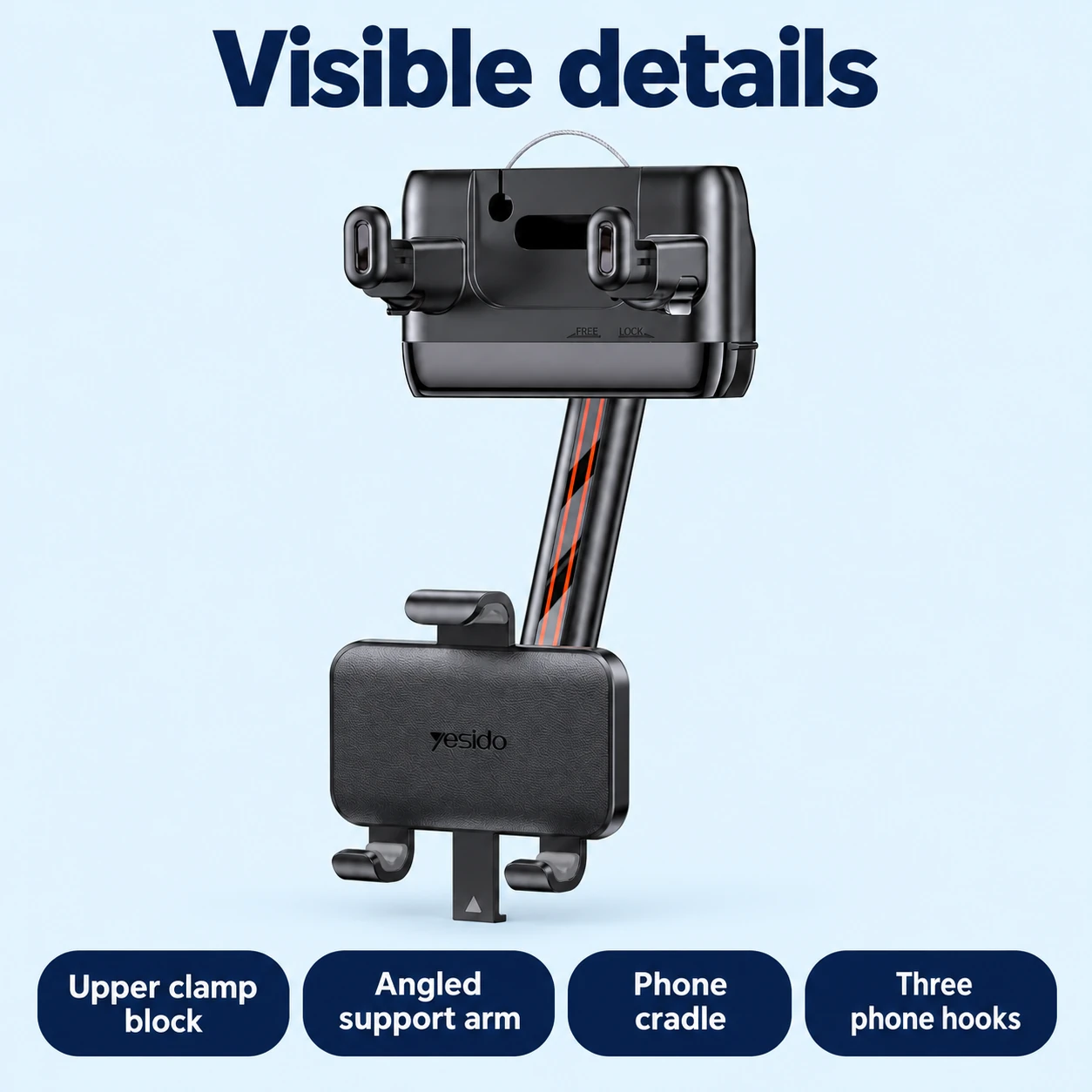
Drivers seeking rapid installation can evaluate the Clip Rear View Mirror Phone Holder. This design uses an overhead clamp operated by a quick-release lock lever, connected to a downward extension arm with sporty red accents and a faux-leather textured backplate. Its 360-degree ball joint facilitates seamless tilt and swivel adjustments across bumpy road conditions.
Auto-Dimming Sensors and Forward Dashcam Clearance
Before securing any rearview mirror phone holder, inspect the rear and lower surfaces of your mirror housing for integrated electronics.
Key clearance checks include:
- Ambient Light Sensors: Automatic dimming mirrors incorporate forward-facing and rearward-facing photo sensors. Ensure clamp arms do not cover the tiny sensor windows on the back of the housing, which could disrupt automatic tinting.
- Forward Cameras: Many newer vehicles position dashcams or lane-keep sensors directly behind the mirror. Confirm that mounting brackets do not intrude into the camera field of view.
- Mirror Pivot Stiffness: Adding phone weight increases downward torque on the windshield ball pivot. Ensure the factory mirror ball joint holds its position firmly without drooping over bumps.
Selecting the right clamp profile and verifying sensor clearances ensures stable navigation access without interfering with vehicle safety systems.