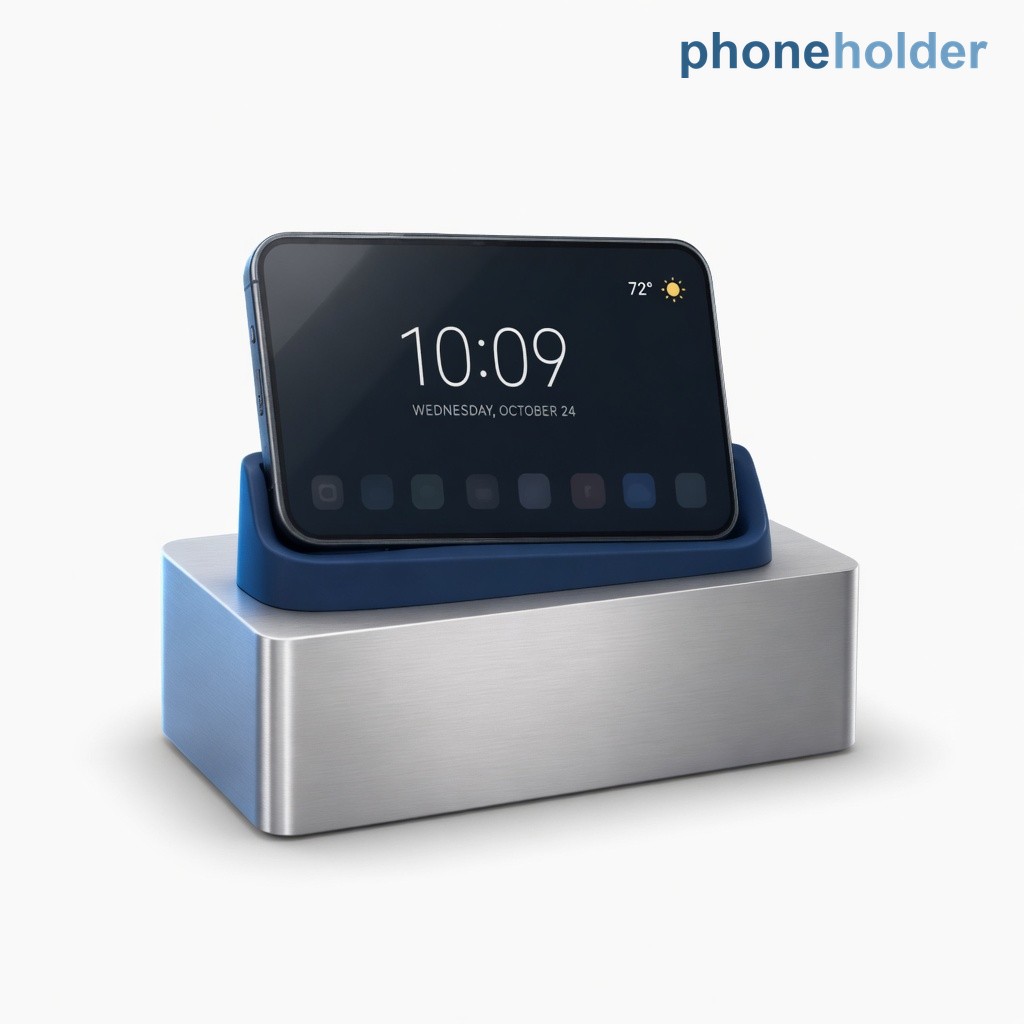
 Desk Dock
 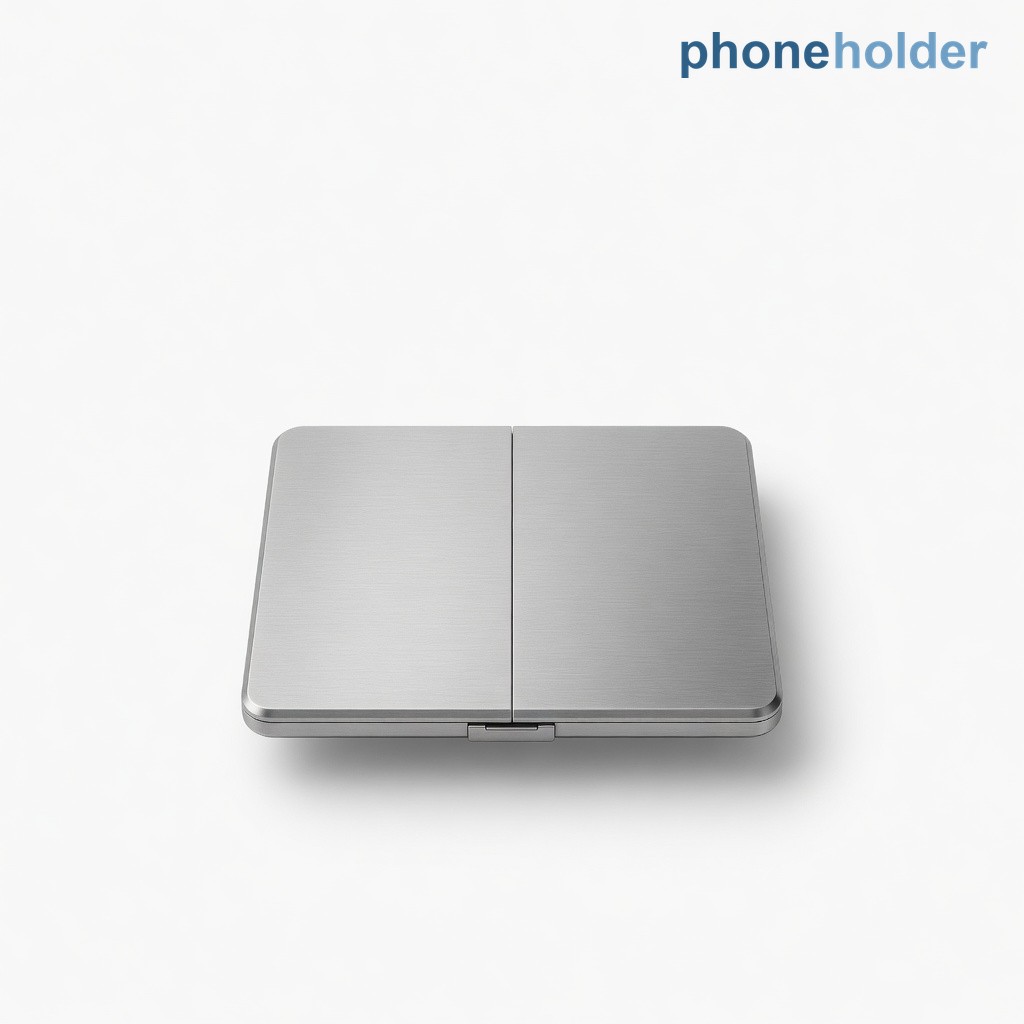 Travel Dock
 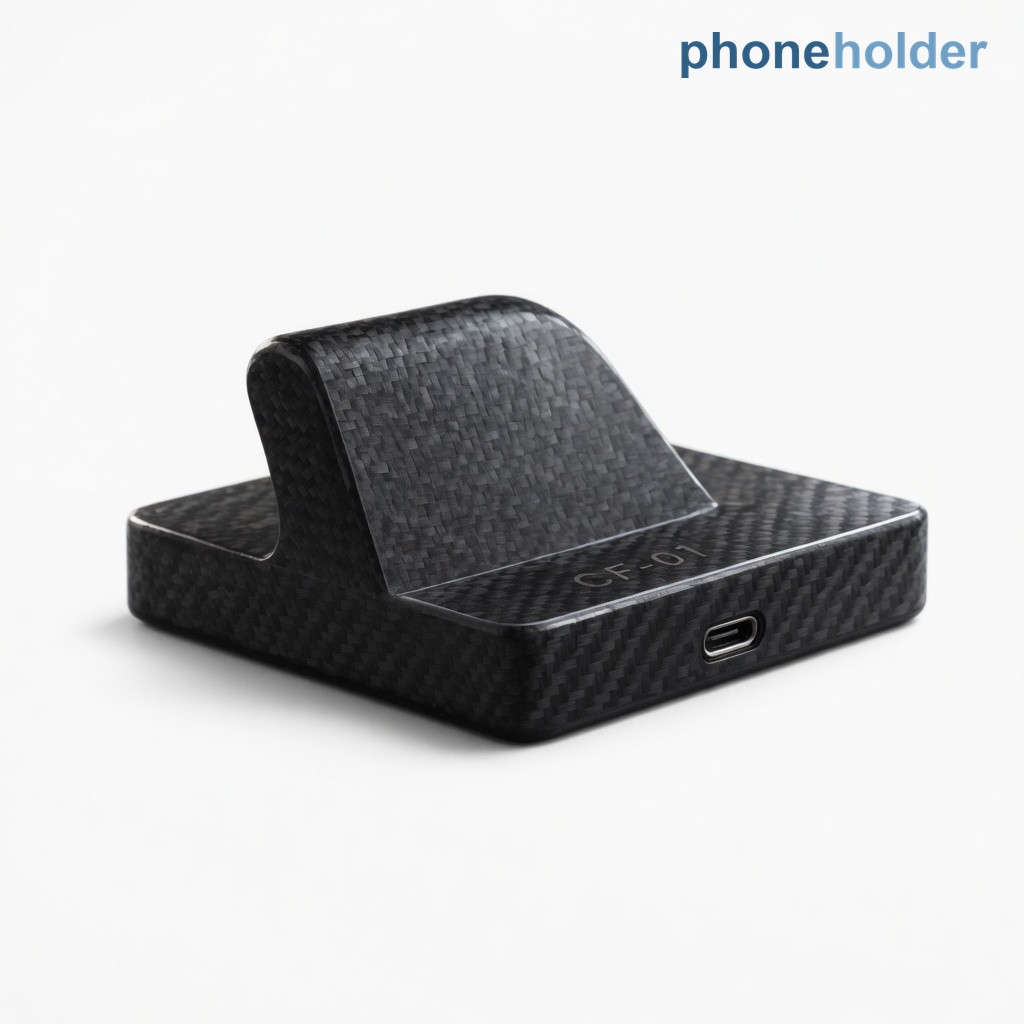 Carbon Dock
 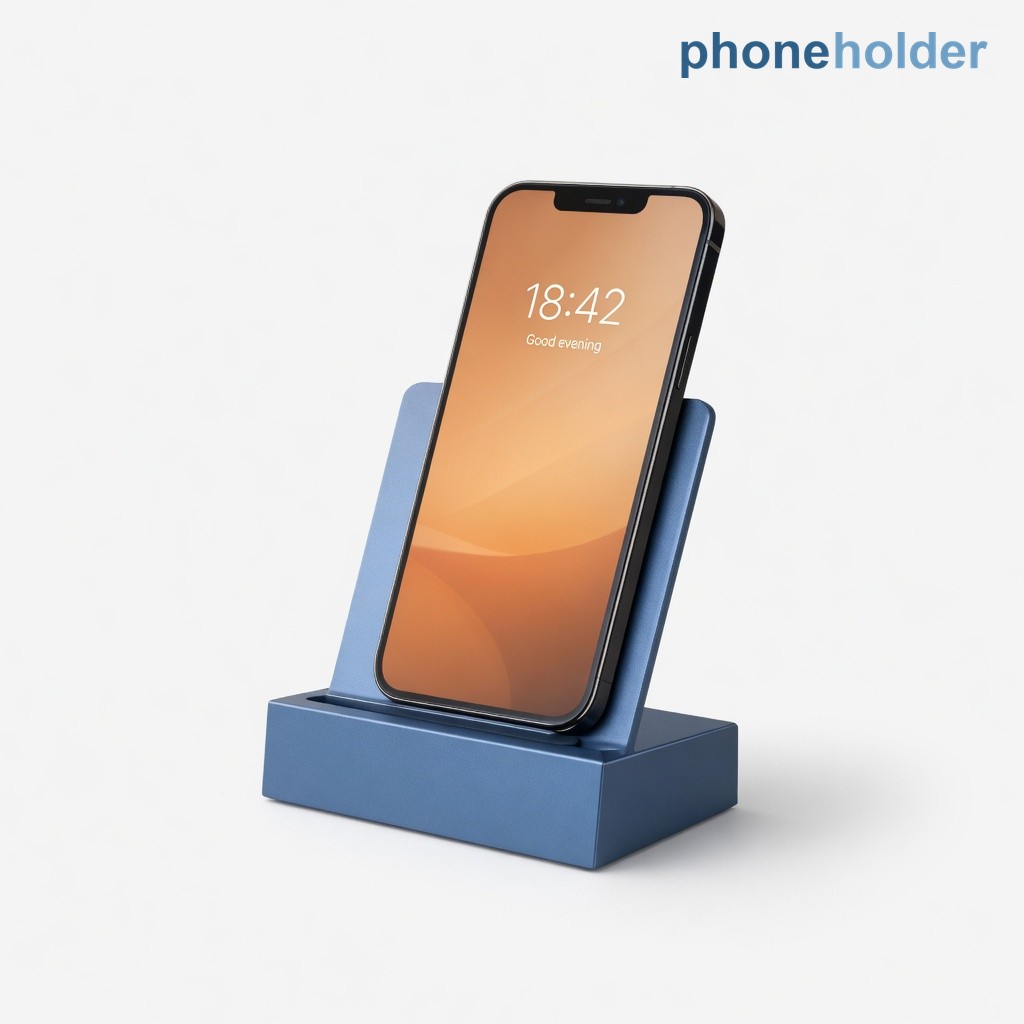 Aurora Dock
 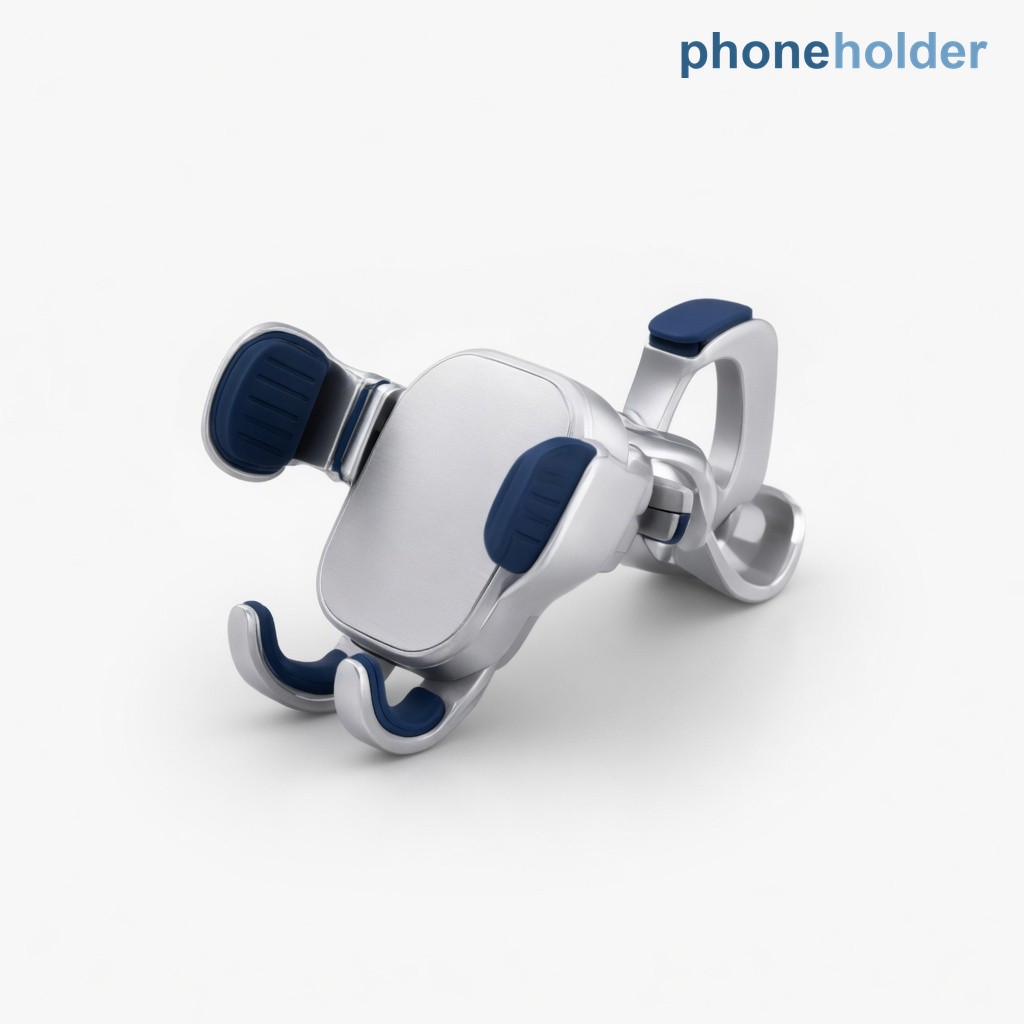 Car Vent Clip
 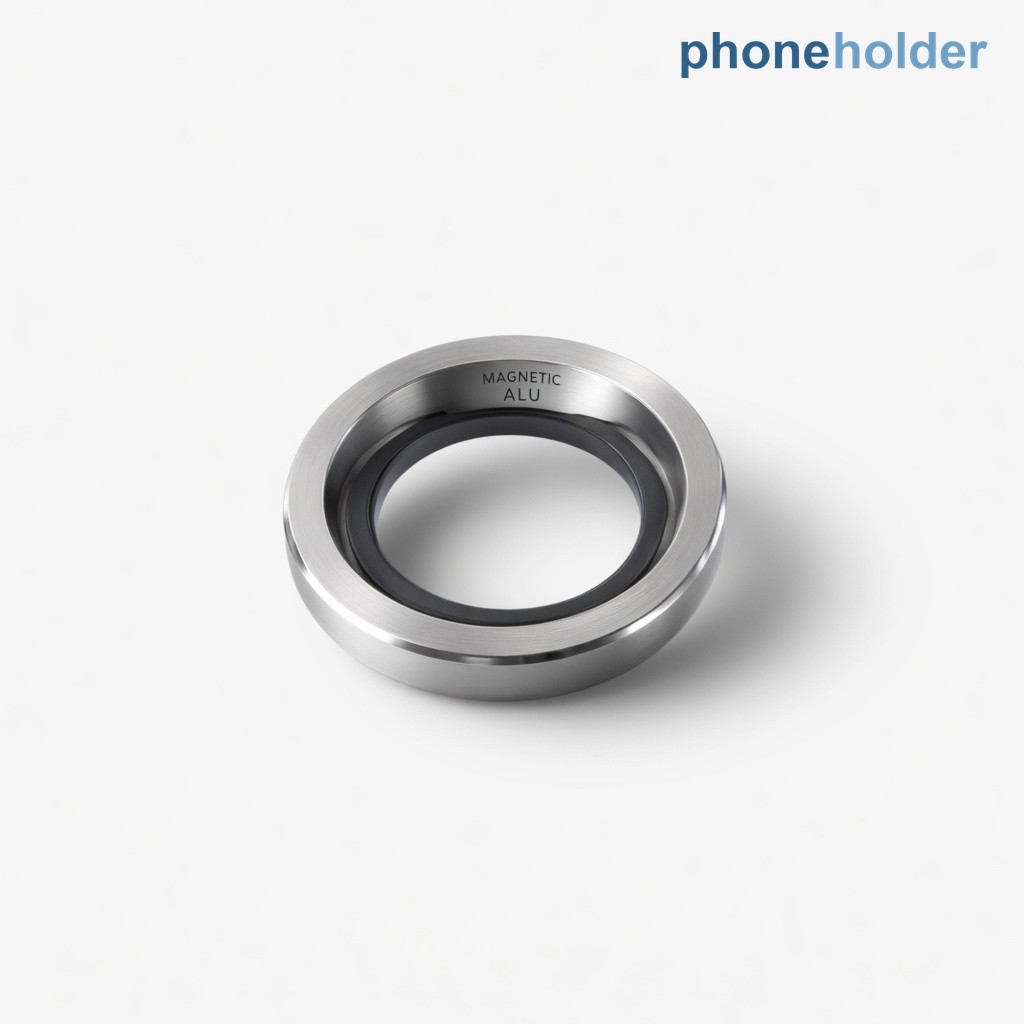 Mag Grip Ring
 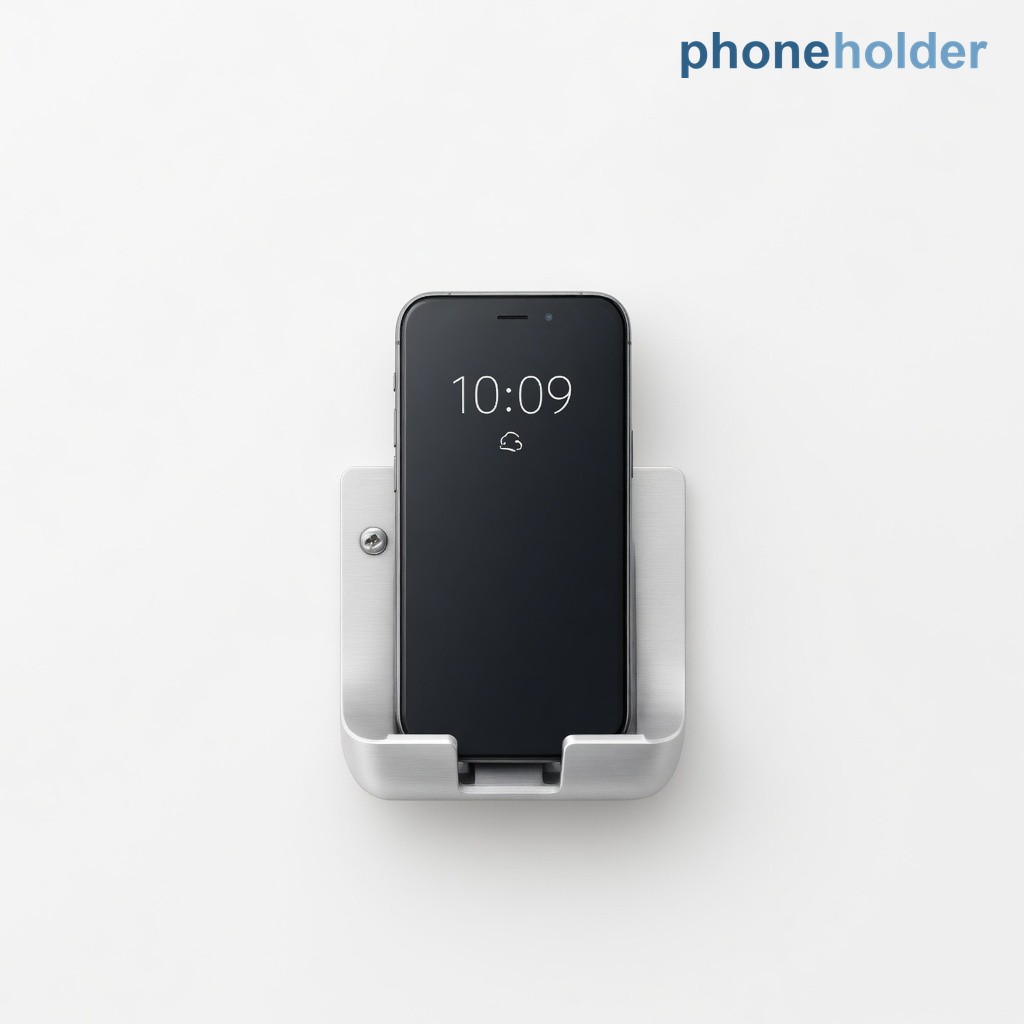 Wall Mount
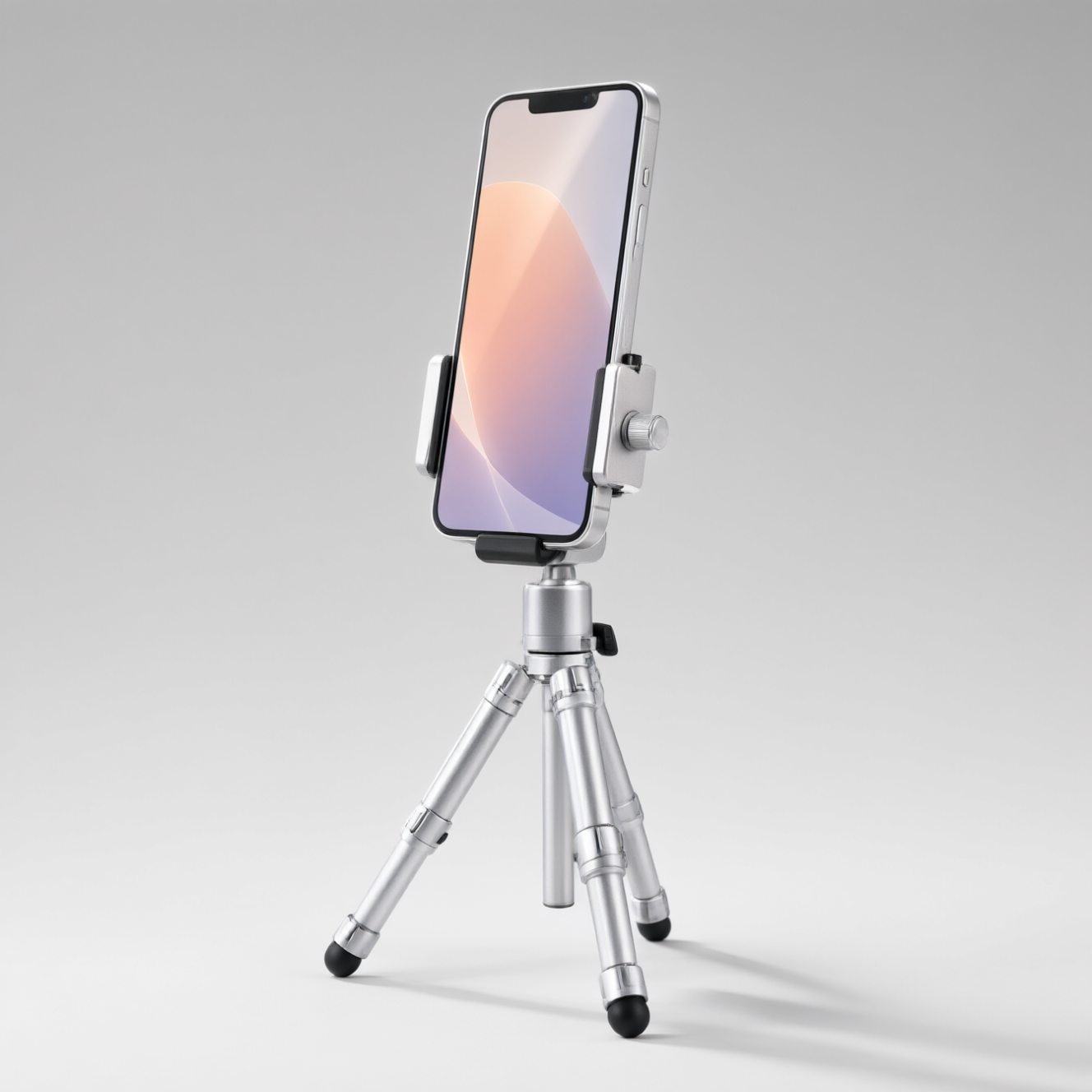
 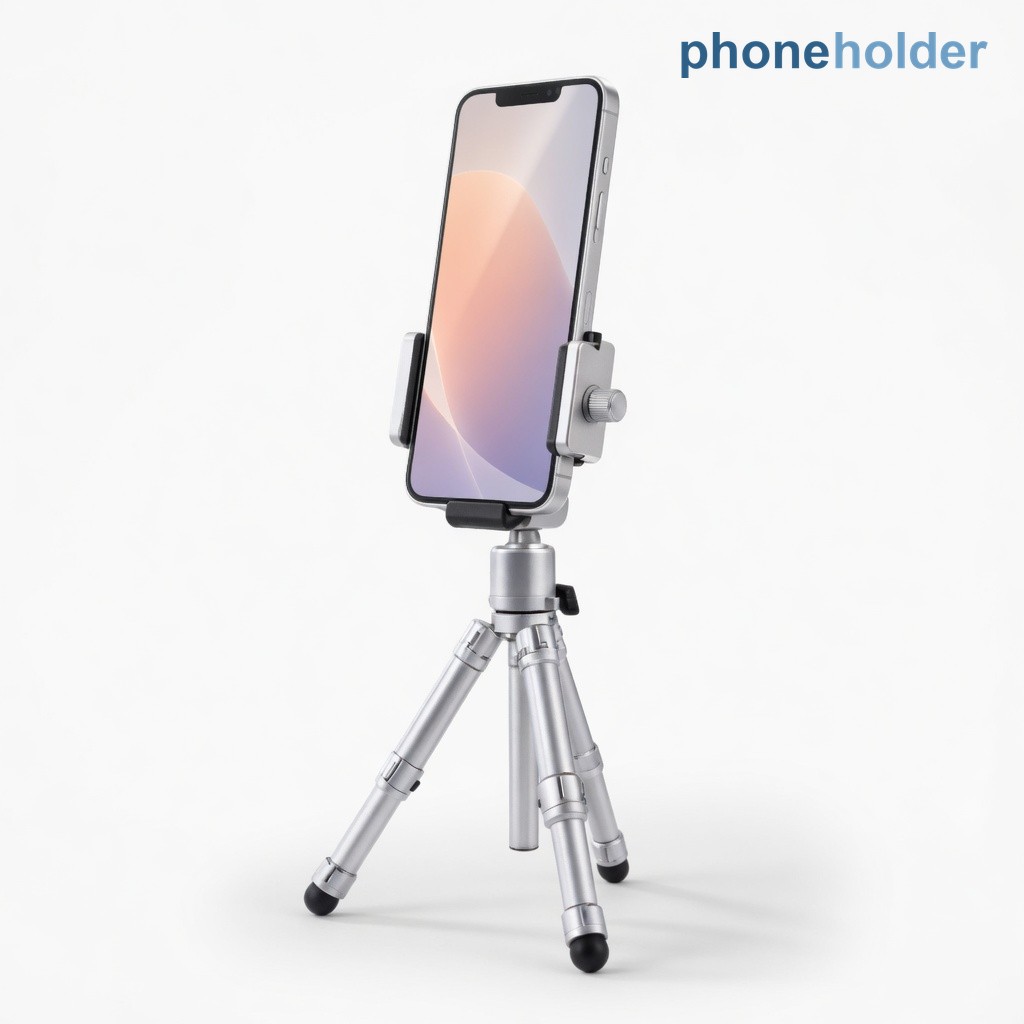 Folding Tripod
 A DIY phone holder has to do one of two jobs: prop the phone so you can see it, or hold it still so it can film. The first job is easy and we covered the best household props in our DIY phone stand guide. The second is where most homemade builds fail, because a tripod is not a stand: it has to hold the phone at a chosen height and angle, keep it there while you walk away, and not transmit every footstep into the footage. This guide covers the holder builds that free your hands, the DIY phone tripod ideas that actually work, why the others shake, and the honest point where a bought clamp or mini tripod is the cheaper answer.
We sell tripods and clamps, so read this as a shop’s checklist, not a lab test. We haven’t measured tipping loads on any of the builds below.
Three things every DIY holder or tripod needs
- A grip that can’t slide. A phone resting on a smooth surface moves the moment something touches it. Rubber bands, a lip, or a slot cut to the phone’s thickness solve this.
- A base heavier than the phone. If the support weighs less than the phone, the phone wins. Fill a bottle, use a book, or clamp to something fixed.
- No long, thin lever. A phone on the end of a long light arm (a coat hanger, a ruler) magnifies every vibration. Keep the phone close to the base.
DIY phone holder ideas that free your hands
- Binder clip on a shelf edge. A large binder clip on a shelf or cabinet edge, phone slid between the metal arms. Holds a recipe at eye level in a kitchen. Fails on thick or rounded edges.
- Rubber bands and a mug. Loop two rubber bands around a heavy mug so the phone stands against it and can’t slide forward. Good for video calls. Fails if the mug is empty and light.
- Cardboard sleeve on a wall hook. Fold a cardboard sleeve the width of the phone, punch a hole, hang it on a hook or nail. A one-evening kitchen or bathroom holder. Fails in steam and after a week of humidity.
- A pants hanger with clips. Clip both sides of the phone in a trouser hanger and hook it over a door or rail. Surprisingly steady for watching in bed. Fails if the clips press the volume buttons.
- A jar and a rubber band for the car cup holder. A tall jar in the cup recess with the phone banded to its side is the classic makeshift car holder; our DIY car and airplane phone holder guide covers why it’s fine when parked and a bad idea in motion.
DIY phone tripod ideas that actually hold
- Bottle tripod. A filled 1-litre bottle with the phone rubber-banded upright to its side. Heavy base, phone close to it, no lever. The best DIY tripod for a fixed talking-head shot on a table. Fails: no tilt, and the bottle blocks the back camera unless you band the phone facing out.
- Three pencils and tape. Tape three pencils into a tripod with the points down and rest the phone in the fork at the top. Works for a mini phone tripod on a desk; the phone must lean back into the fork. Fails on any bump; it weighs almost nothing.
- Book stack with a slot. Two heavy books with a gap the phone’s thickness between them, phone standing in the gap. Rock solid for a fixed desk angle. Fails: one angle only, and it’s not portable.
- Cardboard box with a cut window. Cut a phone-sized slot in a shoebox lid and stand the box on end. An overhead or table-level box camera for crafts. Fails in weight (a phone can tip a light box) unless you put something inside it.
- Clamp anything to a chair back. A spring clamp from a hardware store holding a phone against a chair back or shelf is the closest DIY gets to a real tripod clamp. It’s also the moment to notice you’ve just spent the price of a phone clamp on a clamp that scratches the phone.
Why homemade tripods shake
A tripod’s job is to disconnect the phone from the room. Every DIY tripod above is either light (pencils, box), or rigidly connected to a surface that moves (a table you’re typing on), or both. Real tripods solve this with mass, wide legs and a head that holds the angle without your hand. That’s the difference you pay for, not the brand name.
When a bought holder or tripod is worth $19.99
- You need an angle. None of the builds above tilts. A tripod phone mount with a ball head, or a flexible phone tripod you can wrap around a railing, gives you the angle without rebuilding.
- You film the same shot repeatedly. A small folding tripod lives in a bag and sets up in seconds; the bottle needs refilling and the pencils need re-taping.
- The phone is the camera and you’re adding a mic or light. A cold shoe clamp such as the KY18 Dual Cold Shoe Phone Clamp carries the accessories with the phone; nothing homemade does that safely.
- You want it above the desk. An overhead phone mount clamps to the table edge and folds away; the shoebox doesn’t.
- You already own a camera tripod. Then you don’t need a tripod, you need the clamp that connects the phone to it: the Black Tripod Phone Clamp with Separate Ball Head. Its listing doesn’t verify the thread size, so check your tripod’s stud first.
The full range, by type, is in the phone tripod collection; our iPhone tripod guide explains which shape suits which job.
Quick answers
What can I use instead of a phone holder? A large binder clip on a shelf edge, a rubber-banded mug, or a trouser hanger hooked over a door. Pick by where the phone needs to be, not by cleverness.
How do I make a simple phone holder? Cut a cardboard sleeve slightly wider than the phone, fold a lip along the bottom so the phone can’t slide, and hang or prop it where you need it. The lip is the whole trick.
How do I make a DIY phone tripod? Band the phone upright to a filled bottle for a table shot, or stand it in a slot between two heavy books for a fixed angle. Both are heavy at the base and keep the phone close to it; that’s why they hold.
How can I make a DIY mobile holder that tilts? You mostly can’t, cleanly. Tilt needs a joint that holds its angle under the phone’s weight, which is what a ball head or a friction hinge on a bought clamp provides.
Checklist before you build or buy
- Decide the job: propping (a stand), hands-free viewing (a holder) or filming (a tripod).
- For anything that films, give it a heavy base and keep the phone close to it.
- Give the phone’s bottom edge a lip, band or slot so it can’t slide.
- If you need an angle, accessories, or the same shot every day, buy the clamp or tripod; that’s what the $19.99 buys.
- Test with the case on and a tap on the screen before trusting it with a recording.
Editor’s note: the DIY builds are ordinary household setups anyone can reproduce; we have not measured tipping loads. Product details come from each listing on this site and its supplier information. Drafted with AI assistance and reviewed by the Holderphone team.