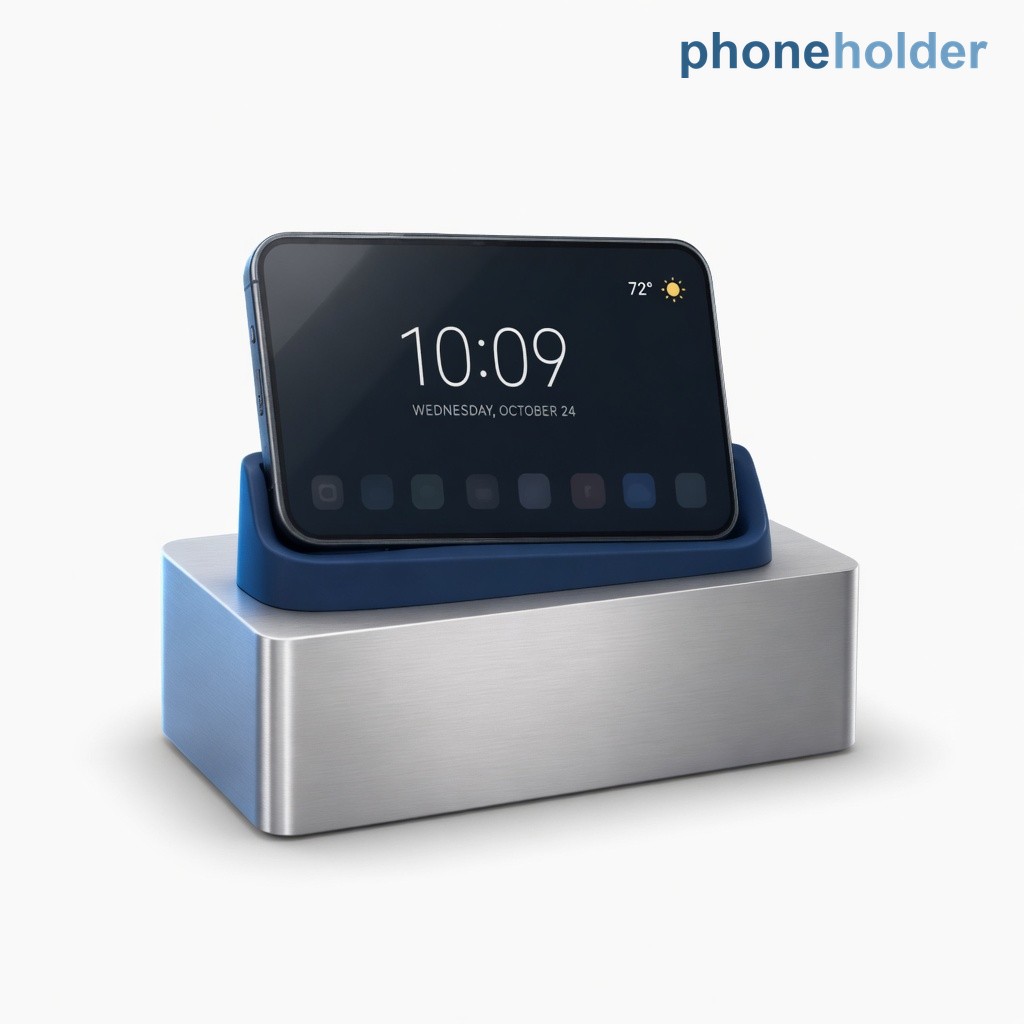
 Desk Dock
 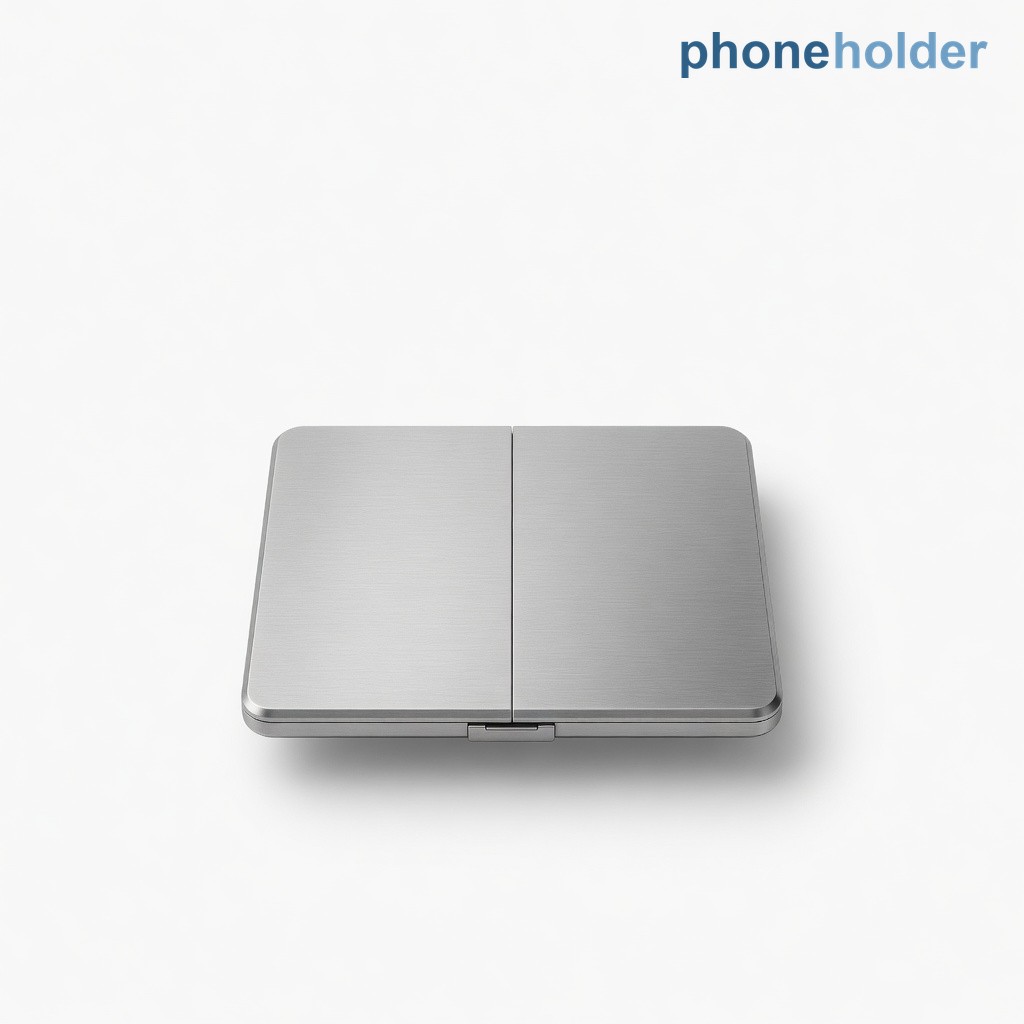 Travel Dock
 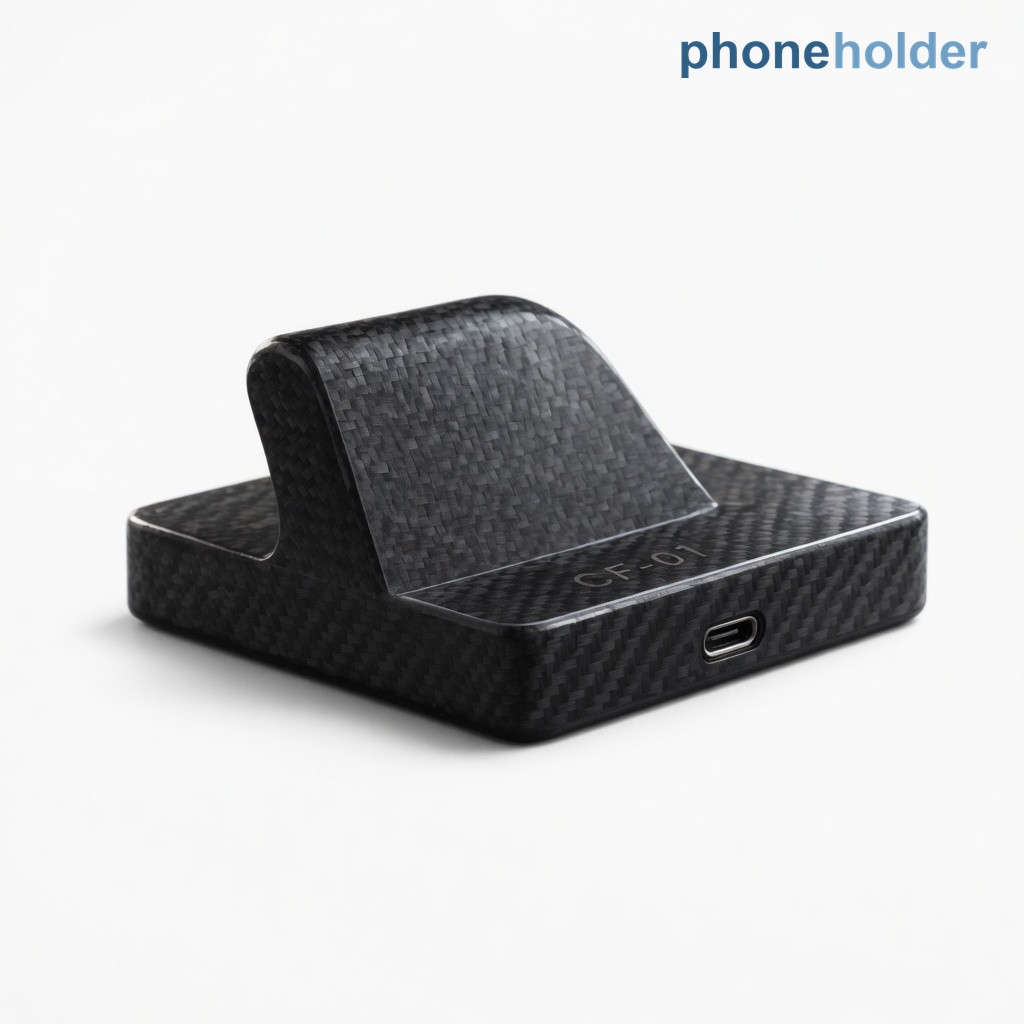 Carbon Dock
 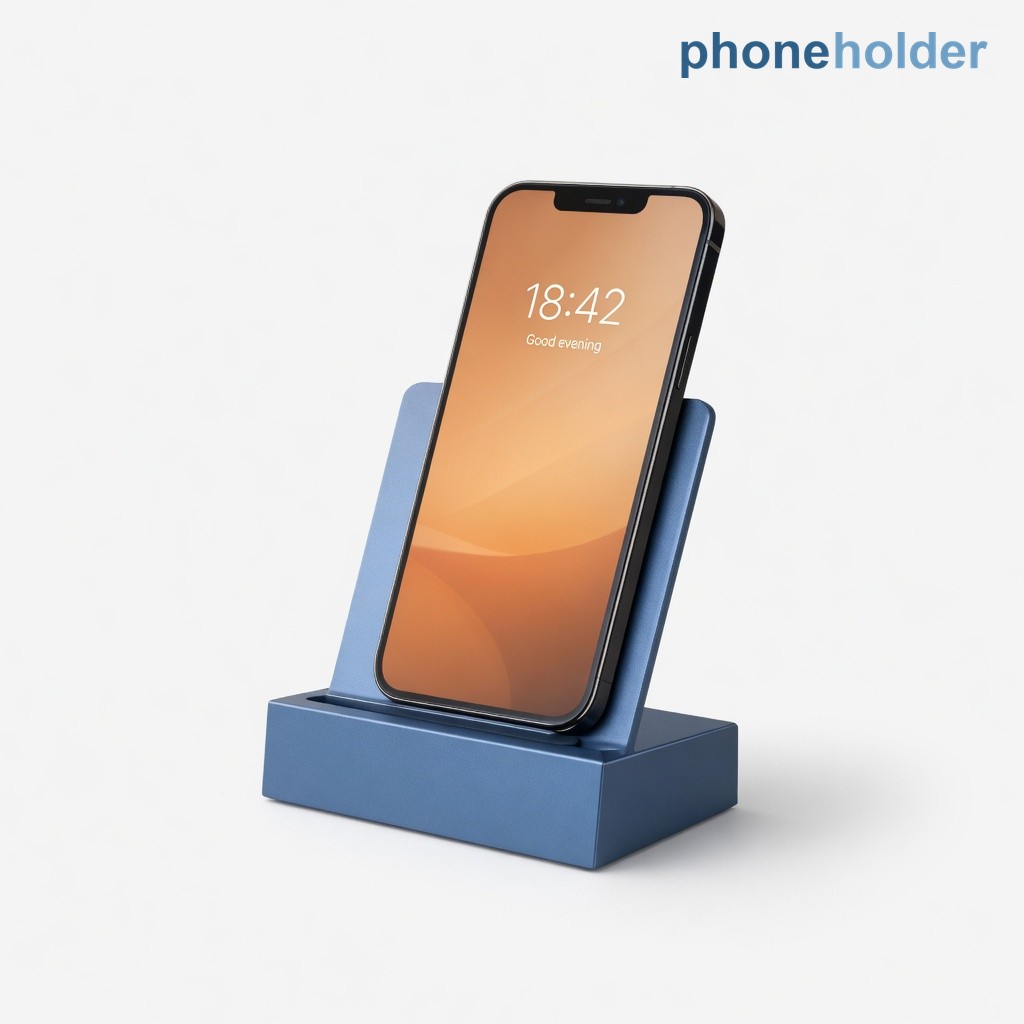 Aurora Dock
 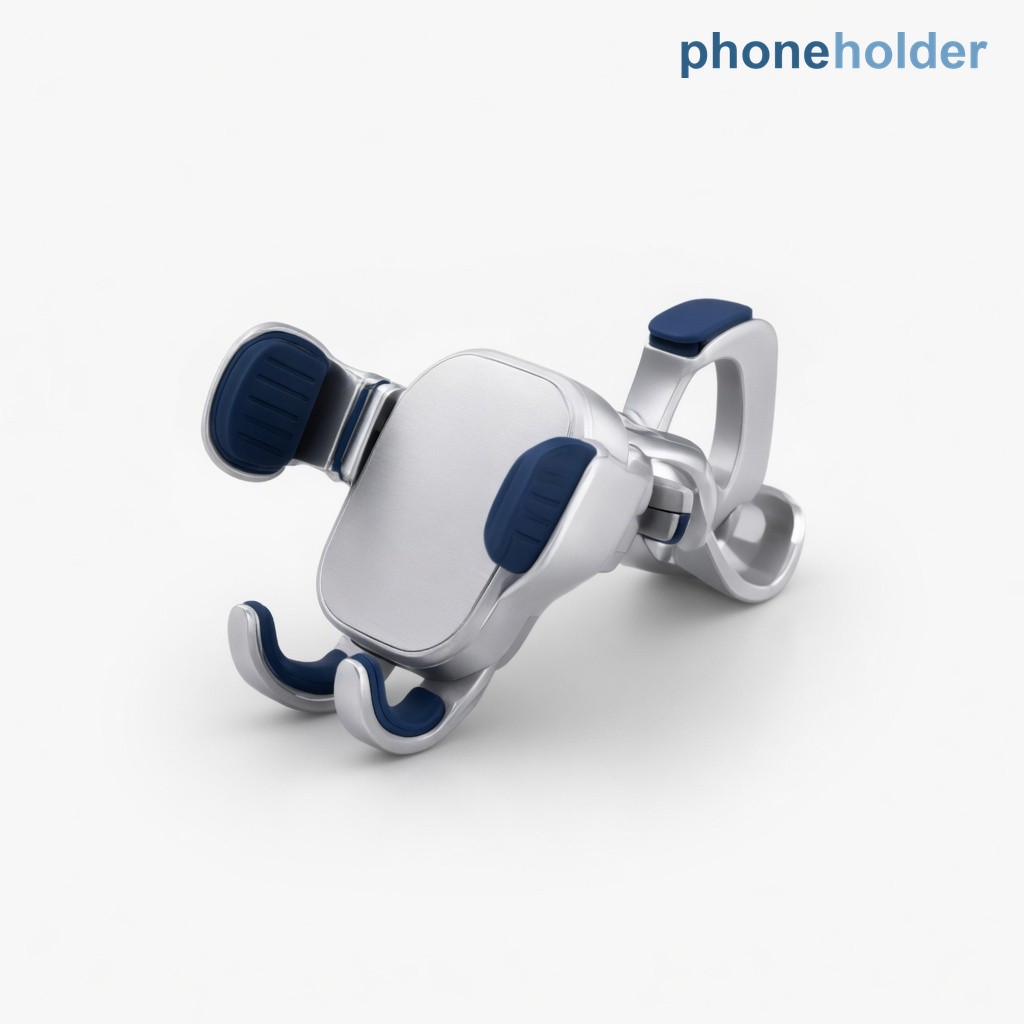 Car Vent Clip
 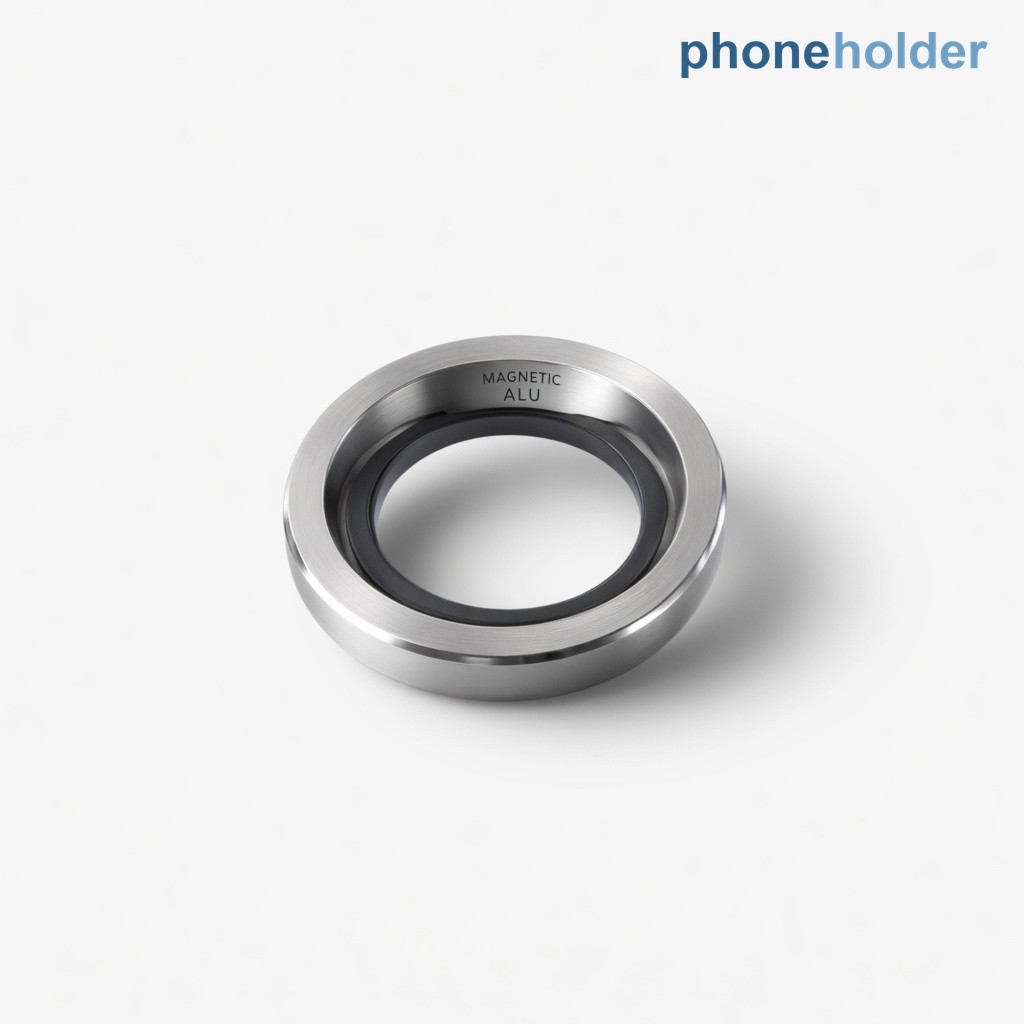 Mag Grip Ring
 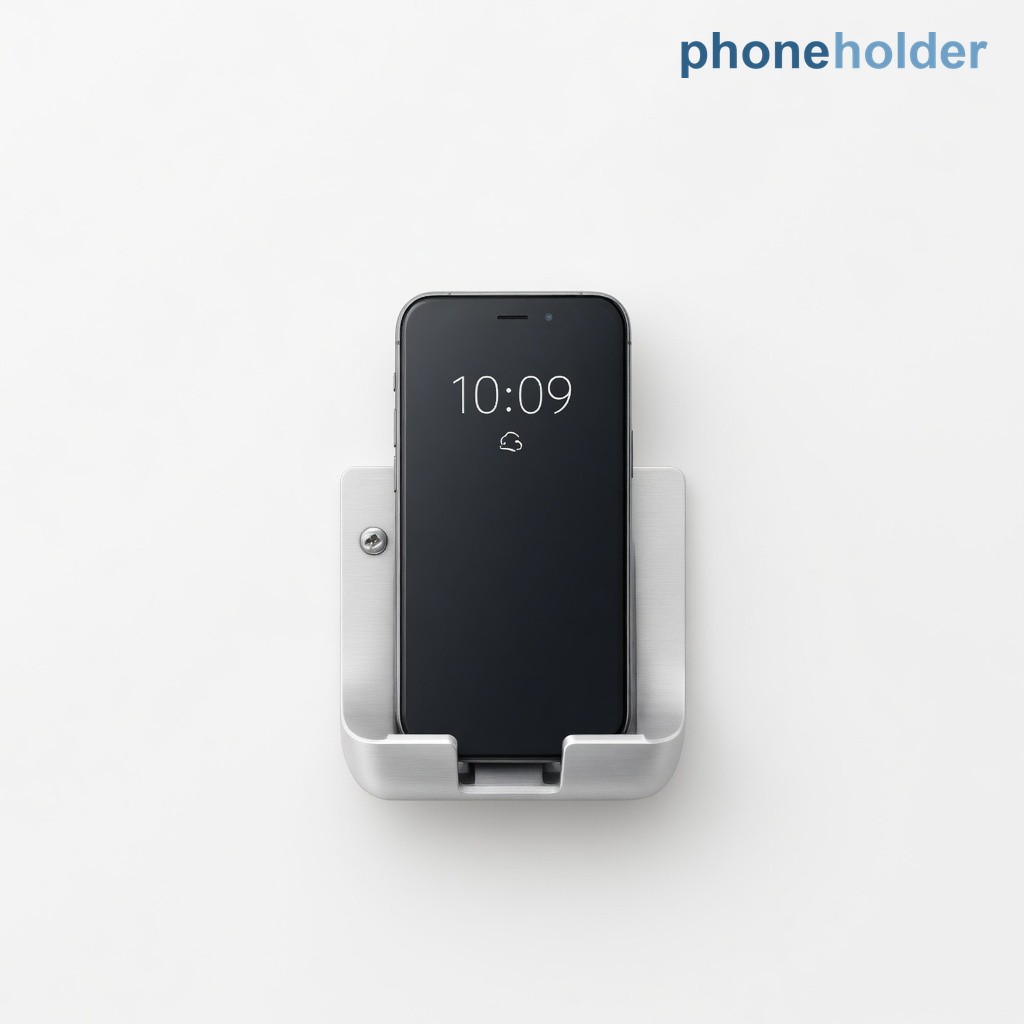 Wall Mount
 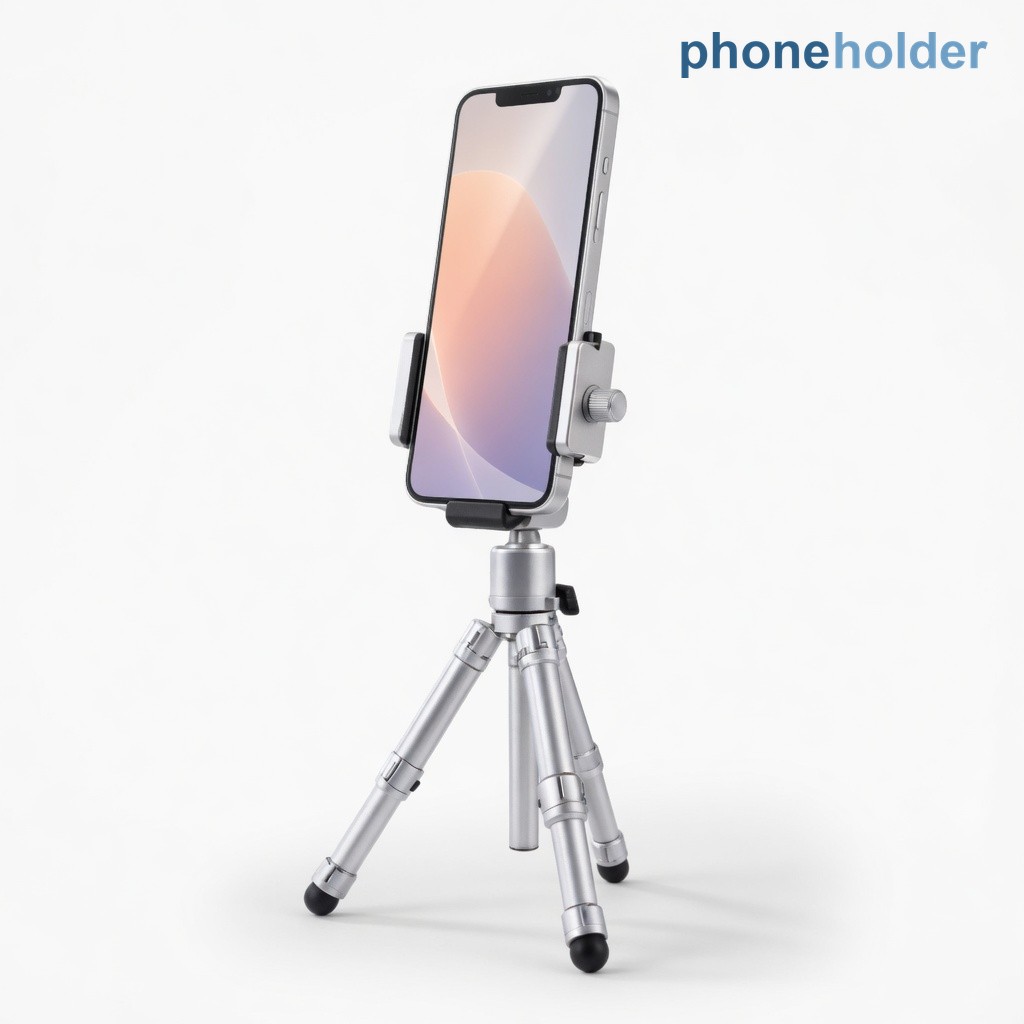 Folding Tripod
 A DIY phone stand works when it gets three things right: a viewing angle you can read, a contact point the phone can’t slide off, and enough base weight that a tap on the screen doesn’t tip it over. Most homemade stands fail on one of the three. Below are seven that usually pass, what each is good for, and the honest point where a bought stand saves you the fiddling.
If you already own a stand that wobbles, the fix is in our separate guide, How to Stop Your Phone Wobbling on a Desk Stand. For the right height and angle for calls, reading and filming, see Phone Stand Height and Angle.
Why homemade stands tip, slide or sag
- Angle: a phone leaning back 60–70° from flat is readable from a desk chair; anything near vertical tips at the first tap.
- Contact: the bottom edge needs a lip or a groove. A phone resting on a smooth ledge slides forward the moment the table is bumped.
- Base mass: a phone is heavier than most of the things people prop it on. If the support weighs less than the phone, the phone wins.
Keep those three in mind and the ideas below make sense.
1. Two binder clips (best all-round)
Clip two medium binder clips together so their metal arms form a cradle: one pair of arms folds flat as the base, the other pair angles up as the backrest. Holds a cased phone in portrait or landscape, costs nothing, lives in a drawer. Fails with: heavy phones on slick desks (the clips slide), and glass tables.
2. A folded cardboard card (best for travel)
Cut a rectangle from a shipping box, score it twice and fold it into an inverted V with a small lip folded up along the front edge. The lip is the whole trick; without it the phone slides. Fails with: humidity (cardboard softens) and any bump (no mass).
3. A cassette case or old CD jewel case
Open the case past 90° and stand it on its long edge; the phone rests in the hinge. Surprisingly stable in portrait because the case is wider than the phone. Fails with: landscape use and thick cases.
4. A wallet or a thick paperback
A folded wallet or a book propped open on its spine gives a heavy base and a natural groove. This is the closest DIY answer to the “I need it for bed” question: a book on the mattress doesn’t slide the way plastic does. Fails with: anything you actually want to keep flat.
5. A cup and a rubber band
Stand the phone against a mug and loop a rubber band around both so it can’t slide forward. Good for video calls in a kitchen. Fails with: tapping (the mug tips if it’s empty) and any liquid nearby.
6. Sunglasses folded flat
Fold the arms and rest the phone across them with the lenses as the backrest. Works on a nightstand for a quick video. Fails with: prescription glasses you’d rather not scratch, and phones without a case (they slide on the lens coating).
7. A phone kickstand you already own
Many wallets and grips have a kickstand built in. If yours does, it beats every idea above for stability because the support is attached to the phone rather than balanced under it. Two examples from our shop: the Black Slim Hinged Phone Kickstand, a slim panel on a short-edge hinge, and the Light Blue Hinged Wallet Phone Stand, which the supplier describes as a magnetic card wallet and folding stand. For both, the listing asks you to confirm the attachment method and your phone or case fit before ordering.
When a real stand is worth $20
DIY is fine for a call or a recipe. It stops being fine when:
- you use the stand every day at a desk and keep rebuilding it;
- you need a specific angle for video calls or filming;
- you want to charge while the phone is up (cables and cardboard don’t mix);
- the phone is large and the improvised base keeps losing.
What you’re buying is the three things above done for you. Examples from our range, with what each solves:
- Bamboo Desk Phone Stand with Charging Cutout: an angled bamboo panel with a rear brace and two front ledges, plus a horizontal slot and a bottom notch that leave room for your charging cable. No charger included; it’s a passive stand.
- Rotating Foldable Desk Phone Stand: aluminum-alloy frame per the supplier, a hinged arm for the angle and a rotating base so you can turn it toward you without lifting it. No exact range of movement is specified.
- Orange Flexible Silicone Phone Stand: a silicone strip that folds into an inverted V with an upturned lip, essentially the cardboard idea made in a material that doesn’t soften. Dimensions and load rating aren’t supplied, so check your phone’s edge against the lip.
- Black A-Fold Wallet Phone Stand: a stitched wallet that folds into an A-shaped support, for people who’d rather carry the stand on the phone. Card capacity and magnetic strength aren’t verified.
All four are $19.99 at the time of writing.
Quick answers
What can I use if I don’t have a phone stand? Two binder clips, a folded cardboard card with a lip, or an open jewel case. Pick the one that matches your surface: clips for a desk, a book for a bed, a mug for the kitchen.
What can I use to prop up my phone? Anything heavier than the phone with a groove or lip at the bottom. Weight and a lip matter more than cleverness.
How can I make a DIY cell phone holder for my bed? A thick book opened on its spine on the mattress, phone in the gutter. It doesn’t slide and it doesn’t need the mattress to be flat.
Is a DIY phone kickstand safe for the phone? Yes if the phone can’t slide off the front edge. The only real risk is a fall, so always give the bottom edge something to catch on.
Editor’s note: the DIY methods are ordinary household setups anyone can reproduce; we have not measured tipping loads. Product details come from each listing on this site and its supplier information. Drafted with AI assistance and reviewed by the Holderphone team.